The morning air in the mountains does not merely cool; it sharpens. It smells of damp earth, woodsmoke, and the faint, sweet decay of chlorophyll retreating into the dark heart of the trees.
For most of the year, we treat forests as static green wallpaper. We drive past them on interstate highways at seventy miles an hour, listening to podcasts, half-aware of the endless wall of leaves blurring past the window. But right now, something invisible and monumental is happening in the dark vessels of every sugar maple and red oak from New England down through the Appalachian ridges. In related developments, read about: Why This Czech Sanctuary Beats Stonehenge by a Thousand Years.
The machinery is shifting gears.
Consider Clara, who sat at her kitchen table in Vermont last October, staring at a calendar with a growing sense of panic. She had missed the peak color window by exactly four days the previous autumn. Four days. She had arrived to find a forest of slick, dark-veined skeletons shedding wet brown paper onto the mud, the brilliant scarlet explosion she had driven six hours to witness reduced to a sodden memory. The Points Guy has also covered this critical topic in great detail.
"It feels personal," she told me, holding a mug of coffee that had long since gone cold. "Like the trees are playing a cruel game of hide-and-seek."
She wasn't entirely wrong about the elusiveness, though the trees have no malice in them. They simply respond to physics, chemistry, and the brutal honesty of the solar clock.
To understand why this year’s United States fall foliage forecast matters—why meteorologists, arborists, and travelers are tracking the shifting temperatures with the intensity of Wall Street traders—you have to understand what autumn actually is. It is not a celebration. It is an evacuation.
The Chemistry of the Breakup
Summer is an era of reckless abundance. Inside every green leaf, millions of microscopic chloroplasts are working overtime, churning sunlight into sugar through photosynthesis. The pigment that drives this engine is chlorophyll, a rich, dominant green that drowns out everything else.
Then, the days shorten. The angle of the sun shifts, slicing through the atmosphere at a longer, lazier angle. The tree senses the changing light and initiates a desperate, life-saving protocol.
It cuts off the supply lines.
At the base of every leaf stem, a specialized layer of cells begins to swell and seal itself off. This process, known as abscission, is a clean, surgical amputation. Water and nutrients stop flowing in. Sugars get trapped and altered. And as the green chlorophyll breaks down and vanishes into nothingness, the hidden truths of the leaf are finally revealed.
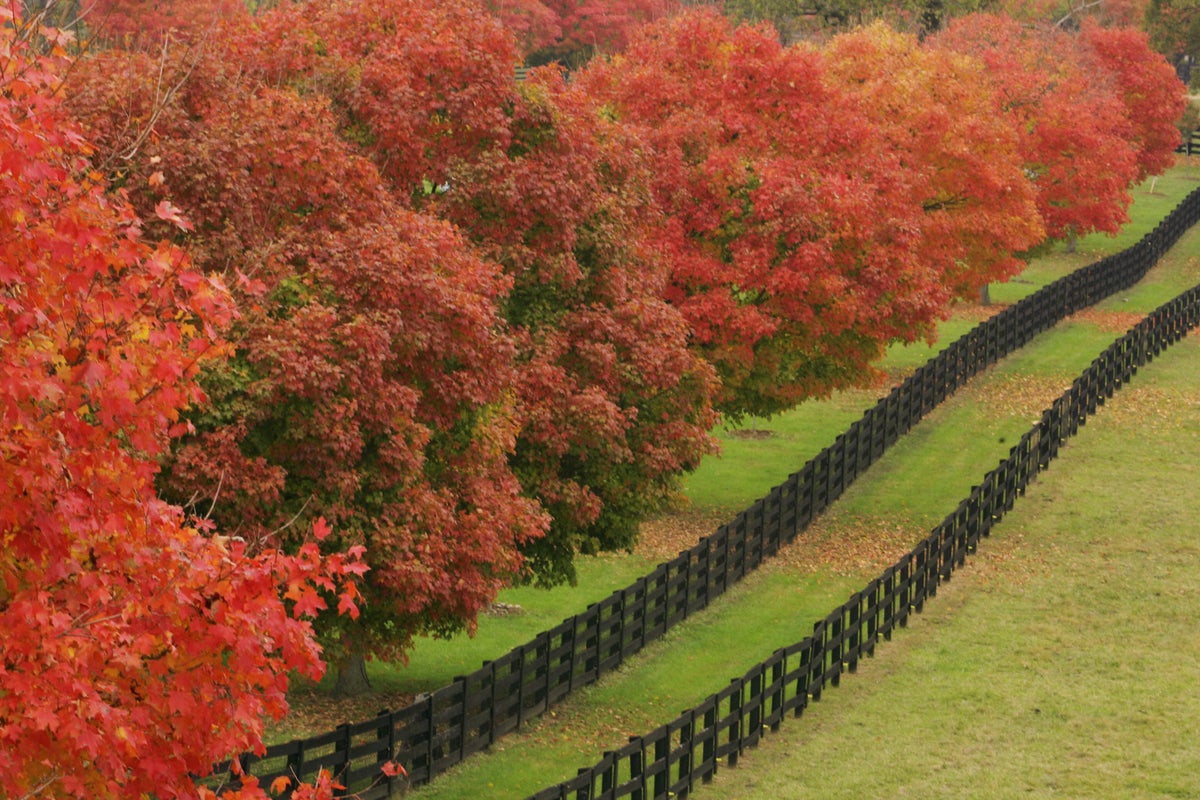
Carotenoids step out of the shadows, bringing bright yellows and oranges—the same pigments that make carrots orange and corn yellow. Anthocyanins, born from trapped sugars reacting with bright light and cool autumn nights, ignite into brilliant scarlets and purples.
(Note: This chemical transformation is a biological fact documented by forest ecologists, though witnessing it feels entirely supernatural.)
When people ask for the fall foliage forecast, what they are really asking for is the schedule of a chemical magic trick. And like any magic trick, the timing depends entirely on variables beyond human control.
The Recipe for Brilliance
This year’s forecast is already drawing intense scrutiny from meteorologists and leaf-peepers alike. Why? Because the palette of autumn is famously temperamental.
A great foliage season requires a very specific meteorological cocktail.
Imagine a late summer baked in moderate rainfall, followed by an autumn of warm, sunny days and crisp, cool nights—nights hovering just above freezing, between thirty-two and forty-five degrees Fahrenheit. That combination traps the sugars inside the leaves while accelerating the destruction of chlorophyll, acting like a chemical accelerator on a bonfire.
Drought, however, is the great spoiler. When summer barks with unrelenting heat and dry soil, trees panic. Some species drop their leaves early to conserve moisture, bypassing the color show entirely and sliding straight into a dull, crispy brown. Too much early frost can kill the leaves before the pigments have time to develop. Too much rain and wind can strip the branches bare overnight, leaving travelers standing beneath naked limbs wondering where the magic went.
This season, the weather patterns across the United States have played a complex hand. In parts of the Northeast, lingering summer dryness has arborists watching moisture levels closely, warning that peak colors might arrive slightly earlier than historical averages in certain localized pockets. Meanwhile, higher elevations in the Blue Ridge Mountains and the Pacific Northwest are gearing up for a vibrant, albeit tightly compressed, window of brilliance.
If you arrive too early, you see a stubborn, stubborn green that refuses to yield. If you arrive too late, you wade through ankle-deep sludge of rotting brown pulp. The window is agonizingly narrow—often no more than ten to fourteen days of peak saturation per region.
That is why the forecast isn't just a travel tip. It is a tactical manual.
Chasing the Line
In the forestry division of a small county office in New Hampshire, markers track what they call the "wave."
The wave starts at the Canadian border and high elevations in September, cascading slowly southward and downward day by day, elevation by elevation, creeping across the country at a rate of roughly five to ten miles a day. It is a slow-motion avalanche of color.
People think you can just pick a weekend in October and book a cabin. That is the amateur mistake. The continent-spanning forest does not care about your weekend availability.
Consider what happens next: You check the official state foliage trackers. You watch the temperature drops. You notice that a cold snap is predicted for the second week of October in the northern tier of the Catskills, while the southern valleys are holding steady. You realize that to catch the absolute apex—that fleeting moment when every single leaf on a hillside is shouting in yellow, orange, and crimson before surrendering to the gravity—you have to be mobile. You have to be willing to drive an extra hour south because the wind stripped the ridge you planned to visit yesterday.
This is where travel transforms from tourism into pilgrimage.
You pull your car off onto a forgotten gravel turnout off a two-lane highway. The engine ticks as it cools. The air bites your cheeks. There are no gift shops here, no tour buses idling with diesel fumes. Just a cathedral of white birches and sugar maples vibrating against a hard, cobalt sky.
You walk into the treeline. The ground is a springy carpet of damp humus and fallen leaves that crackle softly beneath your boots. A sudden gust of wind rattles the canopy overhead, and for a brief, weightless moment, a rain of gold and amber detaches from the branches and spirals down around your shoulders.
You stand there, perfectly still, realizing that this entire explosive display of color is actually a forest preparing for a long, silent sleep. It is a gorgeous, heartbreaking paradox. The most vibrant moment of a tree's year is also the prologue to its winter survival.
The forecast will tell you where to look. The calendar will tell you when to leave. But the forest itself will remind you why you bothered to make the journey at all.
The clock is ticking. The leaves are turning. The color is already moving south.