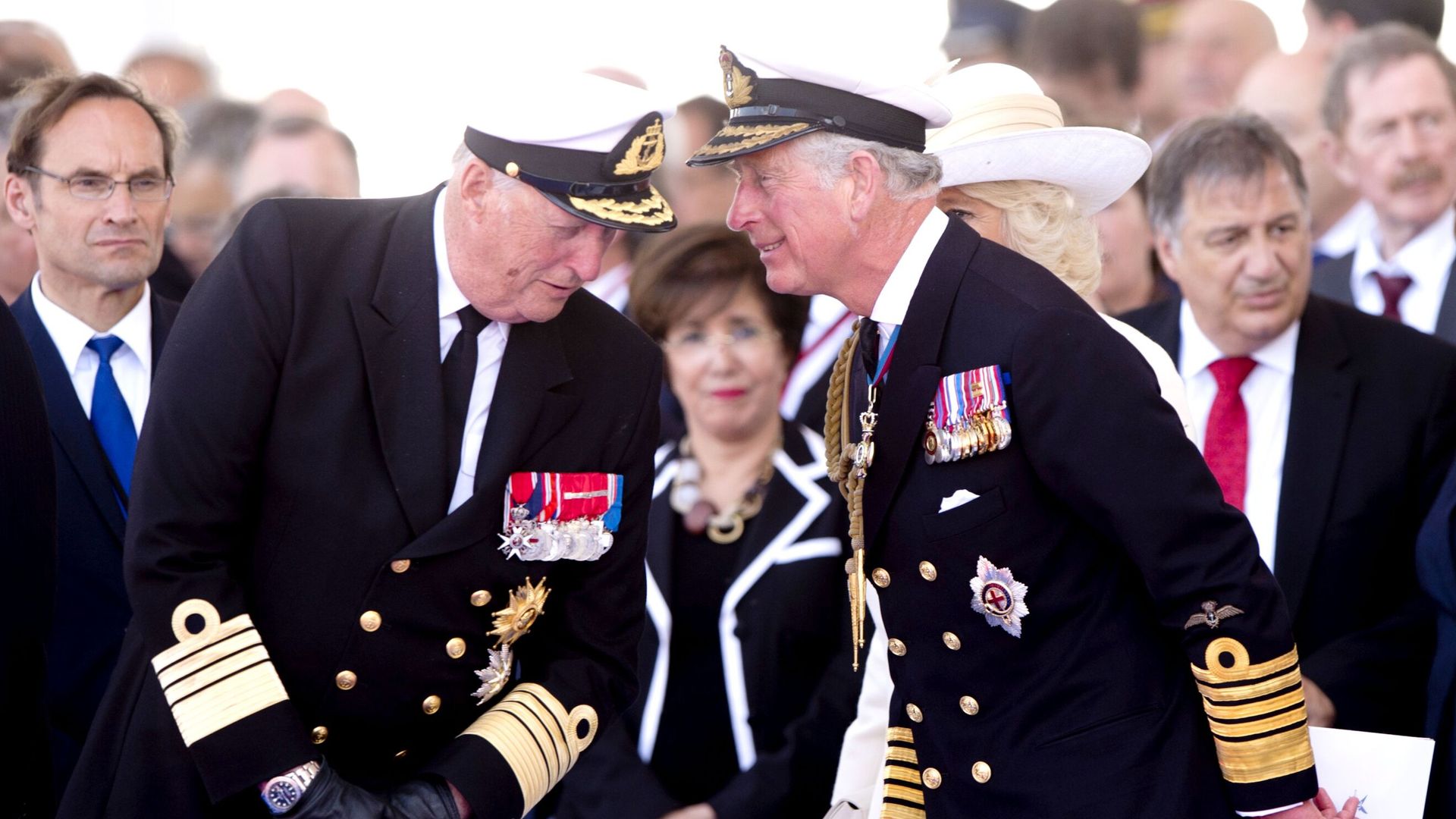
King Charles III stood before the cameras at Buckingham Palace, offering a public salute to his dear cousin, King Harald V of Norway. Official dispatches framed the gesture as standard monarchical courtesy between two elder statesmen of European royalty. That surface narrative misses the sharper political reality. Royal houses do not exchange public warmth merely out of shared bloodlines. Every shared glance, joint anniversary appearance, and public telegram functions as a calculated maneuver to maintain institutional relevance across a skeptical continent.
European monarchies face an existential squeeze. Republican sentiment simmers in Scandinavian capitals and London alike, while taxpayers grow increasingly impatient with hereditary privilege. When Charles underscores his familial bond with Harald, he is actively shoring up a joint brand of survival. Old Europe is shrinking. The surviving crowns know they must project stability, continuity, and shared purpose if they hope to outlast the next generation of political upheaval.
The Bloodline Bureaucracy
King Harald V and King Charles III share more than affectionate cousinly ties; they share a lineage deeply embedded in the geopolitical architecture of twentieth-century Europe. Harald descends directly from Queen Victoria through both maternal and paternal lines, as does Charles. This web of royal kinship was once designed to secure peace through intermarriage. Today, it serves a different masters voice: public relations.
Look closely at the family tree. The House of Glücksburg in Norway and the House of Windsor in the United Kingdom are branches of the same dynastic root system. When Harald faced severe health scares over recent years, including hospitalizations for infections while vacationing in Malaysia, the British press covered his updates with unusual intensity. Why does Fleet Street care about the medical bulletins of an eighty-seven-year-old Norwegian monarch?
Because the Windsor survival strategy relies on normalization through numbers. If Britain were the sole major constitutional monarchy left standing in Northern Europe, the spotlight of public scrutiny would burn with unbearable heat. By keeping Norway, Sweden, Denmark, and the Benelux crowns tightly linked in the public imagination as a collective institution, the royals dilute the pressure. They are not isolated oddities clinging to medieval perks; they are part of a northern constellation of stable, democratic figureheads.
Navigating the Modern Scrutiny
Public reverence cannot be inherited; it must be managed daily. Harald of Norway understood this better than most of his peers. He cultivated a reputation as the people’s king, famously driving his own electric car, championing progressive social values, and famously defending multiculturalism in a speech that went viral globally. Harald made himself indispensable to Norwegian civic life by embodying the modern social democracy he watched over.
Charles watched this evolution with keen interest. The British sovereign has spent decades trying to balance traditional pageantry with modern relevance, often stumbling where Harald succeeded with quiet grace. When Charles publicly honors Harald, he borrows a fraction of that democratic legitimacy. Aligning himself with a monarch widely respected for personal humility and institutional restraint allows Charles to project those exact virtues onto his own beleaguered court.
The timing of these public tributes rarely happens by accident. Whenever financial scandals hit royal households, or when debates over public funding flare up in parliamentary committees, the palaces lean heavily on diplomatic theater. State visits and cousinly tributes remind skeptical younger demographics that these families possess deep international networks that elected prime ministers simply cannot replicate. A president comes and goes with an election cycle. A king whose cousin is the king of a neighboring maritime ally represents a century-long continuity that appeals to conservative instincts across the political spectrum.
The Succession Pressure Test
Both monarchies are navigating fragile generational handovers. In Oslo, Crown Prince Haakon has slowly assumed royal duties as Harald steps back due to age and declining physical health. In London, William and Catherine represent the youthful face of an ancient institution, desperate to modernize while clinging to archaic pomp.
The pressure on these heirs is immense. Harald and Charles belong to an analog generation that enjoyed a wide berth of respectful silence from the press. Their children and grandchildren operate in a relentless digital ecosystem where every misstep is dissected by online commentators within seconds.
Harald handled family controversies with a pragmatic realism that Buckingham Palace has historically struggled to match. When his daughter Princess Märtha Louise stepped down from official duties to pursue alternative business ventures with her controversial partner, Harald managed the split cleanly, protecting the core institution from peripheral damage. Contrast that with the messy, protracted disintegration of the Sussex relationship with the Windsors. Charles has much to learn from how the Norwegian court cuts its losses.
The Geopolitical Anchor in the North Sea
Beyond domestic PR, the British-Norwegian royal alignment serves strategic state interests. The North Sea is a geopolitical flashpoint. Energy pipelines, submarine communication cables, and maritime borders make Norway an indispensable security partner for the United Kingdom.
While diplomats negotiate trade deals and naval pacts in Whitehall and Oslo, the monarchs provide the velvet glove for the iron fist of statecraft. A royal visit to a naval base or an Arctic research station reinforces alliances without requiring partisan political debate in parliament. When Charles and Harald stand side by side, they project a united northern front that transcends shifts in party politics.
This diplomatic utility explains why foreign offices quietly encourage these familial displays. A king is a permanent asset on the diplomatic balance sheet. By emphasizing their kinship, Charles and Harald remind their respective governments that the crown remains a potent tool for quiet influence, long after direct imperial power has faded into history.
The mutual admiration society of European royalty is ultimately an exercise in mutual preservation. As the ground shifts beneath throne rooms from London to Oslo, the remaining kings know they cannot stand alone against the tide of modern republicanism. They will continue to lean on one another, swapping telegrams of support and staging public reunions, because in the high-stakes game of institutional survival, blood remains their most reliable currency.