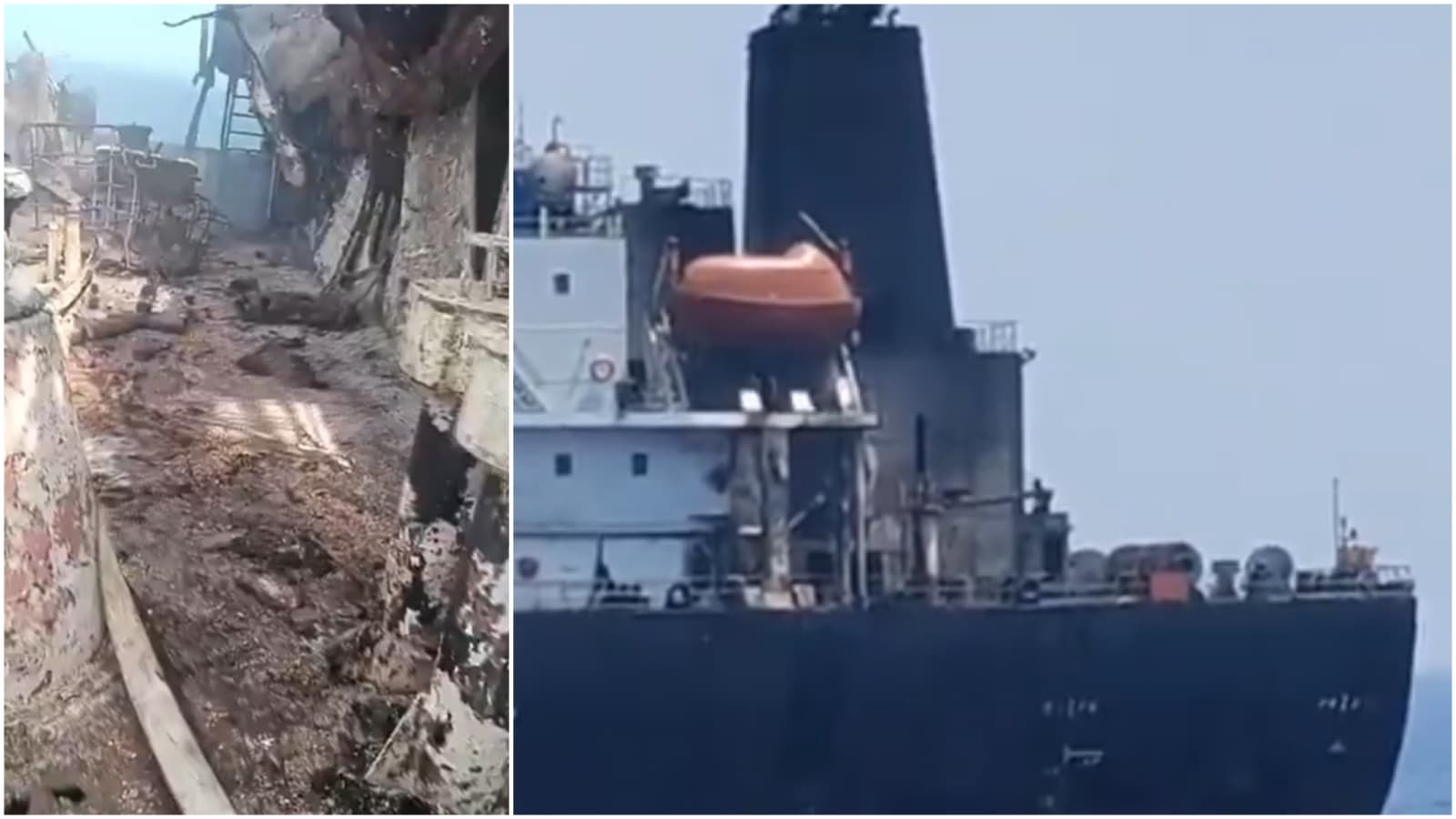
Mainstream news networks are running the exact same headline today. Two Indian sailors are dead after a US military strike targeted an oil tanker off the coast of Oman. The collective media response is predictable: a flurry of hand-wringing over tragic loss, standard condemnations of military overreach, and vague warnings about a fracturing geopolitical order.
They are missing the entire point.
The media treats these maritime fatalities as shocking anomalies, a sudden breakdown of international safety protocols. That perspective is naive. If you spent twenty years in international logistics managing supply chains through high-risk choke points, you would know the uncomfortable truth: human life on commercial vessels is not an absolute priority for global trade conglomerates. It is an operating cost. It is a line item, balanced against transit speeds and insurance premiums.
The tragedy off Oman is not a failure of the system. It is the system functioning exactly as designed.
The Illusion of Merchant Neutrality
Every mainstream publication frames the incident around the tragedy of innocent merchant mariners caught in the crossfire of superpower friction. This narrative relies on a comfortable myth: that commercial shipping exists in a bubble of political neutrality, completely separate from the wars waged by the nations owning or targeting the cargo.
It is a fantasy. Merchant shipping has always been an extension of asymmetric warfare.
When a state military targets a commercial vessel, they are rarely striking blind. They are executing calculations based on the vessel’s flag, the nationality of its beneficial owners, its cargo destination, and its past port calls. To pretend that these sailors were just in the wrong place at the wrong time ignores how modern maritime tracking works. In the modern shipping environment, every vessel radiates a digital footprint across Automatic Identification Systems (AIS) and satellite arrays. Everyone knows exactly who is moving what, and for whom.
The "lazy consensus" blames military aggression while ignoring the corporate decisions that placed those sailors in the strike zone to begin with. Shipping companies regularly route crews through high-risk corridors—whether it is the Bab el-Mandeb, the Strait of Hormuz, or the waters off Oman—because taking the long way around Africa destroys their quarterly margins. They assess the threat of missile strikes or drone interventions, compare it to the cost of burning thousands of tons of extra fuel, and choose to roll the dice with human lives.
The Hypocrisy of Flag States and Cheap Labor
Look closely at the crew manifest of almost any targeted tanker. You will find a stark disconnect between the country that owns the ship, the flag flying on the mast, and the passports of the people working the deck.
This is the system of open registries, otherwise known as Flags of Convenience (FOC). A ship owned by a European conglomerate might fly the flag of Panama or Liberia, be managed by an agency in Singapore, and be crewed entirely by mariners from India, the Philippines, or Ukraine.
The Mechanics of Exploitation: By utilizing Flags of Convenience, the global shipping industry legally detaches itself from the labor protections and safety regulations of the owners' home countries. It allows companies to source cheap labor from developing nations, sending those workers into active combat zones with minimal liability.
When two Indian sailors die, the outcry in New Delhi is intense, but the legal leverage is virtually non-existent. The shipowner hides behind a web of shell companies registered in offshore tax havens. The flag state lacks the geopolitical muscle—or the desire—to challenge a military power like the United States. The international community wrings its hands, while the corporate entities that pocketed the profits from that high-risk voyage face nothing more than a temporary spike in their protection and indemnity (P&I) insurance rates.
If the industry truly prioritized human life, entering a designated war risk zone would require immediate hull-to-crew hazard pay increases that make the voyage economically non-viable, forcing a rerouting. Instead, the premiums paid to Lloyd's of London syndicates cover the hull, the cargo is backed by sovereign guarantees, and the crew is left to absorb the kinetic energy of a drone strike.
The Flawed Premise of Freedom of Navigation
International bodies like the International Maritime Organization (IMO) and various naval coalitions state that their presence in the Middle East is to protect the "freedom of navigation." This phrase is repeated constantly by talking heads on cable news.
Let us dismantle that premise entirely. Naval forces do not protect universal freedom of navigation; they protect selective trade flows that align with their specific geopolitical strategies.
When the US military executes a strike near Oman that results in merchant casualties, it is not a mistake or a technical glitch. It is a deliberate application of force designed to deny logistics access to an adversary or to enforce a blockade. The maritime industry understands this perfectly well. Executives do not expect the oceans to be safe; they expect the oceans to be policed in a way that favors their capital.
Consider a thought experiment: Imagine a scenario where a global logistics giant decides to halt all transits through the Middle East until absolute safety can be guaranteed by all global superpowers. Within 72 hours, energy grids in Western Europe would falter, manufacturing supply chains in Asia would freeze, and the price of crude oil would skyrocket past 150 dollars a barrel. Global capital cannot afford safety. It demands velocity. Therefore, the risk is socialized onto the crews.
The Mathematical Reality of Risk Management
To understand why this will happen again tomorrow, you have to look at the cold, hard math governing maritime insurance.
Every square mile of the ocean is categorized by the Joint War Committee (JWC) in London. When an area is declared a Listed Area, hull war premiums apply. These premiums are a fraction of a percentage of the ship's total value. For a tanker carrying 100 million dollars worth of oil, a 0.5% war risk premium equals 500,000 dollars per transit.
If a shipping company can dodge that premium, or if they decide the payout from a successful, high-speed run outweighs the insurance cost, they will take the gamble. The life of a merchant mariner from a developing nation has a standardized payout structure under standard maritime employment contracts, often capping out at less than 150,000 dollars.
Do the math. The financial penalty for losing a human being is significantly less than the cost of avoiding the danger zone entirely. This is the brutal, unvarnished spreadsheet logic that drives global trade.
The Actionable Pivot for Global Supply Chains
If you are an executive sitting in a boardroom pretending your supply chain is resilient because you bought a standard insurance policy, you are part of the problem. You are relying on a broken framework that treats human collateral as inevitable.
Stop asking how to secure these routes. They cannot be secured. Instead, you must aggressively diversify away from geographic choke points that require military escorts.
- Decouple from Singularity Routes: If your entire operation relies on the seamless transit of goods through the Suez Canal or the Persian Gulf, your business model is inherently fragile. You are betting your company's survival on the accuracy of military targeting systems.
- Enforce Crewing Transparency: Force your logistics providers to disclose the origin of their crews and the exact safety protocols applied when entering JWC listed areas. If they are using flags of convenience to skirt safety liability, drop them. Not out of altruism, but because an intercepted ship is a stranded asset that destroys your inventory velocity.
- Absorb the Premium Cost: Accept that the era of hyper-cheap, zero-risk maritime transport is dead. Pay the higher rates for rail, air, or longer, safer maritime routing around the capes. If your margins cannot survive a longer transit time, your product is not as valuable as you think it is.
The deaths of those two sailors off the coast of Oman are a stark reminder that the global economy is fueled by a level of risk that borders on criminal negligence. The media will call it a tragedy. The politicians will call it an outrage. The shipping companies will call it Tuesday.


