The sea is a fickle master.
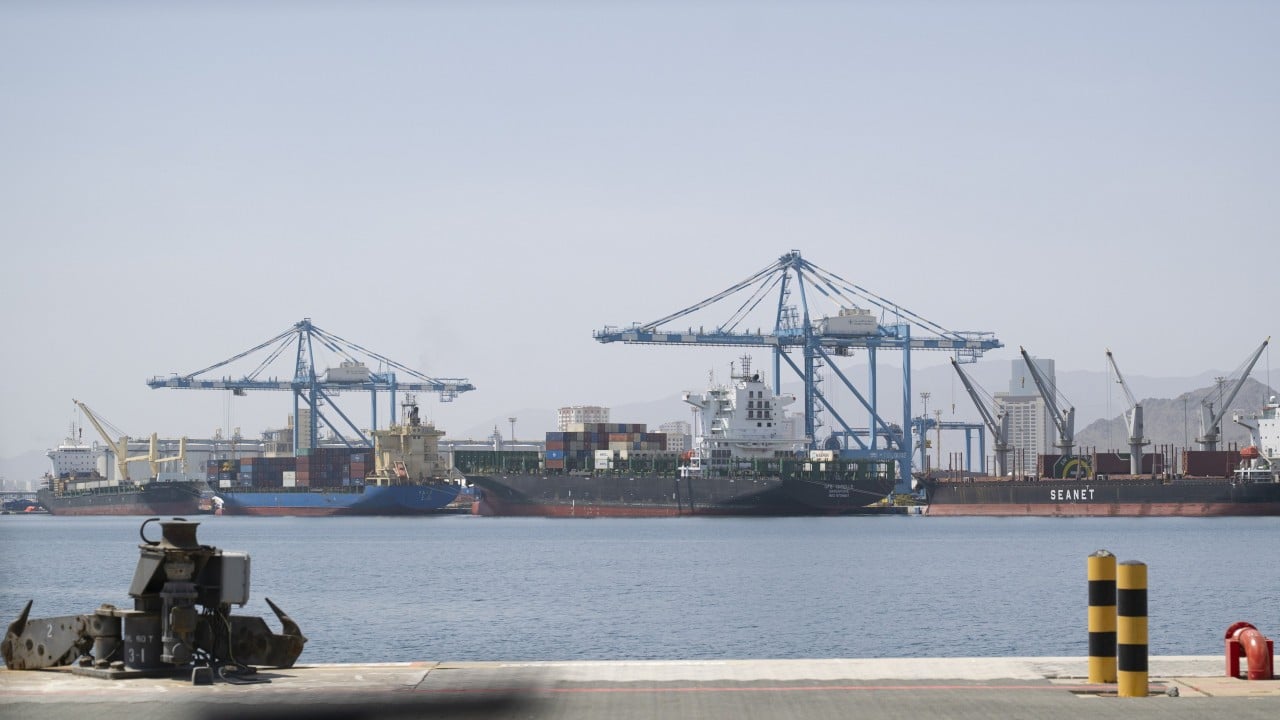
If you stand on the coast of Fujairah, looking out toward the Gulf of Oman, you aren't just seeing water. You are looking at the world’s most precarious bottleneck. Somewhere over that horizon lies the Strait of Hormuz. It is a narrow strip of brine, only twenty-one miles wide at its tightest point, through which one-fifth of the world’s liquid energy must squeeze every single day.
For decades, the global economy has held its breath. Every time a drone buzzes in the distance or a diplomatic cable turns cold, the price of bread in Cairo and the cost of heating in Berlin begin to vibrate. We have built a modern civilization on the assumption that this tiny door will always stay open.
But doors can be slammed shut.
Consider a hypothetical captain named Elias. He is thirty-eight, third-generation merchant marine, and he hasn't slept in thirty hours. His tanker carries two million barrels of crude. As he approaches the Strait, he isn't thinking about "geopolitical tensions" or "macroeconomic stability." He is looking at his radar, wondering if the shadow on the screen is a fishing boat or a fast-attack craft. He knows that if a single incident occurs in these waters, his insurance premiums will skyrocket before he even hits the next waypoint.
Elias represents the hidden friction of our age. When we talk about "logistics" and "supply chains," we are actually talking about the anxiety of men like Elias. We are talking about the fragility of a world that depends on a single, crowded geographic chokepoint.
The Great Landward Pivot
Regional leaders have tired of the anxiety. They are no longer content to let their entire economic future hang on the security of a few miles of water. A massive, silent shift is occurring. It is a pivot away from the waves and toward the dust.
The plan is straightforward, yet staggering in its physical scale: the creation of a massive land bridge connecting the Persian Gulf to the Mediterranean. By carving out new rail lines, highways, and high-tech dry ports through the heart of the Arabian Peninsula, states like the UAE, Saudi Arabia, and Jordan are effectively building an "off-ramp" for the Strait of Hormuz.
This isn't just a construction project. It is a declaration of independence from geography.
If you can move a container from a ship in the UAE, put it on a high-speed freight train, and have it arrive at a port in Israel or Jordan within forty-eight hours, you have changed the math of the planet. You have bypassed the most dangerous water on earth. You have turned a three-week sea voyage into a weekend drive.
The Anatomy of a Corridor
To understand why this is happening now, you have to look at the numbers that haunt the backrooms of ministries in Riyadh and Abu Dhabi.
The Strait of Hormuz sees roughly 20 million barrels of oil pass through it daily. If that flow stops, the global economy doesn't just slow down; it breaks. By diversifying the routes—shifting from a purely maritime model to a hybrid "multimodal" system—these nations are creating redundancy.
Redundancy is a dry word for a vital concept. Think of it like a heart bypass surgery. If the main artery is blocked, the blood finds a new path. The "Land Bridge" or the "IMEC" (India-Middle East-Europe Economic Corridor) is that new path.
The infrastructure required is titanic. We are talking about thousands of miles of heavy-gauge rail capable of carrying double-stacked containers through some of the harshest environments known to man. It requires locomotives that can breathe in sandstorms and tracks that won't warp in 50°C heat.
The cost? Billions. The stakes? Survival.
The Human Cost of Distance
Let’s go back to the ground.
Imagine a logistics manager in a warehouse in Dubai. Her name is Sarah. Every day, she plays a high-stakes game of Tetris. She has five hundred containers that need to get to Rotterdam. In the old world, her only real choice was the sea. She would track her shipments as they crawled around the Arabian Peninsula, through the Red Sea, and up the Suez Canal.
If there was a storm, she waited. If there was a conflict, she paid more. If a ship got stuck sideways in a canal—as we all saw happen not long ago—her entire business went into cardiac arrest.
Now, imagine Sarah's screen five years from today. She sees an alternative. A "Green Channel" rail option. It’s faster. It’s more predictable. More importantly, it is insulated from the volatility of the high seas.
When goods move faster, life gets cheaper. When the cost of moving a refrigerator or a ton of grain drops because the route is shorter and safer, that savings eventually trickles down to a kitchen table somewhere. This is the human element of a logistics corridor. It isn't about trains; it’s about the time and money we reclaim from the tyranny of distance.
The Invisible Diplomacy of Steel
There is a quiet irony in this transformation.
For centuries, the desert was the barrier. The sea was the highway. We stayed on the fringes of the peninsula because the interior was too vast, too hot, and too empty to be a viable path for global trade.
Technology has flipped that script.
Advanced desalinization allows for the creation of "dry ports" and logistics hubs in places that were once uninhabitable. Digital tracking systems and automated customs clearing mean that a train crossing three borders can move with the fluidity of a single country.
But the real magic isn't in the tech. It is in the cooperation.
To make a land bridge work, you need more than just rails. You need trust. You need countries that have historically been rivals to agree on a single set of rules. They have to synchronize their gauges, their taxes, and their security protocols.
In a way, the logistics corridor is a form of "hard-coded" peace. Once you have invested fifty billion dollars into a rail line that connects your neighbor's port to your own, you have a very expensive reason to stay on speaking terms. You are no longer just neighbors; you are shareholders in the same machine.
The Friction of Reality
It would be a mistake to think this is easy.
The desert is a brutal auditor. It demands constant maintenance. Sand is invasive; it gets into bearings, clogs filters, and buries tracks. There are also the political winds, which can be even more abrasive than the khamsin.
Regional instability hasn't vanished. A rail line is a stationary target. Unlike a ship, which can change its course to avoid a conflict zone, a track is fixed. Protecting thousands of miles of steel in a volatile region is a security nightmare that keeps generals awake at night.
Then there is the competition. Egypt, which earns billions from the Suez Canal, views these overland routes with a wary eye. The global shipping giants, who have invested trillions in massive "Mega-max" vessels, aren't necessarily eager to see their business diverted to the rails.
But the momentum is undeniable.
The world has realized that "just-in-time" delivery is a fragile dream when it relies on a single, ancient maritime route. We are moving toward a "just-in-case" economy. We want options. We want exits.
The End of the Island Mentality
For a long time, the states of the Persian Gulf operated like islands. They looked outward to the sea, sending their resources to distant shores while the vast interior of the peninsula remained a silent backdrop.
That era is closing.
The new logistics corridors are turning these nations "inside out." They are looking toward each other. They are stitching the fabric of the Middle East together with threads of steel and asphalt.
The result is a new kind of map. It’s a map where the Strait of Hormuz is no longer the only heartbeat of the region. It’s a map where a container can travel from the Indian Ocean to the Mediterranean without ever touching the water.
Think of the silence of the deep desert. For thousands of years, the only sound there was the wind and the occasional caravan. Soon, that silence will be broken by the low hum of electric freight engines. It will be the sound of a world trying to find a safer way home.
The sea will always be there. It will always be the master of the world’s bulk trade. But the monopoly of the waves is over. The desert is no longer an obstacle.
It is the bridge.
The next time you see a headline about a new railway in the sand or a port expansion on the coast of the Red Sea, don't think of it as a boring business story. Think of it as a giant, collective effort to build a world where we can finally stop holding our breath.
The concrete is being poured. The rails are being laid. The bypass is almost complete.
Somewhere, out in the middle of the Gulf, a captain like Elias looks at the horizon and waits for the day he isn't the only thing keeping the world's lights on.
That day is coming. You can hear it in the rhythm of the tracks.
The desert is finally waking up.
It has a job to do.
It is going to carry the world on its back.