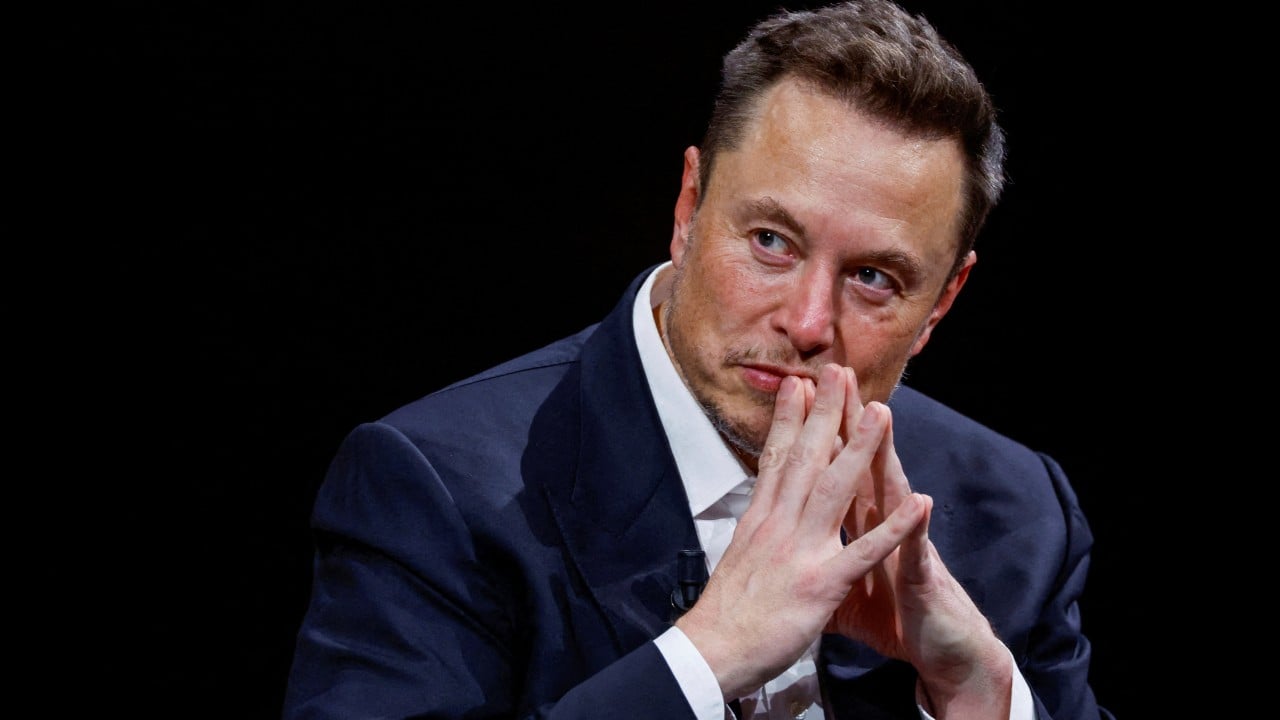
Smoke smells different in Shanghai. It carries the weight of a thousand furnaces burning through the night, a metallic tang that lingers on your coat long after you have stepped inside. I remember standing by a floor-to-ceiling glass window in Pudong years ago, watching the harbor cranes lift shipping containers with the mechanical precision of a clockwork god. Back then, the prevailing myth was simple: outsiders brought the blueprint, and local hands simply built it.
That myth is dead.
Today, the architects wear local shoes. They do not wait for permission from Silicon Valley. They do not nod politely when an American executive explains how things ought to be done. They smile, they take the notes, and then they build a parallel universe that functions faster, cheaper, and with a ruthless gravity that pulls entire supply chains into its orbit.
Nowhere is this collision more visible than at the gates of Tesla.
Elon Musk built an empire on the altar of individual defiance. He sold the world a vision of electric vehicles as spaceships for the road, wrapped in software updates and charismatic bravado. For years, he operated as the undisputed king of a high-stakes chessboard. But grandmasters know that a single piece can only dominate if the opponent agrees to play by standard rules.
China never played by standard rules. They built a different board entirely.
Walk through the industrial parks of Shenzhen or the outskirts of Shanghai, and you will see the architecture of this corporate matrix. It is not a single monolith. It is a dense, interlocking ecosystem of state-backed giants, hyper-efficient battery manufacturers, and software developers who treat vehicle operating systems like consumer electronics. When Tesla arrived in Shanghai to build its Gigafactory, the local government rolled out the red carpet. They offered cheap land, rapid permitting, and billions in low-interest loans. It looked like a triumph of global capitalism.
It was actually an adoption.
(Note: When I speak of an "adoption" here, I am using a metaphor for industrial localization—a process where foreign capital is welcomed not to conquer a market, but to seed an ecosystem that will eventually outgrow its creator.)
Consider what happens next: the factory opens. The cars roll off the line. Beautiful, sleek, undeniably popular. But look closer at the ingredients. The batteries come from CATL. The microchips, the sensors, the supply chain logistics—they are woven into a local grid of suppliers who answer, ultimately, to Beijing's industrial master plan. Musk brought the spark, but the fuel belongs to someone else.
The sheer scale of the opposition is staggering. We are not talking about legacy automakers stumbling over software bugs. We are talking about companies like BYD, Geely, and Xiaomi—enterprises backed by capital pools that make traditional venture capital look like pocket change. These competitors do not just sell cars. They sell smartphones that happen to drive, smart home integrations, and an entire digital lifestyle tailored to a domestic consumer base that has long since moved past Western software dependencies.
Why does this matter? Because the traditional playbook of American tech expansion is fracturing. For decades, the strategy was to invent it at home, protect it with patents, and scale it globally. But what happens when you land your crown jewel in a nation that masters your manufacturing techniques in thirty-six months and improves upon your software pricing model by half?
You get headaches. Deep, throbbing, existential headaches.
Musk knows this. You can see it in the frantic pace of price cuts, the relentless push for full self-driving approvals in foreign markets, the desperate need to stay ahead of a wave that is rising faster than any single man can bail. The corporate matrix challenging his empire is not a faceless competitor. It is a hydra. Cut off one head—lower prices in Shanghai—and two more appear in the form of state-supported EV startups exporting affordable electric sedans to Europe and Southeast Asia.
To understand the human stakes of this conflict, you have to look past the stock tickers and quarterly earnings reports. Look at the assembly line worker in Austin versus the engineer in Hangzhou. Both are grinding seventy-hour weeks. Both believe they are building the future. But the engineer in Hangzhou operates within a synchronized national machine where every bottleneck is cleared by regional policy, and every supply chain hurdle is anticipated by a government that views technological supremacy as an existential survival metric.
The American narrative loves the lone genius. We worship the myth of the titan standing against the elements, sketching rockets on napkins and tweets that move markets. It makes for great cinema. But reality is rarely won by lone geniuses. Reality is won by logistics, by redundancy, by the quiet, unglamorous accumulation of industrial might.
When you peer across the Pacific today, you are not just looking at a trade dispute. You are witnessing the end of an era where Western innovation could casually colonize global markets without a fight. The rules have changed. The playground has been enclosed by concrete walls built with local steel.
The question is no longer whether Tesla can survive in China. The question is whether the man who wanted to die on Mars is prepared to be out-engineered by a system designed to conquer the earth right beneath his feet.
The factory lights in Shanghai do not flicker. They burn brighter with every passing shift. Out on the floor, a robotic arm welds a steel frame with absolute, chilling perfection. No one is tweeting. No one is issuing manifestos. There is only the rhythm of the machine, turning raw metal into the new center of gravity.