Modern ground-based air defense systems face a severe operational friction point between high static footprint requirements and dynamic multi-vector threat environments. The decision by the United States Army to inject an additional $347 million into the development and scaling of containerized Patriot launchers highlights a fundamental structural shift in how air defense artillery achieves mobility, logistics efficiency, and survivability. Rather than viewing this financial allocation as a routine procurement adjustment, procurement analysts must deconstruct it as a targeted investment to solve survivability bottlenecks, reduce total cost ownership per battery, and decouple complex missile defense architecture from legacy heavy-wheeled transporter-erector-launchers.
The Structural Deficit of Legacy Launchers
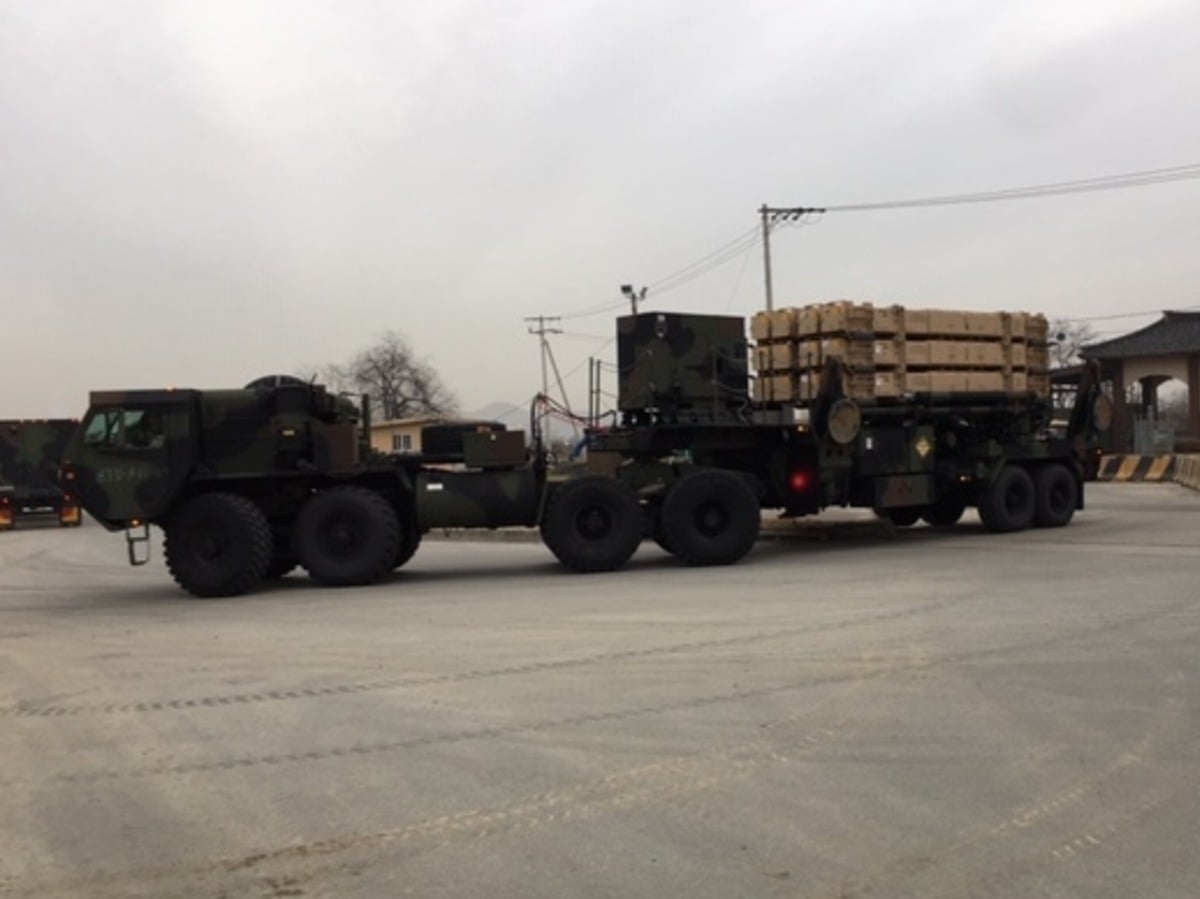
Traditional Patriot batteries rely heavily on the M903 transporter-erector-launcher. While highly capable, the M903 presents acute operational liabilities that limit tactical dispersion. Expanding on this idea, you can also read: The Night We Forgot How to Listen to the Stars.
- Footprint rigidity: The standard launcher requires specialized heavy-duty prime movers, specific turning radii, and extensive stabilization procedures before becoming combat-ready.
- Signature vulnerability: In modern electronic and satellite reconnaissance environments, the distinct radar and thermal signature of standard launchers makes prolonged concealment difficult once deployed.
- Logistial drag: Transporting traditional launchers via strategic airlift strains military logistics chains, restricting rapid global repositioning.
Containerized configurations address these vulnerabilities by housing launch mechanisms within standard International Organization for Standardization footprint dimensions. This design allows deployment via commercial flatbeds, rail networks, and standard tactical utility vehicles without requiring specialized recovery assets.
Financial Allocation Breakdown and Cost Optimization
The $347 million capital injection targets specific engineering and manufacturing phases designed to transition the containerized launcher from prototype validation to low-rate initial production and operational testing. Observers at TechCrunch have shared their thoughts on this situation.
[Capital Injection: $347M]
  ├── Engineering & Design Hardening
  ├── Standardized Interface Integration
  └── Manufacturing Scalability & Supply Chain Resilience
By utilizing standard shipping container dimensions, the program leverages existing global transportation infrastructure. This reduces the lifecycle cost curve significantly compared to proprietary chassis manufacturing. The financial efficiency manifests through three distinct vectors:
- Procurement cost reduction: Eliminating custom heavy chassis manufacturing lowers unit acquisition costs.
- Maintenance overhead: Standardized commercial parts simplify supply chain demands for mechanical maintenance.
- Personnel footprint: Automated reload and remote operation protocols reduce the crew requirements per battery, lowering long-term personnel sustainment costs.
Operational Integration and Tactical Agility
Deploying air defense assets in contested zones requires maximizing dispersion while maintaining centralized command and control. Containerization allows batteries to disaggregate across wider geographic areas. A single adversary strike cannot neutralize an entire cluster of launchers if individual nodes operate autonomously from disguised or hardened positions.
[Centralized Command Node]
       │
       ├─► [Containerized Launcher Alpha (Concealed)]
       ├─► [Containerized Launcher Beta (Industrial Zone)]
       └─► [Containerized Launcher Gamma (Forward Position)]
This structural decentralization changes the mathematical calculus for opposing force targeting. Instead of targeting a concentrated battery layout, adversaries must expend disproportionate reconnaissance assets to locate smaller, modular launch units that blend into standard commercial logistics traffic.
Strategic Deployment Forecast
The integration of containerized Patriot launchers into active force structures will alter theater air defense doctrine over the next decade. As low-rate initial production yields operational units, combatant commanders will prioritize these modular systems for expeditionary theaters where traditional heavy infrastructure is absent or vulnerable.
To maximize this capability, force planners must adapt command architectures to support high-node dispersion without increasing communication latency or cybersecurity vulnerabilities. The success of the $347 million investment will ultimately be measured not by units produced, but by the measurable reduction in launcher vulnerability windows during active peer-to-peer conflict scenarios.