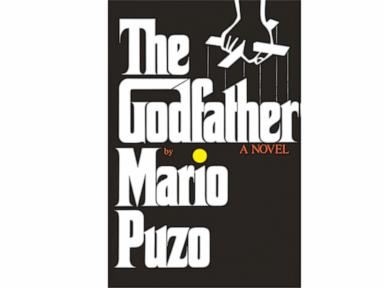
The Corleone family is officially coming back to the page in 2027, but this isn't just a win for Mario Puzo’s estate. It is a calculated move by the publishing industry to squeeze blood from a fifty-year-old stone. Grand Central Publishing recently confirmed that author Michael Korda, the legendary editor who actually worked with Puzo on the original 1969 masterpiece, will pen a new prequel titled The Family Corleone. While fans are debating whether we need another look at the rise of Vito Corleone, the real story lies in the desperate mechanics of "legacy IP" and the thinning line between literary tribute and corporate mining.
The Resurrection of the Don
The announcement of a new Godfather book usually triggers a specific kind of skepticism. We have been here before. Since Puzo’s death in 1999, the estate has authorized several continuations, including Mark Winegardner’s The Godfather Returns and Edward Falco’s prequel efforts. Some were serviceable; none were essential. However, the 2027 release carries a different weight because of Michael Korda’s involvement.
Korda isn't a ghostwriter pulled from a hat. He was the man in the room when the original "cannoli" was being fried. By tapping a contemporary of Puzo, the publishers are attempting to bypass the "fan fiction" label that plagues most legacy sequels. They want the prose to feel authentic to the late 1960s aesthetic rather than a modern imitation. The strategy is clear: sell the book as a long-lost extension of the primary source rather than a secondary spin-off.
Why the Corleones Never Die
Why do we keep returning to 1930s Hell’s Kitchen? It isn't just about the violence or the romanticized view of the Mafia. The Godfather brand remains the gold standard for the "immigrant making good" narrative twisted through a dark, Machiavellian lens. For a publishing house, an established brand like this is a financial safety net in an era where debut novels struggle to find oxygen.
The business logic is straightforward. A new Godfather book guarantees:
- Backlist sales spikes: Every time a new entry drops, sales of Puzo’s original novel and the Blu-ray sets of the Coppola films climb.
- Global licensing: The Corleone name translates into every major language without a cent of extra marketing needed for brand awareness.
- Adaptation potential: You can bet the film rights or a high-end streaming limited series are already being discussed in hushed tones behind closed doors.
The Problem with Prequels
The upcoming novel aims to bridge the gap between Vito Corleone’s arrival in America and the powerhouse he becomes by the start of the 1945 timeline. This is treacherous ground. We already saw the definitive version of this story in the flashback sequences of The Godfather Part II. Robert De Niro’s performance and Coppola’s direction etched that history into the cultural psyche.
When a writer tries to add "new" history to a story that feels complete, they risk the "Star Wars" effect. They begin explaining things that didn't need explaining. We don't need to know where Sonny got his temper or exactly who taught Tom Hagen the law. The power of the original work often lived in the shadows and the things Puzo left unsaid. Korda faces the monumental task of providing enough new information to justify the cover price without demystifying the legend to the point of boredom.
The Industry of Literary Grave Robbing
This 2027 release is a symptom of a larger trend. From Ian Fleming’s James Bond to Stieg Larsson’s Millennium series, the industry is increasingly reliant on "zombie franchises."
Publishing is a high-risk gamble. Most books lose money. To offset those losses, houses rely on "big books." But creating a new "big book" from scratch is hard. It requires luck, timing, and a massive marketing spend. It is much easier to buy the rights to a dead man's ideas and hire a veteran hand to keep the engine running.
The danger is the dilution of the brand. Every time a mediocre Corleone book hits the shelves, the original loses a bit of its luster. It stops being a singular piece of American art and starts being just another "content vertical."
The Korda Factor
If anyone can pull this off, it is Korda. His memoir, Another Life, showcases his deep understanding of the mid-century publishing world and his personal friendship with Puzo. He knows the rhythms of Puzo’s speech and the cynical, weary worldview that defined the Corleone patriarch.
Korda's challenge will be moving beyond the tropes. We have seen the olive oil fronts. We have seen the street-corner hits. To make this work in 2027, the narrative needs to tackle the internal psychological shift of a man who decides that the law is for fools and that "family" is the only protection against a cold, industrializing America.
The Commercial Reality of 2027
By the time this book hits shelves, the original film will be 55 years old. The audience that saw it in theaters is aging out. This novel is a bridge to a younger generation that knows the memes but hasn't felt the weight of the story.
The marketing campaign will likely lean heavily on the "historical accuracy" and "lost notes" angle. Expect a lot of talk about Puzo’s unproduced ideas and Korda’s unique access to the creator’s mind. It is a compelling hook, even if it is designed primarily to satisfy shareholders.
The Bottom Line for Readers
Is this a cash grab? Yes. Can a cash grab still be a good book? Also yes.
The success of the 2027 Godfather novel won't be measured by its first-week sales—those are practically guaranteed. It will be measured by whether it adds a single meaningful layer to the character of Vito Corleone or if it simply feels like an expensive cover band playing the hits.
The Corleone family built an empire on the idea that they could stay ahead of the law and their enemies through sheer will and intelligence. Now, their greatest enemy is irrelevance. This novel is the family’s latest attempt to hold onto its territory in a culture that moves faster than a getaway car on a Brooklyn pier.
Take the book. Leave the skepticism for the second printing.