Donald Trump has fundamentally redrawn the boundaries between public governance and private enterprise, converting the American presidency into a high-yield asset class that generated more than $2.2 billion in outside income during his first year back in office. His latest 927-page federal financial disclosure reveals an unprecedented transformation. The traditional real estate holdings that defined his early career have been entirely overshadowed by a massive influx of cash from digital assets, global licensing deals, and sweeping media settlements. More than $1.4 billion of his total revenue originated from cryptocurrency ventures and coin partnerships, making digital speculation the primary engine of the president's wealth.
This economic reality defies historical precedent. While previous commanders-in-chief typically liquidated their assets or utilized blind trusts to avoid the appearance of impropriety, the current administration has embraced an overt synthesis of policy and personal profit. The corporate structure of the Trump family business now moves in tandem with executive orders, trade negotiations, and regulatory rollbacks. Retail investors and foreign entities are pouring capital into Trump-branded ecosystems, often absorbing severe financial losses while the underlying brand owner extracts millions in guaranteed royalties and token sales.
The Token Economy and Retail Asymmetry
The most striking revelation within the federal filing is the scale of the president's cryptocurrency earnings. World Liberty Financial, a digital finance project established by the president's sons alongside the family of Middle East envoy Steve Witkoff, brought in more than $525 million from the direct sale of digital governance tokens. This was supplemented by an additional $65 million from the sale of equity stakes in the company and nearly $197 million from transaction fees tied to stablecoin operations.
To understand these figures, one must examine the specific mechanics of the digital assets being sold. Governance tokens do not convey an equity stake in a traditional corporation. They do not grant a share of company profits, nor do they confer ownership over tangible assets. Instead, they merely allow buyers to vote on internal management policies for a decentralized finance platform. For the average buyer, this distinction proved costly. Since trading commenced, the market value of these tokens has declined by roughly 80 percent, leaving retail participants with rapidly depreciating digital codes while the Trump family trust retained the initial capital.
A separate corporate vehicle, CIC Digital LLC, generated an additional $635 million last year. This revenue came in the form of royalties from a licensing agreement with an entity known as Celebration Coins, which marketed a souvenir meme coin stamped with the president's likeness. Launched just days before the presidential inauguration, the token experienced a brief, volatile surge in value. It eventually crashed from a peak of over $74 to under two dollars. The financial architecture of the deal ensured that the president’s business was insulated from this market collapse, pocketing upfront licensing fees and recurring royalties regardless of the asset's secondary performance.
High-net-worth foreign buyers played a substantial role in sustaining this ecosystem. Disclosures indicate that a single foreign digital asset executive purchased $75 million worth of governance tokens and injected $200 million into the souvenir coin market. At the time of these transactions, the executive was facing an active federal lawsuit regarding investor protection violations. The legal proceedings were subsequently paused and settled for a minor financial penalty. While the involved parties deny any correlation between the financial transactions and the regulatory outcome, the overlap illustrates the deep structural vulnerabilities inherent in allowing a sitting president to operate an active, unregulated investment platform.
Foreign Real Estate as a Policy Backchannel
While digital currencies provided the vast majority of the cash flow, the Trump Organization’s traditional real estate footprint experienced a significant international expansion. The company secured more than $58 million in licensing and management fees from a flurry of newly minted luxury developments across the globe. These deals were negotiated and executed in nations that were simultaneously engaged in delicate diplomatic talks with the United States regarding tariffs, military aid, and trade access.
Foreign Licensing Income by Nation (2025)
United Arab Emirates:  $10.4 Million
Saudi Arabia:          $9.0 Million
Qatar:                 $5.0 Million
Romania:               $5.0 Million
In the United Arab Emirates, a luxury property venture yielded $10.4 million for the president's business. Concurrently, an entity linked directly to the Emirati government injected $500 million into the broader World Liberty Financial structure, receiving a substantial capital contribution stake. Shortly after these transactions were completed, the administration altered a long-standing national security restriction, granting the UAE access to advanced American semiconductor chips that had previously been withheld over concerns regarding technology transfers to foreign adversaries.
Similar dynamics played out across the Middle East and Eastern Europe. A luxury resort development in Saudi Arabia, managed by a real estate firm with close ties to the royal family, directed $9 million to the president’s private trust. In Qatar, a separate commercial project contributed $5 million. In Bucharest, Romania, another development brought in an identical sum. Each of these financial transactions occurred against a backdrop of shifting geopolitical priorities, creating an environment where foreign governments could directly enrich the American head of state while seeking favorable diplomatic outcomes.
The legal framework governing the presidency permits this behavior. While ordinary executive branch employees are bound by strict statutory conflict-of-interest laws that criminalize participation in matters affecting their personal financial interest, the president and vice president are legally exempt from these provisions. The authors of the 1978 Ethics in Government Act reasoned that applying such restrictions to the chief executive could cause unconstitutional interference with their official duties. This statutory carve-out has been transformed into a powerful mechanism for wealth generation.
The Discretionary Stock Portfolio and Executive Actions
Beyond property and digital tokens, the president’s financial filing outlines a massive expansion into the public equities market. According to an analysis of the 927-page document, Trump engaged in more than 22,000 distinct stock transactions throughout the year, utilizing eight separate investment accounts. This volume of trading stands in sharp contrast to previous administrations; his immediate predecessor recorded just 13 transactions over a four-year period.
The total value of these stock purchases is estimated to sit between $461 million and $1.4 billion. Seven of the investment accounts functioned as broad market index trackers, but the eighth account engaged in aggressive, targeted stock-picking. Among the equities acquired were substantial stakes in major American technology corporations, including up to $70 million in Microsoft, $63 million in Apple, and $33 million in Amazon.
The most notable acquisition involved Nvidia, the dominant producer of artificial intelligence microchips. The president's portfolio added up to $67 million in Nvidia stock during a period when the company’s market value was deeply affected by federal export controls and international trade tariffs. Throughout the year, the president publicly discussed Nvidia at dozens of official events and frequently mentioned the corporation on social media platforms. The company’s stock value rose 39 percent over the course of the year, directly inflating the value of the president's private holdings.
The Trump Organization maintains that these investments do not constitute a conflict of interest because the accounts are managed on a discretionary basis by independent, third-party financial institutions. Under this structure, the asset managers possess sole authority over all specific buy and sell decisions. This defense assumes an absolute firewall between the presidency and the market. It ignores the reality that a single public statement, executive decree, or tariff threat from the Oval Office can instantly alter the valuation of a specific stock, regardless of whether the president explicitly directed the trade.
Domestic Asset Inflation and Media Cash-Outs
The financial windfall extended deep into the president’s domestic hospitality portfolio. Mar-a-Lago, the private club in Palm Beach, Florida, generated $77 million in revenue last year, representing a 50 percent increase from its earnings when Trump was a private citizen. The venue has effectively been transformed into an alternative political capital, where corporate executives, lobbyists, and foreign dignitaries pay escalating membership fees and venue costs to secure proximity to the administration.
Other domestic properties observed a parallel upward trajectory. Trump National Doral, a massive golf resort in Miami, reported $121 million in revenue, up from $110 million the previous year. Across the entire portfolio of 16 golf courses and country clubs, total revenue surpassed $470 million. These facilities operate as highly efficient cash collection centers, benefiting from the constant presence of security details, political fundraising committees, and corporate groups seeking to signal alignment with the ruling administration.
Key Domestic Revenue Sources
Trump National Doral: $121.0 Million
Media Settlements:    $86.5 Million
Mar-a-Lago Club:      $77.0 Million
Golf Portfolio Total: $470.0 Million
The revenue spike was further accelerated by an unusual series of legal windfalls. The president reported receiving $86.5 million derived from five separate legal settlements with major media and technology conglomerates. These payments were extracted from ABC, CBS, YouTube, Meta, and the social media network X following protracted disputes over defamation, content moderation policies, and broadcasting rights.
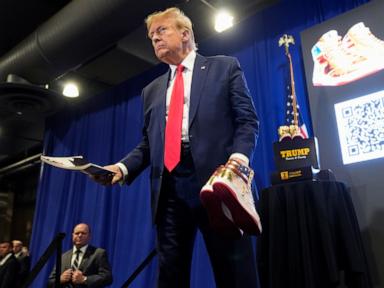
The financial picture is rounded out by an array of branded consumer merchandise. The disclosure details $4.7 million in revenue from a licensing deal for Trump-branded luxury watches, alongside millions more from high-end footwear, commemorative bibles, and personal apparel. These items are sold directly to the political base, transforming routine campaign enthusiasm into a continuous stream of personal cash flow.
This unprecedented accumulation of wealth while occupying the White House exposes a structural shift in the nature of American political power. The traditional division between public service and private accumulation has dissolved, replaced by an integrated financial system where executive decisions, foreign policy, and regulatory actions serve as continuous catalysts for a multi-billion-dollar corporate empire. Legislative efforts to curtail this practice remain deadlocked in congressional committees, ensuring that the monetization of the American presidency will continue unabated, altering the baseline of political ethics for generations to come.