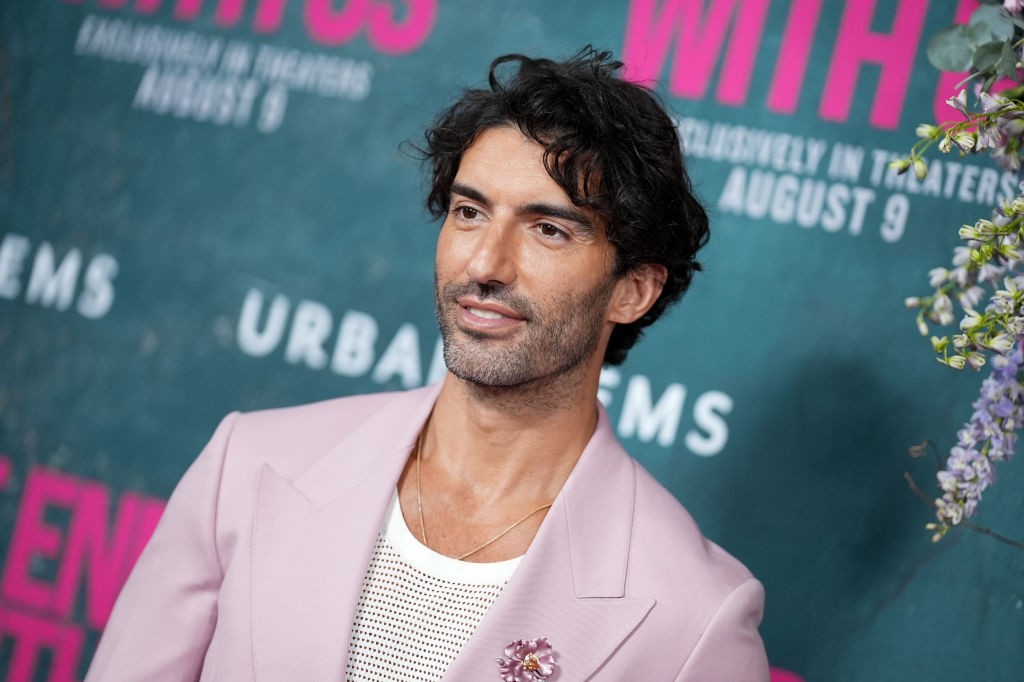
The room is quiet now, but the echo of a thousand internet theories still bounces off the walls.
When a movie sets out to capture the messy, fragile reality of human trauma, everyone involved signs an unspoken contract. They agree to bleed a little for the art. But no one tells you what happens when the bleeding doesn't stop once the cameras pack up. No one warns you about the quiet war that can spark when two distinct creative forces look at the exact same story and see two entirely different worlds.
For months, the headlines ran on pure speculation. Tabloids traced the missing tag on Instagram, the separate red carpet walks, the frost that seemed to settle over what should have been a triumphant victory lap. Justin Baldoni on one side; Blake Lively on the other. Between them lay It Ends With Us, a film that became a box office juggernaut while its creators became a cautionary tale of Hollywood fracture.
Then came the legal murmurs. The whispers of high-stakes attorneys stepping into the frame, turning a creative disagreement into a war of fine print.
When Baldoni finally broke his silence, he didn’t do it with a weaponized press release or a tearful sit-down designed to trend on TikTok. He chose a different path. He spoke of the silence itself.
"We didn’t want to add to the noise," he remarked, a simple statement that carries the weight of a man trying to pull a fragile narrative out of a raging fire.
But beneath that restraint lies a deeper story about control, ownership, and the exhausting cost of bringing pain to the screen.
The Chemistry of Friction
To understand how a partnership fractures, you have to look at how it begins. Making a movie is an exercise in forced intimacy. You lock hundreds of people in a room for twelve hours a day, demand that they bare their souls, and then ask them to agree on where the shadows should fall.
Imagine an empty stage. On one side stands a director whose entire career has been defined by a specific kind of earnest vulnerability. He views the project through a lens of raw advocacy, treating the text like a mission statement. On the other side stands a global superstar, a woman who understands the machinery of modern celebrity better than almost anyone, who sees the story through the prism of grand, sweeping emotional arcs and cinematic polish.
At first, this friction looks like magic. It feels like the spark that ignites a masterpiece.
The trouble with friction is that if it burns too long, it consumes the foundation.
During the production of the adaptation of Colleen Hoover’s massive bestseller, the creative differences weren't just minor disagreements over wardrobe or lighting. They were foundational. Reports surfaced of competing cuts of the film—different versions of the same agonizing story fighting for survival in the editing room. One version leaned heavily into the stark, uncomfortable reality of domestic abuse; the other sought a balance that felt more aligned with a traditional Hollywood emotional drama.
This is where the invisible stakes live. It is easy for the public to look at a celebrity feud and see nothing but ego. We love to reduce complex human dynamics to simple heroes and villains because it makes for better lunch-talk. But the reality is far more tragic. It is usually a story of two people who care so deeply about the same thing that they end up tearing it apart trying to protect it.
When the Lawyers Enter the Frame
Silence in Hollywood is rarely empty. Usually, it is expensive.
When the press began reporting that legal teams were being mobilized, the narrative shifted from a standard creative disagreement into something far more clinical, and far more dangerous. The moment a artist has to filter their thoughts through a legal representative, the human element is effectively scrubbed clean.
Consider the mechanics of a modern film dispute. It is no longer just about who got their way in the editing bay. It becomes a chess match of contractual obligations, producer credits, and future profit margins. Every statement is weighed. Every public appearance is calculated.
When a filmmaker spends years nurturing a project, securing the rights, and pouring their identity into the frame, seeing that project get swallowed by legal posturing is a unique kind of grief. It changes the work from an act of creation into an asset to be defended.
Baldoni’s decision to pull back, to refuse the bait of public mudslinging, wasn't just a PR strategy. It felt like an act of creative self-preservation. When the noise reaches a certain decibel level, anything you say only feeds the machine. If you defend yourself, you look defensive. If you attack, you look petty.
So, you choose the one thing the public and the lawyers cannot easily exploit: absolute stillness.
The Audience in the Arena
We live in an era where the behind-the-scenes drama is often more lucrative than the movie itself. The public doesn't just want to watch the story on the screen; they want to watch the gladiators who made it bleed in the arena of social media.
Every interview during the press tour was scrutinized. TikTok accounts dedicated entire channels to analyzing the body language of the cast. Did she look away when his name was mentioned? Why did he credit her in that specific tone? The movie itself—a story meant to shed light on the cyclical nature of abuse and the agonizing choices faced by survivors—became a secondary concern to the spectacle of the rift.
This is the real tragedy of the modern creative landscape. The theme of the work gets drowned out by the gossip surrounding its birth.
For the millions of fans who read the book and found solace in its pages, the noise was a distraction from their own emotional connection to the material. They came to the theater looking for healing, or at least validation, and instead found themselves stepping into a cultural battlefield where they were forced to choose a side.
The Remnants of the Battle
The box office numbers will tell one story. They will speak of records broken, millions earned, and a massive cultural footprint. The spreadsheets will look beautiful.
But the spreadsheets don't capture the mood of a quiet room after the cameras stop rolling. They don't reflect the exhaustion of a director who had to fight for every frame, or an actress who felt her vision was compromised.
Justin Baldoni's eventual commentary on the situation didn't offer the explosive closure the internet wanted. There were no shocking revelations, no dramatic accusations. Instead, there was just an acknowledgement of the weight. A quiet admission that some battles are better left fought behind closed doors, away from the glare of a culture that consumes conflict like oxygen.
The film stands on its own now. It belongs to the audience, disconnected from the fractures that created it.
But for those who watch closely, the tension remains visible on the screen. It lives in the spaces between the lines, in the sharp cuts, in the moments where the tone shifts unexpectedly from dark reality to cinematic romance. It is a monument to a creative war where both sides won the battle, but the peace was lost entirely.
The final image that lingers isn't one from the movie itself. It is the image of a creator stepping away from the microphone, refusing to give the crowd the blood they came to see, leaving the work to speak for itself in the quiet that followed the storm.
.png?width=1200&auto=webp&trim=0%2C0%2C0%2C0)

