The lights are on at the Estadio Azteca, but the neighborhoods just outside its perimeter are completely dark. Mexico is hours away from hosting the opening match of the FIFA World Cup, a moment meant to signal global prestige and economic triumph. Yet, beneath the corporate fan zones and freshly painted stadiums lies a country fracturing under the weight of the tournament itself. Discontent is boiling over. This tournament did not cause Mexico’s deep-seated social crises, but it has acted as a massive accelerant, exposing the stark divide between international marketing and local reality.
While FIFA executives promise historic revenues, ordinary citizens are footing a bill that goes far beyond money. The event has triggered forced displacement, strained public resources, and intensified local anger over security priorities.
The Mirage of Economic Modernization
Local officials have spent years pitching the tournament as an economic windfall. They promised thousands of jobs, upgraded infrastructure, and a permanent boost to tourism. The math, however, tells a completely different story.
Most tourism revenue from mega-events never reaches the host city's economy. Instead, it leaks straight back to international hotel chains, global sponsors, and FIFA itself through aggressive tax exemption agreements.
Tax Breaks and Capital Flight
To secure hosting rights, governments must sign binding agreements that shield FIFA and its corporate partners from local taxes. This means the billions of dollars spent on merchandise, broadcast rights, and high-end ticketing leave Mexico tax-free. Meanwhile, the cost of upgrading stadiums, securing transport hubs, and building fan corridors falls squarely on the Mexican taxpayer.
Public funds that were desperately needed for water infrastructure in places like Iztapalapa were diverted to pave roads around training facilities. For residents who regularly rely on water trucks, seeing millions of pesos spent on cosmetic upgrades for a month-long tournament is a bitter pill to swallow. The jobs created are almost entirely temporary, low-wage security and concession positions that disappear the moment the final whistle blows.
Clean Up Campaigns and Forced Displacement
The physical preparation for the tournament has come at a high human cost. In the rush to present a sanitized, postcard-perfect version of Mexico City, Guadalajara, and Monterrey, municipal governments initiated sweeping urban renewal projects. In practice, this meant clearing out informal settlements and informal vendors who have operated in these spaces for generations.
The Real Estate Squeeze
Around the renovated stadiums, property speculation has gone into overdrive. Landlords have aggressively evicted long-term tenants to convert apartments into short-term rentals for international tourists.
Imagine a family that has lived five blocks from the stadium for thirty years suddenly being priced out in a matter of months so their apartment can be rented for five hundred dollars a night to foreign fans. This is not a hypothetical risk. It is a documented pattern seen in Rio de Janeiro in 2014 and South Africa in 2010. Mexico has repeated the exact same playbook, pushing its poorest residents further to the margins of the metropolis.
Street vendors, who form the backbone of the informal economy, have been banned from major tourist corridors. The state has effectively criminalized poverty to appease international broadcasters who want clean camera angles.
Security for Foreigners Danger for Citizens
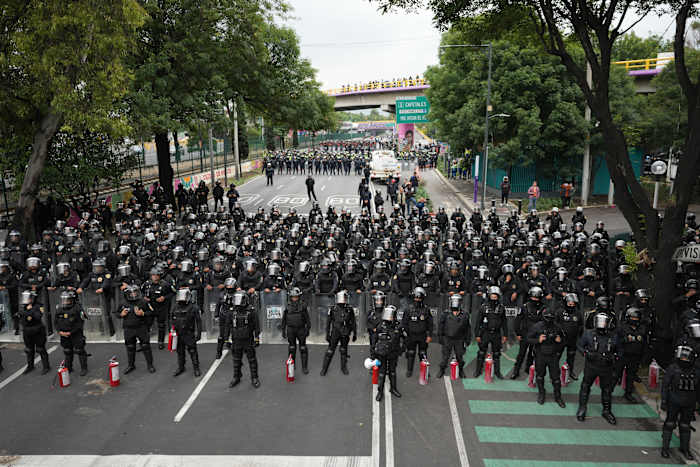
The most explosive flashpoint on the eve of this tournament is security. Mexico has been locked in a complex internal conflict for nearly two decades, with high rates of violent crime and disappearances. To guarantee the safety of international visitors, the government deployed tens of thousands of National Guard troops to tournament zones.
A Two Tiered Justice System
The sudden appearance of heavily armed security cordons in wealthy neighborhoods and tourist hubs has created a deeply cynical dynamic. It proves that the state possesses the resources and personnel to secure territory when it wants to. It simply chooses to prioritize international tourists over its own population.
- Zone A (The Bubble): Heavy military presence, facial recognition cameras, rapid-response teams, and absolute safety for ticket holders.
- Zone B (The Rest of the Country): Depleted local police forces, unmonitored neighborhoods, and ongoing violence that continues entirely unabated just miles from the stadiums.
Activists representing the families of the disappeared have staged protests outside training grounds. They are not trying to stop the matches. They are trying to use the international media spotlight to force a conversation about the nation's ongoing humanitarian crisis. Their message is clear: a country should not be celebrating a game while thousands of its citizens remain missing.
The Corporate Hijacking of Football Culture
Football in Mexico is not just a sport. It is a vital social fabric that binds communities together. Yet, the average Mexican fan has been completely priced out of this tournament.
Ticket prices, pegged to international currencies, represent several months of wages for an ordinary worker. The traditional, raucous stadium culture has been replaced by corporate hospitality suites and sanitized fan zones managed by global beverage conglomerates.
This alienation has turned what should be a moment of national pride into a source of deep resentment. The stadiums stand as heavily guarded fortresses, accessible only to the global elite and wealthy locals, while the community that built the footballing culture of the country looks on from behind a chain-link fence.
The Structural Trap of the Mega Event
The fundamental flaw lies in the structural model of modern sporting events. FIFA requires hosts to take on 100% of the financial risk while retaining 100% of the commercial control. Mexico entered this agreement hoping to project an image of a modern, stable economic powerhouse. Instead, the pressure of hosting has cracked open the existing fault lines in Mexican society.
The protests occurring on the eve of the tournament are not isolated incidents of hooliganism. They are the predictable reaction of a population that is tired of watching its resources diverted to a circus while the bread runs out. The matches will play out on television screens across the globe, looking flawless under the stadium floodlights. But when the fans pack up and the broadcast trucks leave, the citizens of Mexico will be left to pick up the pieces of an expensive party they were never actually invited to attend.