A flashing red and blue light in your rearview mirror commands instant compliance. You pull over. You expect a routine traffic stop. Instead, you find yourself staring down the barrel of a rifle while men shouting immigration commands drag you from your car.
This nightmare scenario became reality for a driver near Woodburn, Oregon, on July 17. State police and the Federal Bureau of Investigation launched a joint investigation after three individuals staged a fake traffic stop, abducted a motorist, and assaulted them under the guise of being Immigration and Customs Enforcement (ICE) agents. For an alternative look, consider: this related article.
The incident highlights a terrifying escalation in law enforcement impersonation. Criminals exploit public anxiety, confusing tactical gear, and legitimate enforcement uncertainty to victimize ordinary people on public highways.
Anatomy of a Fake Immigration Stop
The details released by Oregon State Police reveal a chillingly professional setup designed to bypass a driver's immediate skepticism. The suspects drove a newer model blue or gray small SUV equipped with unauthorized red and blue emergency-style lights. Similar analysis on this matter has been provided by TIME.
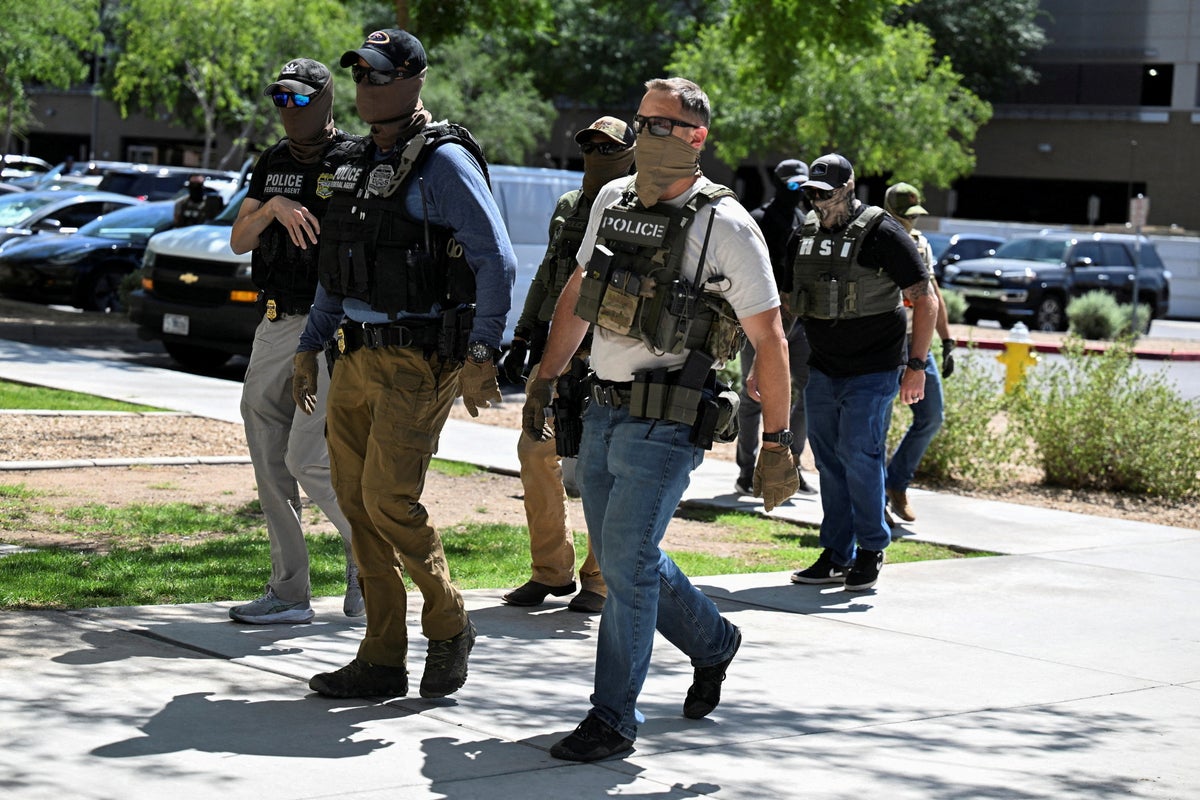
When the victim pulled over into a gravel turnout on Highway 211 near South Barlow Road, two men jumped out. Their attire mirrored modern tactical units:
- Green long-sleeved shirts
- Heavy boots and baseball caps
- Face coverings obscuring their features
- Tactical vests emblazoned with "POLICE" in white lettering
- Badges similarly marked "Police"
One suspect brandished a rifle. They declared the driver was being detained under ICE authority, hauled them from the vehicle, and searched them. The victim was shoved into the back of the SUV, where a third suspect acted as a guard and proceeded to assault them. After roughly twenty minutes of detention and abuse, the perpetrators released the victim, who subsequently sought hospital treatment for their injuries.
Federal agencies quickly confirmed that the individuals involved had no connection to official government operations. Yet the psychological and physical damage was already done. Adding insult to injury, while the victim recovered in the hospital, they received predatory text messages from a suspicious phone number (971-502-5548) offering fake legal representation.
The Dangerous Blur Between Real and Fake Operations
Why are criminals targeting drivers by impersonating federal immigration officers? The answer lies in the shifting landscape of modern law enforcement tactics.
Over recent years, heightened enforcement mandates have normalized certain tactical elements that previously raised immediate red flags. The routine use of face coverings, unmarked or subtle vehicles, and green or tactical garb by actual field agents creates a dangerous information gap. When real officers operate with obscured identities or non-standard uniforms, bad actors find it remarkably easy to blend in.
Oregon lawmakers attempted to curb this confusion earlier this year by passing legislation requiring state and local law enforcement to clearly identify themselves and restricting the routine use of face coverings. However, federal agencies operate under separate guidelines, and the public remains caught in the middle. Criminals weaponize this ambiguity, knowing that a panicked driver is less likely to question credentials until it is too late.
Community advocacy groups like the Portland Immigrant Rights Coalition have repeatedly warned that ambiguous tactical approaches erode public trust. When people cannot distinguish between legitimate state authorities, federal agents, and violent impostors, community safety collapses. Trust evaporates entirely when uniform standards become murky.
How to Verify a Traffic Stop and Protect Yourself
You cannot assume every flashing light belongs to a friendly public servant. If you feel unsafe or suspicious about a vehicle pulling you over, you have options. Legitimate law enforcement officers understand safety precautions.
Move to a Well-Lit Area
If you doubt the authenticity of an unmarked vehicle or plainclothes officers attempting a traffic stop, turn on your hazard lights. Slow down. Drive deliberately toward a well-lit, populated public space like a gas station, grocery store parking lot, or active police station.
Call 911 Immediately
Dispatchers can verify in real-time whether an active traffic stop is taking place in your exact location. Tell the dispatcher: "An unmarked vehicle with red and blue lights is trying to pull me over on Highway [X]. I am driving to a safe location to verify if this is real." If the car behind you is a criminal impostor, the dispatcher will instruct them or send actual patrol units to intercept.
Demand Proper Identification
Real federal and state officers carry official agency credentials and shields. They must present them upon request during investigative encounters. If individuals refuse to show proper identification, keep your doors locked and your windows rolled up.
Scrutinize the Vehicle
Impostors often use consumer-grade SUVs with magnetic or portable emergency lights that lack official municipal plates or government registration markings. Watch for missing state plates or obscured identifiers.
The investigation into the Clackamas County incident remains active, with the FBI and Oregon State Police urging anyone with information or additional encounters involving the number 971-502-5548 to call dispatchers immediately. Protect yourself by staying alert, trusting your instincts, and refusing to surrender your safety to anyone who cannot prove their authority.
Armed men impersonating ICE agents pull person over, assault them in Clackamas County
This video report from local news covers the ongoing investigation by the Oregon State Police and FBI into the armed assault and fake ICE traffic stop.
http://googleusercontent.com/youtube_content/1