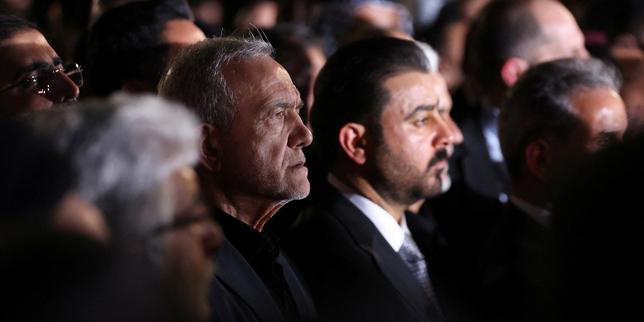
The fragile diplomatic architecture holding the Middle East back from total regional war has collapsed. While official channels scrambled for months to paint recent truces as historic breakthroughs, the reality on the ground has caught up with the rhetoric. Tehran is openly accusing Washington of bad-faith maneuvers, while Donald Trump has declared the current ceasefire agreements effectively dead. This breakdown is not a sudden accident of history. It is the predictable result of a diplomatic strategy built on short-term political expedience rather than addressing the structural security anxieties of the primary actors involved.
For months, back-channel negotiations attempted to stitch together a patchwork of pauses in hostilities. The objective was simple: keep a lid on regional escalation until major domestic political cycles concluded. However, this strategy mistook a temporary pause for a permanent solution. By focusing strictly on surface-level containment without dismantling the underlying triggers—namely proxy funding, missile proliferation, and targeted economic sanctions—mediators guaranteed this exact outcome.
The Mechanized Deception of Paper Truces
Diplomacy often operates on the assumption that a signed document creates its own momentum. In the modern Middle East, it frequently does the opposite, providing a tactical window for factions to rearm, reposition, and recalibrate their next offensives.
Iranian President Masoud Pezeshkians recent public lashing out at American mediation efforts exposes the deep-seated friction inherent in these talks. Tehran claims the United States utilized the cover of ceasefire negotiations to manipulate regional alliances and squeeze Iran economically through secondary sanctions. From the Iranian perspective, Washington is not an honest broker but an active participant playing a double game. They see a pattern where diplomatic overtures are used to freeze Iranian-aligned movements while Western-backed intelligence operations continue unabated.
The mechanics of this distrust are rooted in historical precedent. When major powers offer sanctions relief that never materializes in a meaningful, structural way, target regimes internalize that compliance yields zero reward.
Conversely, the political shift in Washington has fundamentally altered the calculus. Donald Trumps declaration that the ceasefire is over serves as a green light to regional allies who favor a maximalist military approach over managed deterrence. The statements from the prominent American political figure signal a return to the maximum pressure campaign, a policy framework that views any negotiated settlement with Tehran as inherently flawed. This shift completely dismantles whatever minor leverage international mediators held over regional state actors.
The Proxy Dilemma and Tactical Rearmament
Ceasefires fail primarily because they rarely account for non-state actors with independent agendas. While state capitals sign agreements, local commanders on the ground face entirely different incentives.
- Supply Lines Remain Active: History shows that partial blockades during a truce only incentivize more sophisticated smuggling networks. Weapons continue to flow through underground channels, making the post-ceasefire factions deadlier than before.
- Intelligence Gathering: A pause in active bombing runs allows paramilitary groups to map out enemy positions with greater precision, using commercial drones and localized surveillance.
- Asymmetric Incentives: For many regional militias, their political legitimacy is tied directly to active resistance. A prolonged peace threatens their domestic relevance and funding structures.
The Economic Realities Driving Escalation
Behind the ideological rhetoric lies a brutal economic reality that dictates every military maneuver in the region. Iran is fighting a war of economic survival. Years of strict international sanctions have crippled its domestic currency, caused rampant inflation, and limited its ability to modernize its core industrial infrastructure.
To survive, Tehran built an informal gray-market economy dependent on illicit oil sales, murky financial networks, and gold smuggling. This economic reality means Iran cannot afford to back down from its regional commitments without receiving massive, verifiable financial concessions. Because the West view these concessions as politically impossible to grant, the diplomatic track was dead long before the latest public statements.
+------------------------------------------------------------+
|             THE ESCALATION FEEDBACK LOOP                   |
+------------------------------------------------------------+
|                                                            |
|  [Economic Sanctions] ---> [Asymmetric Proxy Warfare]       |
|          ^                                   |             |
|          |                                   v             |
|  [Diplomatic Collapse] <-- [Collateral Regional Chaos]      |
|                                                            |
+------------------------------------------------------------+
Western nations operate under their own economic constraints. Energy security remains a paramount concern for European states, which are highly susceptible to sudden spikes in crude oil prices caused by maritime disruptions in the Strait of Hormuz or the Bab al-Mandab. Every time a drone targets a commercial tanker, global shipping insurance rates climb, creating an immediate inflationary pressure felt in supermarkets thousands of miles away.
This interconnected economic vulnerability explains why major powers continually attempt to engineer superficial ceasefires. They desperately need stable energy markets, even if that stability is built on a foundation of sand.
The Myth of the Neutral Arbiter
International bodies like the United Nations have proven entirely incapable of enforcing the terms of these modern truces. Without a robust, neutral enforcement mechanism willing to use physical force to penalize violators, any ceasefire agreement is merely a statement of intent.
When a violation occurs—be it a cross-border rocket strike or an unflagging drone assassination—each side points the finger at the other. The international community responds with carefully worded statements urging restraint. This toothless cycle has exhausted its utility. Regional actors now calculate that the political cost of violating a truce is negligible compared to the tactical advantages gained by striking first.
The Strategic Realities of a Multi-Front Conflict
The current crisis cannot be viewed through the lens of a single bilateral dispute. The theater of conflict has expanded across multiple geographic zones, creating a complex web of security dependencies. A spark in southern Lebanon instantly ignites tensions in the Red Sea, which in turn triggers retaliatory strikes across Iraq and Syria.
This multi-front reality means that a localized ceasefire in one sector is practically useless if hostilities remain active elsewhere. The command-and-control structures of these various factions are loosely coordinated but ideologically aligned, meaning they operate under a doctrine of unified fronts. If one member of the axis feels existential pressure, the others are bound by strategic necessity to open diversionary theaters.
                   [Tehran Command Hub]
                            |
       +--------------------+--------------------+
       |                    |                    |
[Levant Proxies]     [Red Sea Factions]   [Iraqi Paramilitaries]
       |                    |                    |
(Border Attrition)   (Maritime Blockade)  (Base Target Operations)
This strategic interconnectivity completely paralyzes traditional diplomacy. Diplomatic envoys are trained to handle isolated conflicts with clear territorial boundaries. They are entirely unequipped to manage a fluid, transnational network of state and non-state actors operating without centralized command structures.
The Failure of Conventional Deterrence
For decades, the West relied on the doctrine of conventional deterrence—the idea that overwhelming military superiority would dissuade adversaries from launching attacks. This doctrine has broken down completely in the face of asymmetric warfare.
Cheap, mass-produced drones and unguided rockets have flattened the cost curve of modern conflict. A militia can manufacture a fleet of attack drones for the cost of a single Western interceptor missile. This economic asymmetry means that conventional military powers are burning through expensive, finite munitions stockpiles to defend against low-cost, continuous harassment. It is an unsustainable equation that rewards the party willing to endure the most prolonged chaos.
The Long-Term Fallout of Diplomatic Bankruptcy
The public collapse of this ceasefire agreement marks the end of an era of managed stability. For years, the international community comforted itself with the belief that a combination of economic pressure and backdoor diplomacy could prevent a wider conflagration. That belief is no longer tenable.
As Iran doubles down on its defensive alliances and Western political leaders openly abandon the pretense of negotiated settlements, the region moves into unchartered territory. The absence of a viable diplomatic track removes the guardrails that previously prevented miscalculations from escalating into full-scale state-on-state warfare.
The immediate consequence will be an intensification of shadow warfare. Cyberattacks targeting critical infrastructure, maritime sabotage, and targeted assassinations will likely accelerate as both sides seek to alter the balance of power without triggering an official declaration of war. However, the line between shadow warfare and open conflict is razor-thin, and it is growing thinner by the day.
Regional states that previously attempted to maintain a neutral posture are now being forced to choose sides. This polarization is redrawing the geopolitical map of the Middle East, hardening alliances, and making future consensus entirely impossible. The illusion of a diplomatic shortcut to peace has evaporated, leaving behind a stark reality where security is measured solely by military readiness and the willingness to endure protracted conflict.