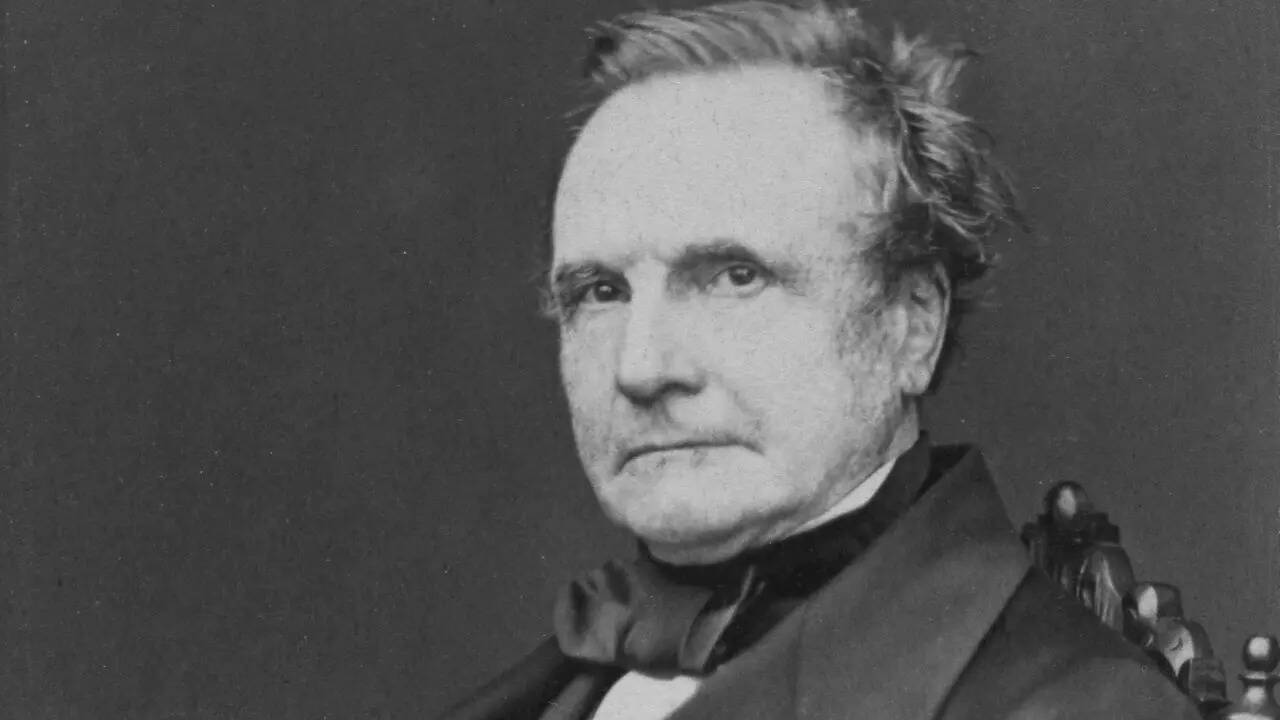
Charles Babbage was wrong. Or, more accurately, the way we’ve spent the last two centuries worshipping his "power of invention" has created a toxic obsession with the "Idea" while the world burns for lack of execution. Babbage famously lamented that for every one person blessed with invention, many will be found who merely apply principles. He framed it as a hierarchy, placing the dreamer on a pedestal and the "applicator" in the dirt.
This is the original sin of the technology sector. It’s the foundational lie that has led to a decade of vaporware, over-funded R&D labs that produce nothing but white papers, and a generation of founders who think a patent is a business.
The truth is much uglier for the "inventor" class: Principles are worthless until they are weaponized by the people Babbage looked down upon.
The Invention Trap
We treat invention like a divine spark. We celebrate the "Aha!" moment. But if you look at the history of failure, it’s littered with inventors who were "first" but couldn't scale. Babbage himself spent a lifetime—and massive amounts of government gold—trying to build the Difference Engine. He had the invention. He had the principles. What he didn't have was the ability to operate within the constraints of 19th-century metallurgy and precision engineering.
He was a victim of his own philosophy. He believed the hard part was over once the logic was on paper. He was wrong. The hard part is the friction of reality.
Innovation isn't a line; it's an ecosystem. When we prioritize the "power of invention" over the "capacity of applying principles," we end up with technically brilliant machines that nobody can use. I have sat in boardrooms where millions were incinerated because a technical founder refused to pivot from their "pure" invention to a version that actually solved a boring, messy problem for a paying customer.
The Superiority of the Applicator
Let's dismantle the hierarchy. The "applicator"—the person Babbage dismisses—is actually the individual doing the heavy lifting of progress. Applying principles isn't a derivative task; it is the ultimate test of an idea's validity.
Consider the modern software stack. We don't need more "inventors" trying to rewrite the fundamental principles of relational databases or transport protocols. We need people who can take those established, boring principles and apply them to solve the logistical nightmare of global supply chains or the inefficiency of rural healthcare.
The "power of invention" is often just a mask for intellectual vanity. It’s easy to dream up a world where $a^n + b^n = c^n$ doesn't work for $n > 2$. It is excruciatingly difficult to build a bridge that doesn't collapse under the weight of ten thousand commuters.
The Math of Reality
In a purely theoretical environment, the value of an invention ($V_i$) might seem absolute. But in the marketplace, the value is better expressed as:
$$V_{market} = I \times E^2$$
Where $I$ is the invention and $E$ is the execution (the application of principles). You can have an $I$ of 1,000, but if your $E$ is 0, your market value is zero. Conversely, a modest $I$ of 2, paired with an $E$ of 10, creates exponential impact. Babbage focused on the variable that doesn't scale.
Why "First Mover" is Usually "First Loser"
The obsession with invention leads to the First Mover Advantage myth. In reality, being the inventor often means you’re just the person who discovers where the landmines are buried.
- The Xerox Star: Invented the GUI. Applied nothing.
- The MPMan: Invented the portable MP3 player. Applied nothing.
- General Magic: Invented the smartphone in the early 90s. Applied nothing.
The winners were the "applicators." Apple and Microsoft didn't "invent" the windowing interface or the digital music player. They applied the principles of user psychology, hardware manufacturing, and ecosystem lock-in. They did the work Babbage thought was beneath the "blessed."
If you are a founder or an executive, stop looking for the "disruptive invention." It’s a ghost. Look for the principle that is currently being applied poorly. That is where the money is. That is where the change happens.
The Cost of Intellectual Elitism
When we echo Babbage’s sentiment, we discourage the very talent we need. We tell engineers that "maintenance" is a dirty word. We tell product managers that "optimization" is for people who can't innovate.
This results in "The Prototype Graveyard." I've consulted for Fortune 500 companies that have "Innovation Labs" filled with VR headsets and AI bots that have never seen a day of production. Why? Because the "inventors" in those labs feel they have completed their duty by proving a concept. They leave the "application" to the "lesser" departments, who are then handed a mess of unscalable code and impractical designs.
The Brutal Truth of the 21st Century
We are no longer in an era where we lack principles. We have more principles, data, and open-source inventions than we know what to do with. We are drowning in the "power of invention."
What we lack is the grit to apply those principles to the physical world. We can "invent" a way to track carbon credits on a blockchain, but we can't "apply" the principles of basic infrastructure to fix a power grid. We can "invent" a new LLM architecture, but we struggle to "apply" it to a workflow that doesn't hallucinate.
The "applicator" is the one who understands constraints. The inventor lives in a world without friction. But we live in a world of friction.
Stop Dreaming, Start Applying
If you want to actually change an industry, you have to kill the Babbage in your head. You have to stop waiting for a "blessing" of invention and start looking at the tools already on the table.
- Audit your "innovations": If you can't explain how a principle is applied to a specific, painful constraint within 30 seconds, it’s not an innovation. It’s a hobby.
- Hire for "Application Capacity": Stop looking for the "visionary." Hire the person who knows how to make a system 10% more efficient every month. They will outpace the visionary in three years, every single time.
- Respect the Boring: The most successful technologies of the next decade won't be new "inventions." They will be the radical application of 20-year-old principles to industries that have been too "traditional" to change.
Babbage’s Difference Engine sat unfinished for over a century. It was finally built in 1991, not by an inventor, but by a team of people who applied the principles of modern engineering to his 19th-century drawings. They proved it worked, but more importantly, they proved that without the "applicator," the inventor is just a man shouting at clouds.
Quit trying to be the "one person blessed with invention." There are enough of those people tweeting their "revolutionary" ideas into the void. Be the person who has the capacity to apply principles. Be the person who actually builds the machine.
Efficiency is the only real disruption.