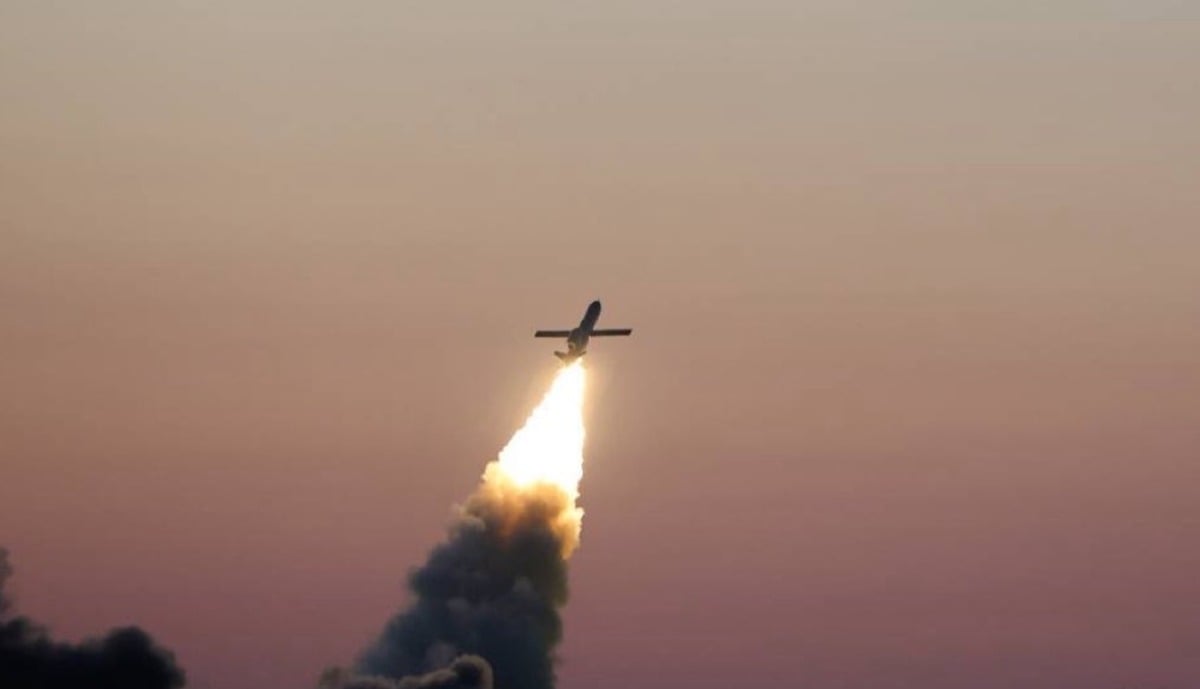
A private defense firm in Ukraine recently confirmed that its flagship long-range ballistic missile, a weapon built to strike deep behind enemy lines, relies heavily on open-source drone code available to anyone with an internet connection. The announcement sent tremors through traditional Western defense circles, where a single guidance system can take a decade and hundreds of millions of dollars to develop. To legacy aerospace manufacturers, packing free, unvetted software into a massive offensive weapon looks like madness. To the engineers building weapons in makeshift workshops across Ukraine, it is the only logical choice.
This development answers a critical question that has puzzled military analysts for months, specifically how an embattled nation facing severe ammunition shortages could suddenly field an entirely new class of long-range strike weapons. By stripping away the bureaucratic regulations and intellectual property hurdles that slow down Western arms production, private Ukrainian firms are assembling functional ballistic missiles out of commercial components and public code repositories. The strategy brings unprecedented speed to the battlefield, but it also introduces volatile technical risks that could redefine the nature of global arms proliferation.
The weapon at the center of this debate is the FP-7, a ballistic missile designed by the private Ukrainian company Fire Point. Built to operate as a low-cost counterweight to heavy state-funded missile programs, the FP-7 represents a massive leap in scale from the small exploding quadcopters that have come to dominate the frontline. Yet, despite its size and destructive potential, its digital brains are derived from the exact same free software frameworks used by civilian hobbyists to fly toy drones in suburban parks.
The Rejection of the Western Defense Monopoly
For decades, the global arms trade has operated under a strict, hyper-regulated framework. When a government commissions a new missile, a prime contractor spends years writing proprietary, heavily encrypted code from scratch, supposedly ensuring absolute security and predictability.
Ukraine does not have years.
Private developers argue that the legacy defense procurement system is fundamentally broken, optimized for corporate profit rather than rapid deployment. By utilizing open-source drone code, engineers can bypass the years of security clearances, export restrictions, and corporate red tape that typically choke defense innovation. If a piece of code needs a patch to counter a new Russian electronic warfare tactic, a developer can modify the software and flash it onto a missile guidance computer in an afternoon. In the traditional defense sector, that exact same patch would require months of committee reviews and millions of dollars in consulting fees.
The reliance on open-source software is also a deliberate push for absolute operational autonomy. Western military hardware sent to Ukraine frequently comes with strings attached, including geographical restrictions encoded directly into the guidance systems or hidden "kill switches" that allow foreign governments to deactivate the equipment remotely. By building their own navigation stacks on top of transparent, public code, Ukrainian engineers ensure that no outside power can veto a strike or disable a weapon when the geopolitical winds shift. The code belongs to everyone, which means it belongs to no one, and therefore cannot be controlled by a foreign bureaucrat.
Under the Hood of a Free Software Missile
To understand how a ballistic missile can run on civilian drone software, one must look at the underlying architecture of modern autonomous flight. Most open-source autopilot systems are designed to be highly modular. They are built to take input from various sensors, calculate orientation, and send signals to control surfaces to keep an aircraft on a predetermined path.
It does not matter to the software whether it is steering a two-pound foam airplane or a multi-ton missile traveling at supersonic speeds.
The core mathematical problems of flight remain largely identical. The software simply needs to process data fast enough to adjust the physical controls of the vehicle. Ukrainian engineers take these public repositories, strip out the safety limitations meant to keep hobby drones away from airports, and rewrite the control algorithms to handle the extreme acceleration and heat of a ballistic trajectory.
The hardware hosting this software is equally unconventional. Instead of hardened, military-grade microchips that cost tens of thousands of dollars and require special export licenses, these missiles utilize commercial off-the-shelf microprocessors. These are the same chips found in high-end consumer electronics and automotive engine control units. They are cheap, widely available, and remarkably powerful.
This approach completely upends the economics of modern warfare. A standard Western air defense or strike missile can easily cost upwards of three million dollars. Fire Point claims it can produce the FP-7 for a fraction of that price, targeting a unit cost near half a million dollars while maintaining a production capacity that rivals major Western factories. The cost reduction comes not from inferior explosives, but from the complete elimination of corporate overhead, intellectual property fees, and specialized hardware supply chains.
The Volatile Reality of Unvetted Code
This radical efficiency comes with terrifying vulnerabilities. Open-source software is maintained by a global community of contributors, meaning anyone can review the code, find flaws, and suggest fixes.
It also means adversaries can look for the exact same flaws to exploit them.
When a missile flies using a known, public software framework, an enemy electronic warfare unit does not need to guess how the weapon calculates its position or responds to signal interference. They can download the source code, run simulations, and design highly specific jamming protocols to trick the missile into veering off course. The transparency that makes open-source software so adaptable also makes it a playbook for the enemy.
There is also the question of systemic reliability. Civilian drone software is built with the assumption that if something goes catastrophically wrong, the drone will simply crash into a field or execute an automated emergency landing. When a ballistic missile carrying dozens of kilograms of high explosives experiences a software glitch over a populated area, the consequences are disastrous. Traditional military software undergoes years of rigorous stress testing, mathematical verification, and redundant programming to ensure a failure rate close to zero. Open-source software, rushed from a laptop to a launch pad in a matter of weeks, simply cannot offer those same guarantees.
The gray market supply chain required to sustain this model adds another layer of instability. Because these weapons rely on commercial microchips and sensors, their builders must constantly scour global markets to procure components. A batch of microchips bought from an electronics distributor in Asia might have subtle manufacturing differences compared to the previous batch. A slight variation in processing speed or sensor calibration can cause the open-source software to miscalculate its movements, leading to catastrophic accuracy errors during the terminal phase of flight.
A New Era of Decentralized Proliferation
The implications of Ukraine's software-driven missile program extend far beyond the current conflict. For decades, the barrier to entering the ballistic missile club was incredibly high, requiring massive state industries, specialized metallurgical capabilities, and secretive software labs.
That barrier has been completely obliterated.
If a private company in a war zone can build a long-range ballistic missile using free software and commercial electronics, any state actor or well-funded militant group can replicate the process. The blueprints for this style of warfare are being written in real-time, and they cannot be unwritten. Future conflicts will not be defined solely by who has the largest industrial manufacturing base, but by who can adapt open-source code the fastest to meet the chaotic demands of the battlefield.
Western defense contractors are watching this experiment with a mix of horror and quiet fascination. While they publicly defend their expensive, slow development cycles as necessary for safety and security, they are acutely aware that the fiscal reality of warfare is shifting against them. You cannot sustain a military strategy where a three-million-dollar missile is required to shoot down a fifty-thousand-dollar drone, nor can you rely on weapon systems that take a decade to iterate when the adversary changes their tactics every three weeks.
The choice to run a nation's most potent strike weapons on free drone software is not born out of academic curiosity or a passion for open-source philosophy. It is a brutal, pragmatic response to a desperate shortage of resources. Ukrainian engineers have looked at the rigid structures of the global arms industry and decided that speed, adaptability, and low costs are worth the terrifying risks of unvetted code. The FP-7 is flying proof that in modern warfare, a clever line of shared code can be just as devastating as a factory full of heavy machinery.