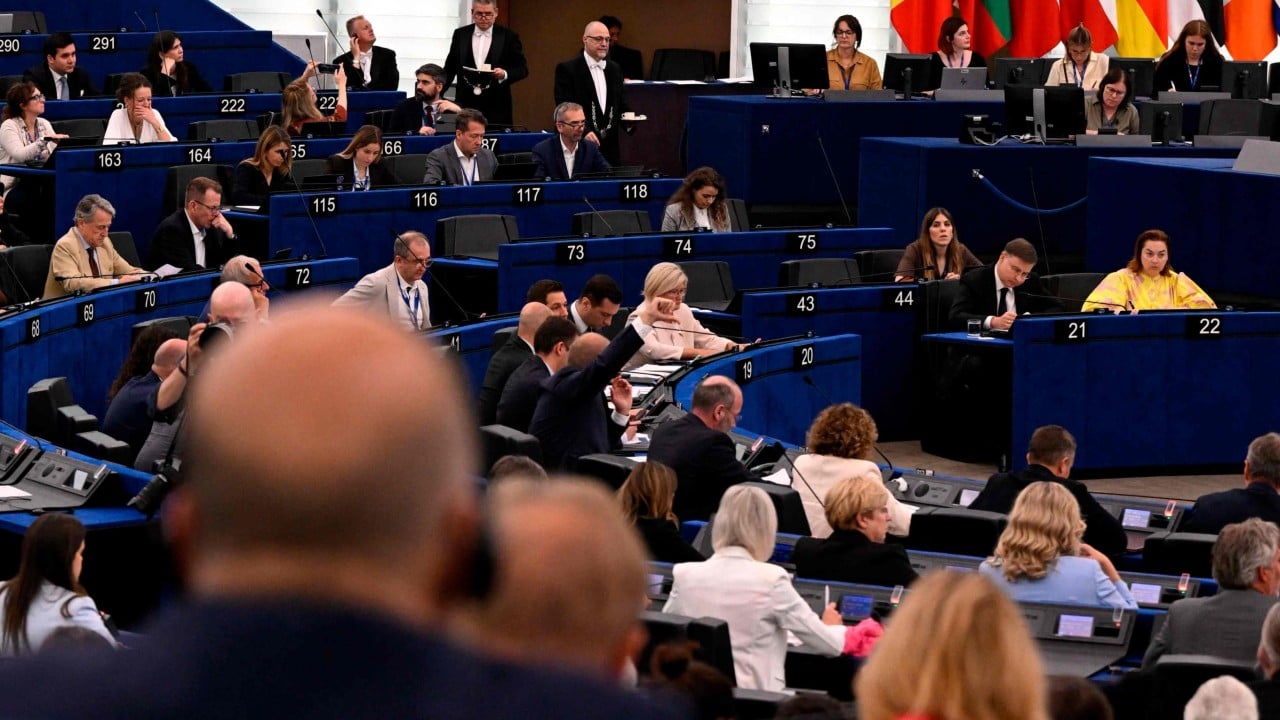
The coffee in the Justus Lipsius building always tastes like a compromise. It is lukewarm, faintly bitter, and served in paper cups that soften if you hold them too long. On a rain-slicked Tuesday morning in Brussels, a high-ranking trade negotiator—we will call him Marc, though his actual title is far more bureaucratic and protective—stared into one of those cups. His phone was vibrating against the laminate wood table. It didn’t stop.
Across the Atlantic, a pen was scratching against a piece of paper. With a few strokes, Washington could erase the profit margins of a family-owned machine tool factory in Stuttgart. It could silence the looms in a textile town outside Milan.
This is how modern economic warfare feels on the ground. It is not fought with artillery. It is fought with percentages, classification codes, and the terrifying weapon of sudden uncertainty.
When Donald Trump threatened a blanket twenty percent tariff on all European imports, the initial reaction in the grand corridors of the European Union was a familiar, rigid defiance. The official talking points were drafted. The legal teams sharpened their WTO arguments. But beneath the institutional bravado, panic was quiet and precise.
The European Union just blinked.
By choosing to offer immediate concessions on liquefied natural gas and American agricultural products, Brussels didn’t just alter its trade policy. It broke its own psychological mold. For decades, the EU functioned like a glacier: slow, massive, and utterly indifferent to the weather outside. It followed rules. It respected processes.
Then came the realization that a glacier cannot outmaneuver an avalanche.
Consider the math that Marc was staring at on his tablet. European car manufacturers operate on razor-thin margins when exporting to the United States. A sudden tax at the border does not just mean fewer luxury sedans sold in Miami. It cascades. It means the local supplier of specialized rubber seals in a small French village loses forty percent of its order volume by next quarter. It means a shift worker named Jean-Paul, who has spent twenty-two years maintaining assembly robots, gets asked to take early retirement.
Brussels blinked because Jean-Paul cannot afford a trade war.
Yet, the mood inside the European Commission is not one of relief. It feels like a temporary truce signed in the mud. By giving in early to avoid the immediate shock of steel and auto tariffs, the EU has established a dangerous precedent. Every seasoned diplomat in the city knows it.
The strategy used to be simple: hit back harder. When the US imposed steel tariffs during the first Trump administration, Europe retaliated with surgically targeted duties on iconic American goods. Bourbon from Kentucky. Motorcycles from Wisconsin. Orange juice from Florida. It was political poetry, aimed directly at the heartlands of powerful American lawmakers.
That playbook is dead.
The scale of the threat this time around made the old retaliatory measures look like bringing a pocketknife to a missile silo. If Europe retaliated proportionally to a twenty percent blanket tariff, the resulting inflationary spiral would have choked the remaining life out of a fragile post-pandemic recovery.
So, the negotiators chose the path of the pragmatist. They offered to buy more American stuff. More gas to heat German homes. More soybeans to feed European livestock. They chose to appease.
But appeasement creates its own specific kind of vertigo.
Step inside the offices of any major European logistics hub right now. The atmosphere is thick with anxiety. Companies are frantically front-loading shipments, trying to get goods across the ocean before the rules of the game change overnight. Shipping container rates are fluctuating wildly. Corporate lawyers are working through the night, hunting for loopholes in contracts that were signed under the assumption that the global trade order was permanent.
Nothing is permanent.
The real danger of this capitulation isn't the cost of the soybeans or the shipping routes of the LNG tankers. It is the invisible rot of predictability. Business requires a horizon. A factory owner needs to know that if they invest ten million euros in a new production line today, the rules governing their exports will look roughly the same in thirty-six months.
When the EU bows to pressure, that horizon shrinks to the length of a single press conference.
The long-term warning signs are already flashing red across the continent. Beijing is watching. Berlin is trembling. Paris is furious. The internal fractures within Europe, usually hidden behind polished press releases, are beginning to splinter out in the open. Germany, its economy built entirely on the engine of exporting heavy machinery and cars, begged for a deal at any cost. France, fiercely protective of its agricultural sovereignty, viewed the concession as a betrayal of European independence.
Marc finally picked up his vibrating phone. The voice on the other end didn't offer congratulations for avoiding the immediate tariff cliff. It asked a single question that no one in Brussels quite knows how to answer.
What happens when he asks for more tomorrow?
The paper cup on the table was completely cold now. Outside, the Brussels rain continued to fall, washing over the gray pavement, indifferent to the fact that the architecture of global commerce had just shifted a few inches to the west.