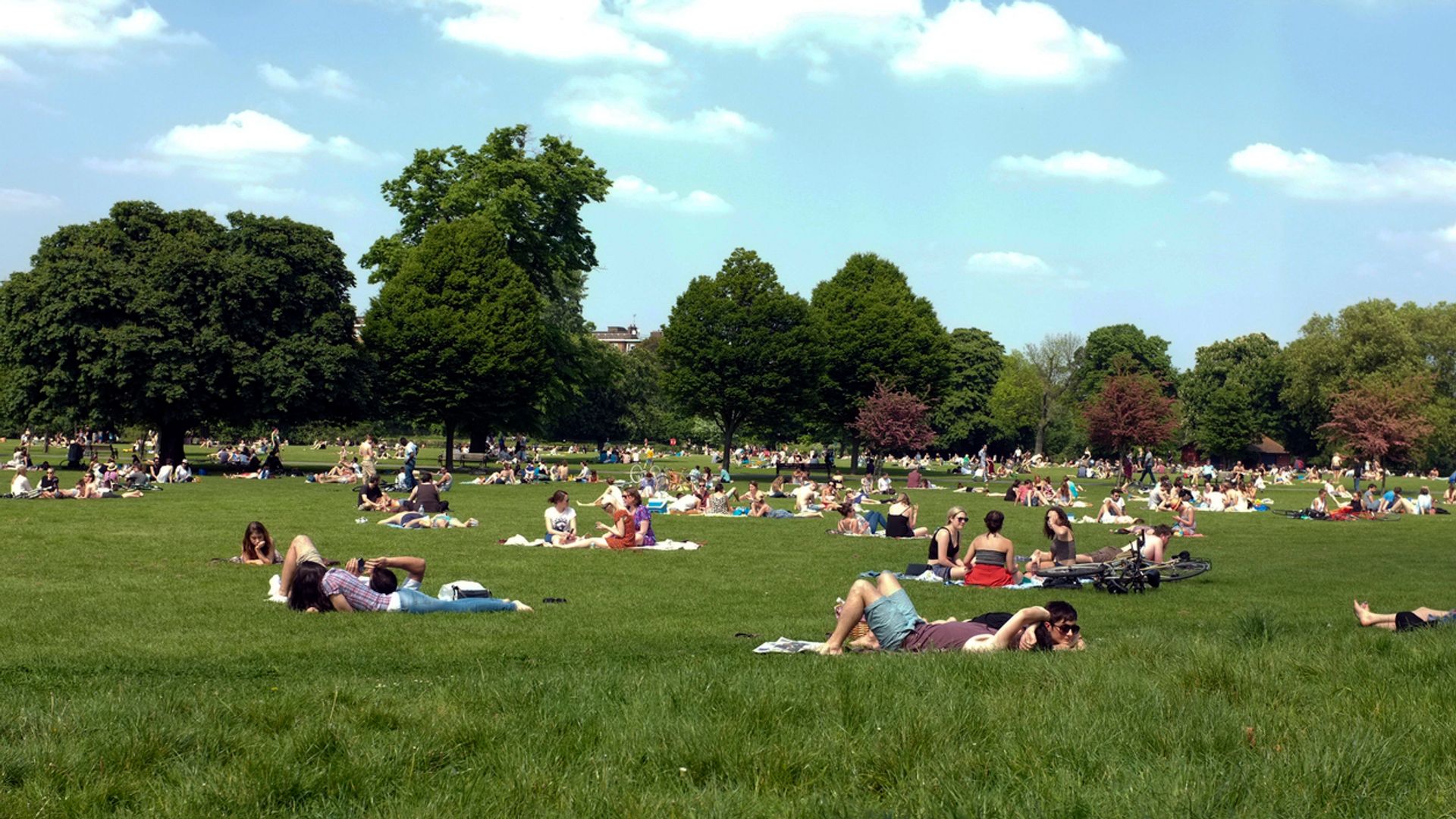
The thermometer on the kitchen windowsill is a liar. That is the first thought crossing the mind of millions this morning as they squint through curtains at a sun that feels suspiciously aggressive for a Tuesday in the United Kingdom. We are used to the sun being a polite visitor—a shy guest who stays for twenty minutes, drinks a cup of lukewarm tea, and leaves before things get interesting. Today, the sun has kicked the door down, raided the fridge, and put its feet up on the coffee table.
According to the latest meteorological data, parts of the UK are currently registering temperatures that make Hawaii look like a walk-in freezer and leave Athens feeling like a breezy mountain retreat. In London and the Southeast, the mercury is screaming past 32°C. In Honolulu? A mild 26°C. We are witnessing a geographical glitch. A thermal coup d'état.
Arthur is seventy-two and lives in a brick terrace in Sheffield. He is our hypothetical Everyman for this heatwave. Arthur doesn’t own an air conditioning unit because, for the last seven decades, owning one in South Yorkshire was considered an act of eccentric pessimism. Today, his house is a slow cooker. The bricks, designed to trap every scrap of warmth during the damp winters, are now performing their job with terrifying efficiency. He watches the news—dry reports of "high-pressure plumes" and "jet stream shifts"—but what he feels is the heavy, stagnant weight of air that refuses to move.
The stakes aren't just about ice cream sales or crowded beaches. They are invisible. They exist in the warped railway tracks that can’t handle the expansion, in the overworked transformers of the National Grid, and in the quiet struggle of bodies that haven't evolved for this. This is the human cost of a statistical anomaly.
The Anatomy of a Thermal Inversion
How does a rain-slicked island in the North Atlantic outpace a tropical paradise? The science is cold, even if the result is blistering. Usually, the jet stream—a high-altitude ribbon of fast-moving air—acts as a velvet rope, keeping the hot, Saharan air to the south and the crisp Atlantic air to our west. But right now, that rope has snapped.
A "heat dome" has settled over the British Isles. High pressure is pushing the air down, compressing it, and as air compresses, it heats up. This dome acts like a lid on a pot. While Hawaii benefits from the cooling trade winds that skip across thousands of miles of ocean, the UK is currently trapped in a recycled loop of its own rising heat.
Consider the "Urban Heat Island" effect. In cities like Manchester or London, the concrete and asphalt absorb solar radiation all day and bleed it back out all night. There is no respite. In a Mediterranean city like Athens, the infrastructure is built for this. White-washed walls reflect the light. Shuttered windows create pockets of cool shade. Narrow streets are designed to funnel the breeze. In Britain, we have black tarmac, glass-fronted offices that act like greenhouses, and a population that considers "sunscreen" something you only buy at the airport.
The Psychology of the Swelter
There is a specific kind of madness that takes hold of the British public when the weather breaks 30°C. It begins with a collective, manic joy. We flock to the parks. We buy every disposable barbecue in a five-mile radius. We ignore the fact that we are essentially frying ourselves on a bed of dry grass.
But then, the second phase sets in. The irritability.
Science tells us that extreme heat increases the levels of cortisol in the blood. It makes us impulsive. It makes us angry. The "human element" of this heatwave is the fraying of social patience. It’s the commuter trapped on a train with no ventilation, feeling their shirt turn into a second, sweatier skin. It’s the parent trying to soothe a toddler who can’t sleep because the bedroom is a humid 28°C.
The irony is that we spent all winter praying for this. We sat through the gray drizzle of February, staring at screensavers of turquoise waves and palm trees, promising ourselves that we wouldn't complain if the sun ever showed its face. Now, the sun has arrived with the intensity of a spotlight in an interrogation room, and we are breaking under the pressure.
The Infrastructure of Yesterday
We are living in a country built for a climate that no longer exists. Our houses are thermal batteries designed to keep us alive during a Dickensian winter. Our transport systems were engineered with the assumption that "hot" meant a pleasant 22°C.
When the heat hits these levels, the physical world begins to fail in small, rhythmic ways.
- The Rails: Steel tracks can reach temperatures 20°C higher than the air. They expand. They buckle. Suddenly, the 08:15 to Waterloo isn't running because the ground beneath it is literally shifting.
- The Water: Demand spikes so sharply that the pressure in the pipes drops to a trickle. We are a nation of gardeners trying to save our wilted hydrangeas while the reservoirs gasp.
- The Health: For someone like Arthur, this isn't a "beach day." It is a cardiovascular marathon. The heart has to pump harder to move blood to the skin's surface for cooling. If the air is humid, sweat doesn't evaporate. The cooling mechanism fails.
The gap between our lived reality and the "Hawaii vs. UK" headlines is a chasm of preparation. Hawaii is an ecosystem in balance with its heat. The UK is a system in shock. We are watching a slow-motion collision between Victorian engineering and 21st-century meteorology.
The Ghost of Summer Past
If you look back at the Great Heatwave of 1976, it lives in the national memory as a golden, hazy dream of long grass and endless lemonades. But the data tells a darker story of cracked earth and dying livestock. We have a tendency to romanticize the heat until it starts to hurt.
What we are seeing today isn't just a "nice day." It’s a symptom. It’s a reminder that the borders we draw on maps mean nothing to the atmosphere. The Sahara can visit Surrey whenever it likes. The tropics can move to the Tyneside.
We try to adapt. We buy electric fans that just move the hot air around in circles. We talk about "British resilience." But resilience has a melting point. There is a limit to how much we can joke about "phew, what a scorcher" before we have to confront the fact that our environment is becoming unrecognizable.
The Silent Afternoon
By 3:00 PM, the peak of the heat hits. The birds stop singing. The streets in Arthur's neighborhood go quiet. Even the dogs have given up on barking, slumped in the shadows of hallways. There is a strange, heavy stillness that descends—a midday twilight where the world feels suspended in amber.
In Hawaii, the surfers are likely enjoying a steady breeze off the Pacific. They are comfortable. They are in their element. Here, in a terraced house in northern England, a man is sitting in front of an open fridge just to feel a momentary lick of cold air on his shins.
The sun begins its long, slow descent, but there is no relief. The heat is deep in the bones of the buildings now. It will stay there for hours, radiating out into the night, making sleep a frantic, twisting struggle. We look at the forecast for tomorrow, hoping for the return of the familiar gray, the comforting rain, the predictable boredom of a standard British afternoon.
We realize, perhaps for the first time, that the "paradise" we see on postcards is a lot more terrifying when it decides to move in next door.
The ice in the glass has melted. The grass is turning the color of a digestive biscuit. The kitchen thermometer continues to climb, indifferent to our disbelief. We are no longer a rainy island in the north; we are a temporary colony of the sun, waiting for a breeze that isn't coming.



