A low, metallic buzz cuts through the pre-dawn mist. It sounds like a angry hornet, or perhaps a malfunctioning weed whacker in a suburban backyard. A decade ago, a soldier hearing this sound in a trench would have ignored it, or maybe swatted at the air. Today, that exact sound makes grown men freeze, hold their breath, and press their bodies so hard into the dirt they wish they could fuse with the earth.
The buzz means you have been seen. And if you have been seen, you are already dead.
We are witnessing the total dismantling of traditional military doctrine, not by multi-billion-dollar stealth bombers, but by plastic quadcopters ordered off the internet for less than the price of a mid-range smartphone. The war in Ukraine, asymmetric conflicts across the Middle East, and shifting border dynamics in South Asia have turned the sky from a strategic high ground into a hyper-visible panopticon. Military academies from West Point to New Delhi are scrambling to rewrite their textbooks. The age of industrialized, heavy-armor warfare is fracturing. In its place is something far more intimate, terrifying, and profoundly cheap.
The Toy That Swallowed the Battlefield
To understand how drastically the landscape of conflict has shifted, look at the commercial tech market. For years, consumer drones were the playthings of wedding photographers and real estate agents. They were designed to be nimble, easy to fly, and capable of carrying a decent camera.
Then came the modifications.
Consider a hypothetical commercial drone pilot we will call Mikhail, operating somewhere in a ruined industrial zone. He is not wearing a crisp uniform. He sits in a damp basement, his face illuminated only by the glow of first-person view (FPV) goggles. In his hands is a controller exactly like the ones used by teenagers playing video games. Strapped to the belly of his four-roto quadcopter is a piece of plumbing pipe packed with plastic explosives and ball bearings, held together with electrical tape and a 3D-printed plastic release latch.
Mikhail presses a plastic joystick. Two miles away, a main battle tank costing upwards of $4 million crawls along a dirt road. The tank is a marvel of twentieth-century engineering, wrapped in layers of depleted uranium and explosive reactive armor designed to withstand massive kinetic shells.
But it has a fatal flaw. Its top armor is thin.
Mikhail guides his $500 drone into a steep dive, aiming directly for the ventilation hatch behind the tank's turret. The feed goes static. A second later, a spotter drone overhead records the result: a catastrophic secondary explosion that tears the multi-ton turret clean off its chassis.
This is not a rare anomaly. It is the new baseline of modern attrition. The staggering cost asymmetric math is breaking the back of modern military logistics. When a weapon that costs less than a pair of combat boots can reliably neutralize an asset that requires a nation-state's entire manufacturing ecosystem to build, the old rules of engagement simply dissolve.
The End of Safe Space
Historically, war possessed a terrifying but predictable geography. There was the front line, where the violence was concentrated. Behind that lay the secondary lines, the command posts, the supply depots, and the medical tents. Distance offered a relative measure of safety.
Drones have flattened that geography entirely.
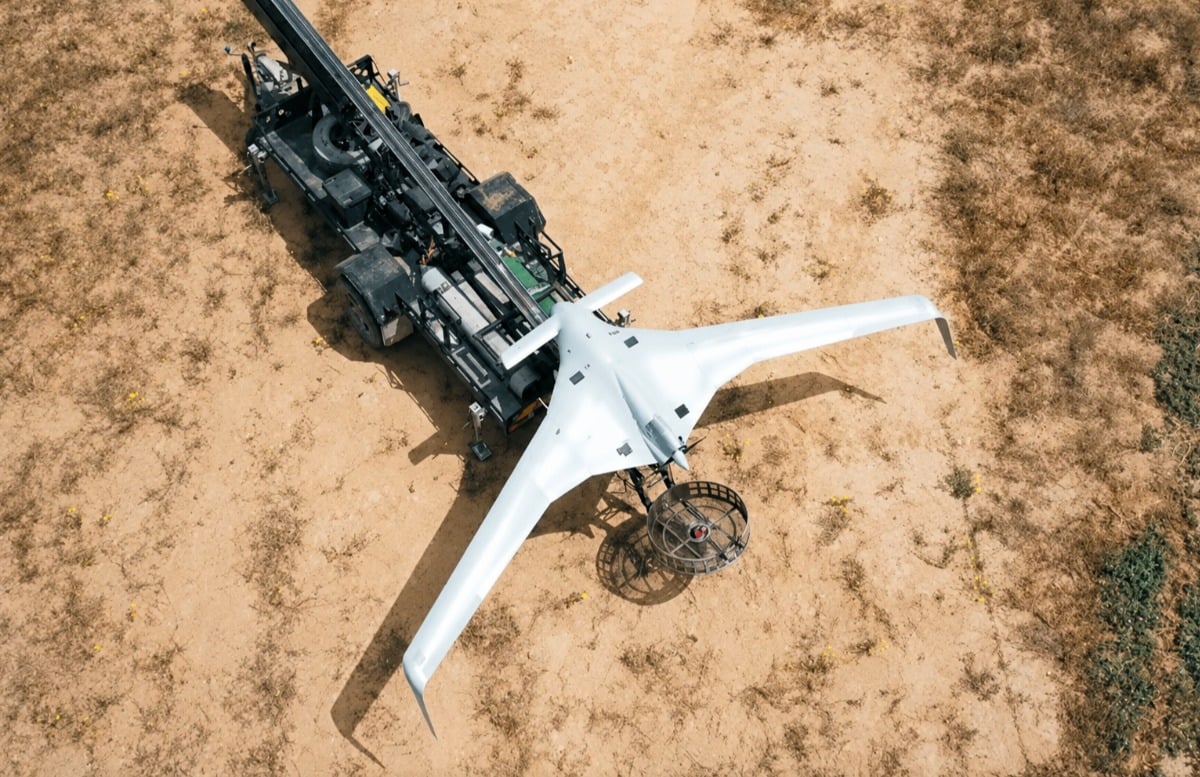
With long-range loitering munitions—often referred to as kamikaze drones—the rear guard is just as vulnerable as the forward trench. These machines are essentially cruise missiles for the masses. Unlike traditional artillery, which follows a predictable, mathematically trackable ballistic trajectory, a loitering munition can fly to a designated area, park itself in the sky for hours, hunt for a target of opportunity, and strike with surgical precision.
This reality breeds an exhausting, unrelenting psychological terror. Soldiers on the modern battlefield report that the mental strain of the omnipresent sky-eyes is more grueling than actual artillery barrages. Artillery stops eventually. The barrels overheat, or the ammunition runs low. But the drones are constant. They rotate in shifts. When one runs out of battery, another takes its place.
Human beings are not biologically wired to endure the sensation of being perpetually hunted by an invisible, unblinking eye. It forces an unnatural existence. Troops must move exclusively under the cover of darkness, or beneath thick forest canopies, or inside heavily reinforced bunkers. Even then, thermal imaging cameras attached to these miniature aviators can spot the heat bloom of a human body through canvas, plywood, and thin metal roofing. The battlefield has become a place where to be warm is to be targeted.
The Blind Spots of Giants
The panic inside traditional defense establishments is palpable. For decades, Western and regional superpowers focused their research and development on countering high-altitude, fast-moving threats: fighter jets, ballistic missiles, and nuclear submarines. They built magnificent, unimaginably complex radar systems and surface-to-air missile batteries like the American Patriot or the Russian S-400.
These systems are masterpiece engineering projects, but they are utterly blind to the drone revolution.
A traditional military radar is programmed to filter out clutter. It purposefully ignores small, slow-moving objects flying close to the ground so that the screen isn't filled with thousands of false alarms caused by flocks of migrating geese. Unfortunately, a plastic drone carrying a payload of military explosives looks exactly like a migrating goose to a multi-million-dollar radar array.
Even when a heavy air-defense system does manage to lock onto a commercial drone, the economic reality of the intercept is suicidal. Firing a $2 million missile to destroy a $300 quadcopter is a fast track to financial bankruptcy. You will run out of missiles long before the enemy runs out of cheap plastic components sourced from mass-production factories in East Asia.
This vulnerability has forced a frantic, chaotic race to develop counter-unmanned aerial systems (C-UAS). Walk through any major defense expo today, and you will see an array of bizarre, sci-fi-esque weaponry designed to reclaim the skies. There are handheld directional jamming guns that look like oversized assault rifles from a space opera, designed to sever the radio frequency link between the pilot and the craft. There are high-energy laser prototypes meant to cook the delicate circuitry of incoming drones mid-air. There are even specialized net-firing drones built to hunt other drones in a mechanical imitation of predatory birds.
But electronic warfare is a game of constant, exhausting cat-and-mouse. The moment a military deploys a jammer that blocks the standard 2.4 GHz frequency, the drone operators on the other side solder new chips onto their boards, shifting their operational frequency to 433 MHz or 900 MHz. When radio frequencies are jammed entirely, operators turn to fiber-optic cables. Unspooling behind a drone like a terrifyingly long spiderweb, a fiber-optic wire cannot be jammed, spoofed, or deflected by electronic shields. The machine becomes a deaf, blind, yet unstoppable bullet guided by a physical thread.
The Ghost in the Controller
The most unsettling aspect of this technological shift is not what it does to the tanks or the trenches, but what it does to the concept of human accountability.
We are rapidly moving past the point where a human pilot like Mikhail needs to manually guide the drone to its target. The integration of machine learning and computer vision algorithms directly onto low-cost microchips means the human element is being systematically phased out of the kill chain.
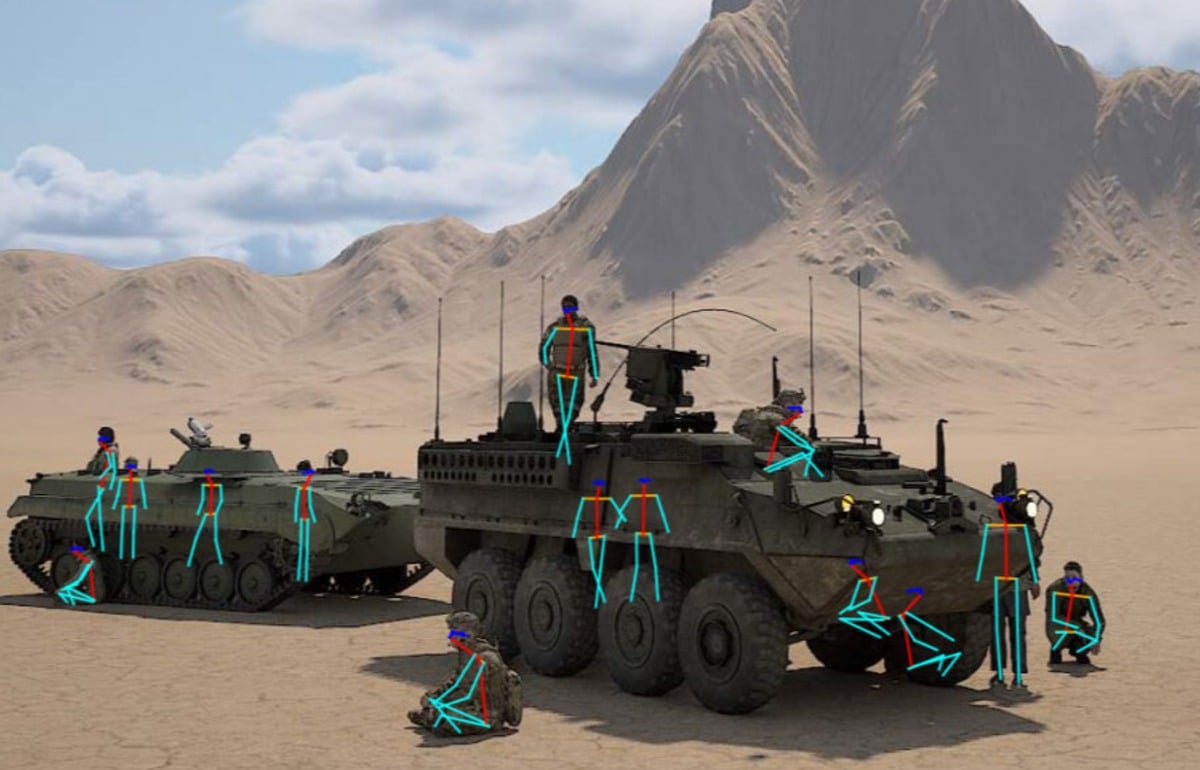
Picture the next phase of this evolution, which is already trickling onto the front lines. A drone is launched into an area where all radio communications are entirely jammed by electronic warfare. To a human pilot, the screen would be dead static. But this drone doesn't need a pilot. Its onboard processor is loaded with a convolutional neural network trained on thousands of images of military vehicles and uniforms. As it sweeps across a grid, the camera scans the terrain below. It identifies the specific silhouette of an armored vehicle or the thermal signature of an infantry squad.
Without asking for permission, without a human finger pulling a trigger, and without a single byte of data being transmitted back to a base, the internal algorithm confirms a match. The drone shifts its flaps and dives.
This removes the friction of distance and emotion. When a soldier fires a rifle, there is a visceral, immediate consequence. Even an artillery crew loading shells miles away can hear the thunderous roar of their weapon and understand the devastation they are unleashing. But autonomous drone warfare turns lethal violence into an automated background process. It reduces the taking of human life to an automated sorting algorithm, no different from the software that filters spam emails out of your inbox.
The danger here isn't just the cold efficiency of the machine; it is the democratization of that efficiency. Because these technologies rely heavily on open-source software and commercially available hardware, the barrier to entry has dropped to zero. A rogue state, a non-state militia, or a highly organized criminal cartel can build a functional tactical air force in an abandoned warehouse using parts bought on public e-commerce platforms. The monopoly on precision airpower, once held exclusively by a elite handful of wealthy nations, has evaporated.
The Quiet Sky
The mist over the trench slowly burns away as the sun climbs higher, but the morning brings no comfort. The silence that used to offer a momentary reprieve between battles is gone, replaced permanently by that faint, high-pitched mechanical whine.
We often talk about the future of war as if it is a distant, abstract concept filled with sleek androids and orbital weapons. We look for the turning point in grand treaties or massive defense budgets. But the revolution didn't arrive with a dramatic announcement. It slipped into our world quietly, packed inside a cardboard box, delivered by a standard courier, and powered by a battery meant for a child's toy.
The young men in the dirt don't look at the horizon anymore for incoming armies. They look straight up into the blank blue sky, waiting for the buzz to stop.