Designing a modern natural history institution requires managing a dual mandate: translating 4.6 billion years of planetary data into an accessible physical sequence while maximizing visitor throughput across massive floor plates. The Shenzhen Natural History Museum in the Pingshan District, spanning a total gross floor area of 105,300 square meters with approximately 35,200 square meters of exhibition space, operates across eight distinct thematic zones. Visitors navigating this facility encounter a macro-to-micro structural progression that begins with the cosmos and terminates in local subtropical ecosystems. Analyzing this layout reveals how spatial distribution shapes public scientific literacy.
The Chronological Spine And Spatial Mechanics
The structural organization of the institution relies on a linear temporal sequence divided across underground and above-ground levels. Spatial planning in high-capacity museums dictates that visitor bottlenecks occur where narrative complexity intersects with physical congregation points. Don't forget to check out our recent post on this related article.
The architecture, conceptualized through an open riverfront flow reminiscent of the adjacent Pingshan River, uses a sinuous green rooftop spine to connect functional zones. Inside, the sequence is segmented into eight zones: Cosmos, Earth, Evolution, Dinosaur, Human, Biology, Ecology, and Homeland.
Moving through the initial zones requires processing dense cosmic and geological timelines before reaching biological specimens. If you want more about the history here, National Geographic Travel offers an excellent summary.
- Cosmos Hall: Operates as the conceptual anchor, deploying astronomical instruments, historical star charts, and deep-space physical touchpoints like a multi-billion-year-old meteorite specimen.
- Earth Hall: Shifts the perspective from stellar mechanics to terrestrial dynamics, utilizing plate tectonics models, mineral taxonomy, and large-scale crystalline displays to establish geological strata.
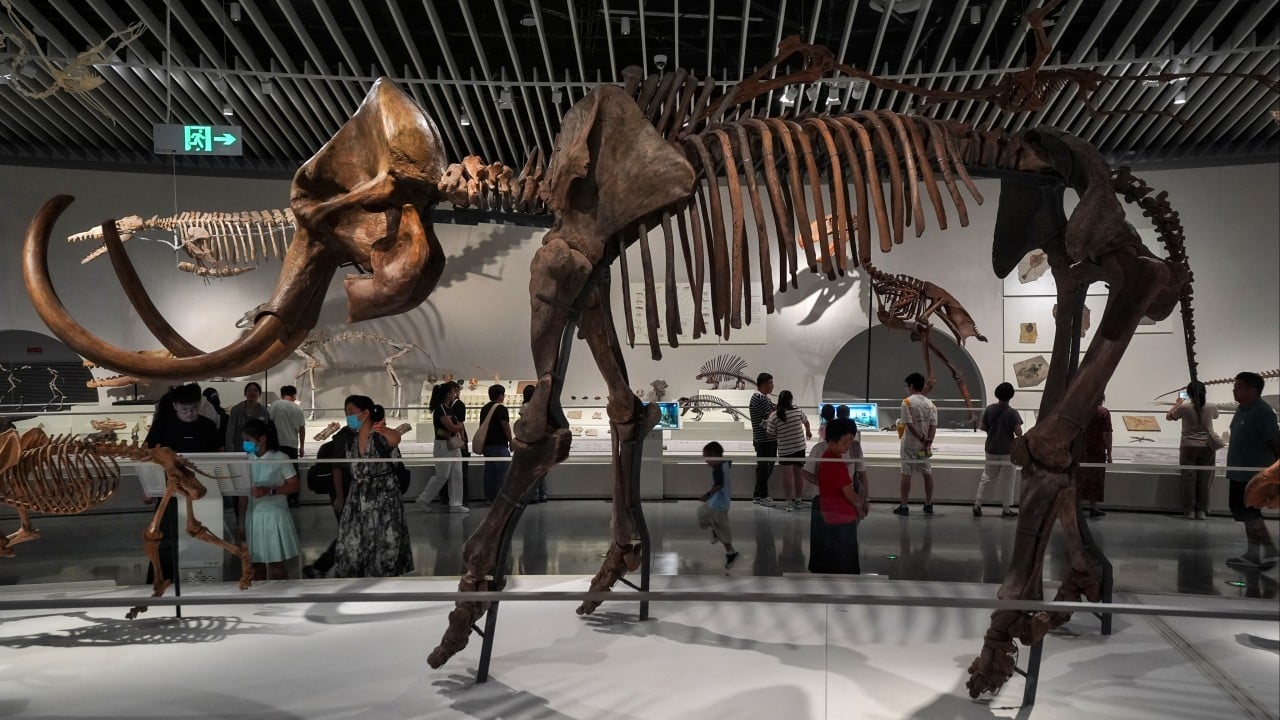
- Evolution and Dinosaur Halls: Grouped to isolate specific evolutionary epochs, transitioning from general speciation mechanisms to specialized Mesozoic paleontology. Regional specimens from Guangdong and Jiangxi anchor the academic credibility of these galleries.
Material Distribution And Specimen Taxonomy
The cognitive load on a museum visitor scales directly with how specimens are categorized. When institutions transition from displaying isolated curiosities to mapping ecological networks, the curation strategy shifts from aesthetic wonder to functional mechanics.
The biological and ecological sequence uses taxidermy and habitat reconstructions to demonstrate adaptive radiation, camouflage, predation, and extinction dynamics. By integrating specimens previously associated with regional collections alongside newly acquired international donations, the curation builds a cross-reference matrix between global biodiversity loss and local conservation.
The final zone, Homeland, deliberately localizes the macroscopic lessons of the previous seven halls. Instead of abstract global habitats, it maps the subtropical wetlands, coastal mangroves, and urban wildlife corridors specific to Shenzhen. This structural closure prevents visitor fatigue by grounding planetary-scale history into immediate, recognizable geography.
Operational Throughput And Access Logistics
High-capacity cultural venues face strict spatial constraints during peak operation. The Pingshan facility relies on multimodal transit integration, connecting via Shenzhen Metro Line 16 at Shabu Station and the local SkyShuttle transit network to manage arrival spikes.
Visitor volume management depends entirely on directional wayfinding and clear zonal division. The architecture separates heavy-load transit corridors from contemplative exhibition pockets, preventing the gridlock common in single-floor exhibition halls.
When evaluating the spatial economy of large-scale museums, the ratio of circulation space to active display area dictates the maximum hourly visitor capacity without degrading the educational experience.
Optimize transit timing by arriving during off-peak morning windows to minimize queuing at high-density transition zones between the Evolution and Dinosaur halls, and utilize the rooftop botanical spine as a low-congestion pedestrian connector between wings.