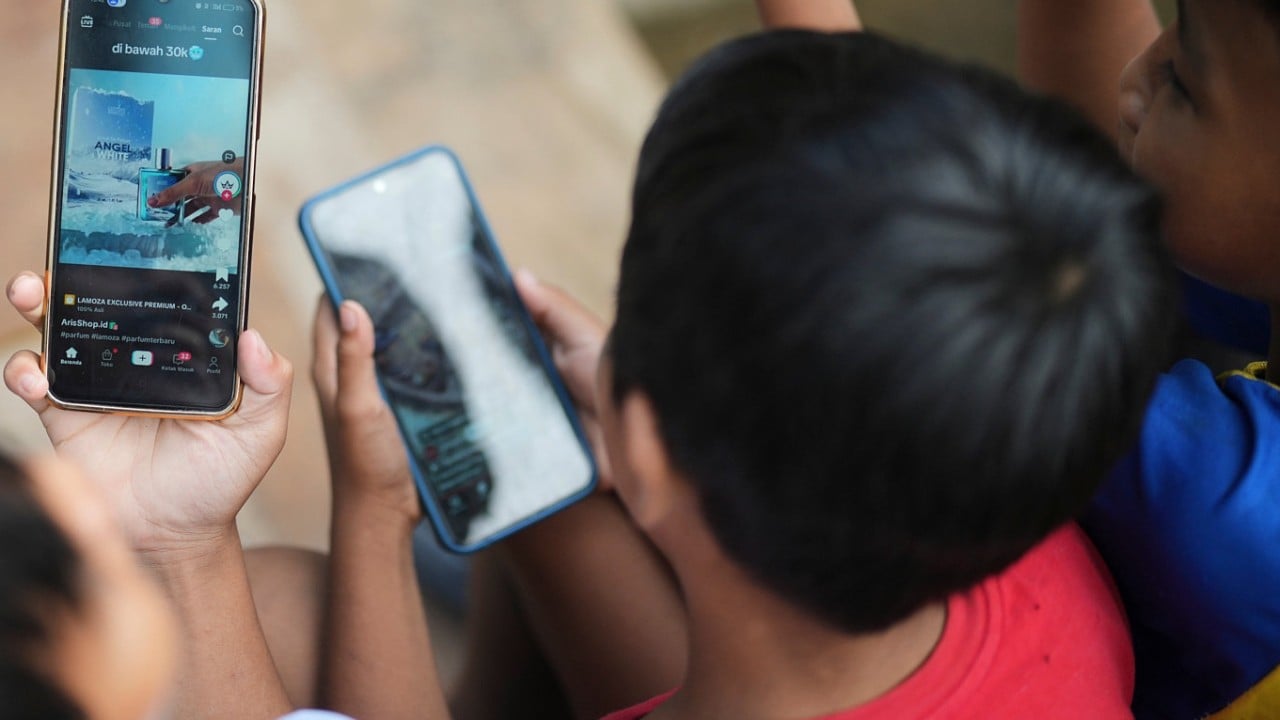
The screen of the cheap smartphone was the brightest thing in the cramped Jakarta bedroom, casting a cold blue glow over fourteen-year-old Rian’s face. For two years, that glow had been his sanctuary. It was where he curated a flawless, hyper-stylized version of himself on TikTok, away from the sweltering heat and the suffocating pressure of his eighth-grade reality. He had nearly ten thousand followers. He had a digital pulse.
Then, on a Tuesday morning, his universe dissolved.
Rian tapped the familiar black icon, expecting the usual dopamine hit of algorithmic validation. Instead, a sterile notification blinked back at him. Account deactivated. No appeal. No warning. Just like that, his digital existence was wiped clean, as if he had never breathed a word into the ether.
Rian is not an isolated anomaly. He is one of the 4.8 million.
Since Indonesia’s Ministry of Communication and Digital Affairs enforced its aggressive new child protection regulations, a massive digital clearance has swept across the nation's internet infrastructure. In a matter of months, tech behemoths have pulled the plug on a generation. TikTok axed roughly 4.1 million accounts. YouTube purged 600,000. Meta sliced away another 185,000 across its platforms.
To a bureaucrat looking at a spreadsheet in a high-rise office, that number—4.8 million—is a triumphant metric. It is data proving that a policy is working. But on the ground, inside the homes of families trying to navigate this sudden blackout, the reality is far more complicated, fragile, and human.
The policy, known locally as PP TUNAS, was born out of genuine desperation. For years, parents watched their children disappear into the quicksand of infinite scrolls, cyberbullying, online fraud, and predatory algorithms. The state finally intervened, declaring that tech giants, not exhausted parents, must police the gates.
But when you cut the chord to a child's primary social pipeline, you don't just eliminate the danger. You create an eerie, echoing silence.
Consider the physics of a dam. If you suddenly block a massive, rushing river without building secondary channels, the water doesn't simply vanish. It pools. It applies immense pressure to the banks. It finds the structural cracks.
In the digital ecosystem, those cracks are already widening. Government data reveals a sobering truth: three out of every five Indonesian children simply falsify their age to bypass the restrictions. The tech platforms are playing an endless, algorithmic game of whack-a-mole, trying to use behavioral patterns to sniff out minors who have reincarnated themselves online as thirty-year-olds.
The deeper issue is that we are treating social media as a luxury item or a simple toy that can be confiscated until a child turns sixteen. It isn't. For a generation raised in overcrowded urban centers where physical community spaces have shrunk to almost nothing, the internet is the town square. It is the playground. It is the place where they learn how to belong.
When Rian lost his account, he didn't suddenly pick up a dusty book or run outside to play soccer in the monsoon rain. He sat on the edge of his bed, staring at a blank wall, feeling an acute, heavy sense of grief. To adults, it looks like a temper tantrum over a screen. To him, it felt like an eviction from his own life.
We are watching a massive, unprecedented behavioral experiment play out in real-time. Indonesia, alongside trailblazers like Australia, is attempting to redraw the boundaries of human connection. They are trying to build a fortress around childhood. It is a noble, necessary impulse. No one wants children exposed to the dark underbelly of unregulated digital commercialism.
Yet, as the accounts continue to drop like dominoes, a critical question remains unanswered. Once the screens go dark, and the 4.8 million children are left sitting in the quiet of their physical rooms, what are we offering to fill the void?
If the answer is nothing but a blank screen and parental exhaustion, the water will find a way through the dam, and the ghosts will simply find a new place to hide.