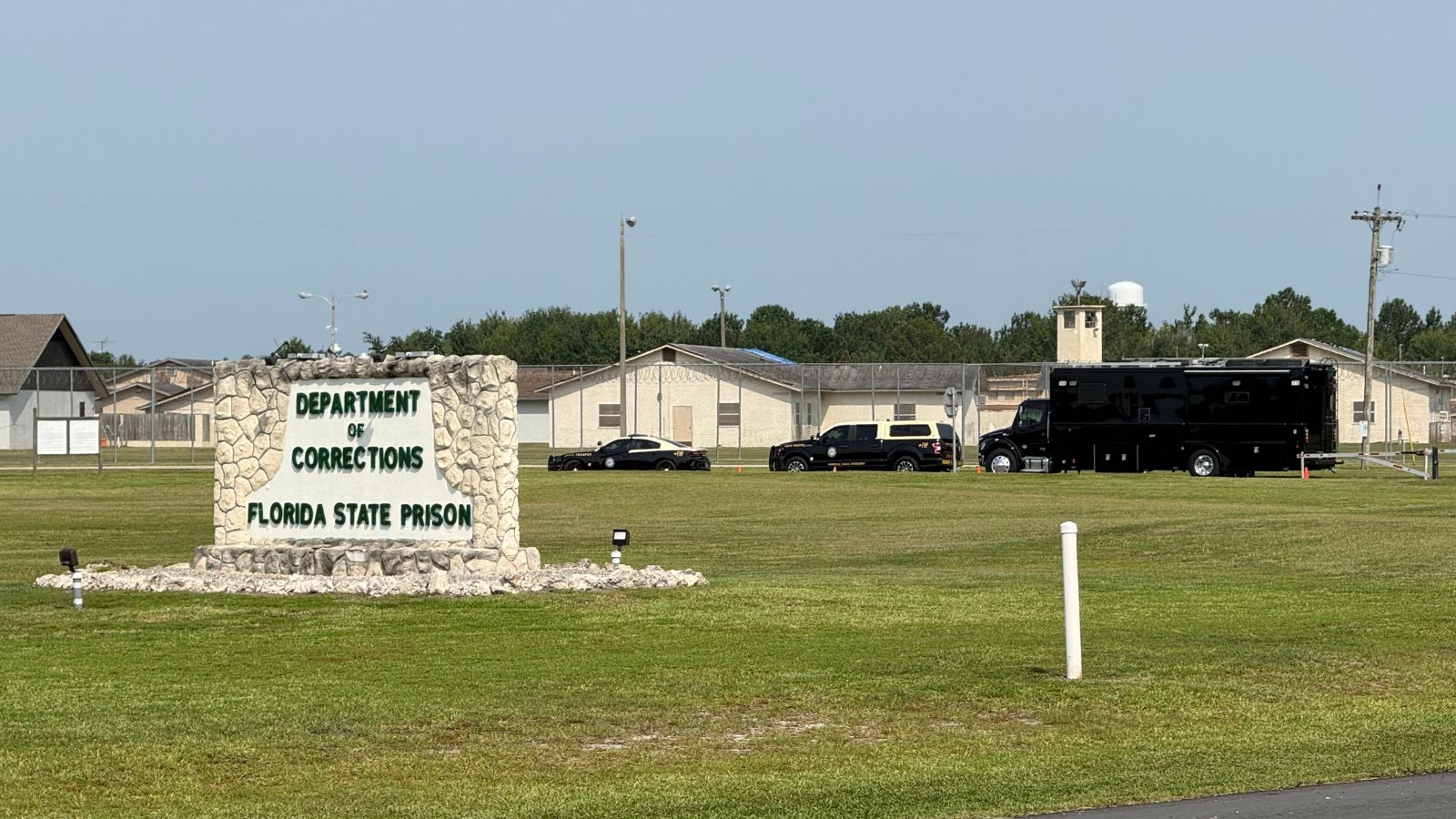
The state of Florida executed two inmates on the same day, marking a chilling inflection point for American capital punishment and breaking a quiet national precedent that had held since 2017.
When lethal chemicals flowed into the veins of two separate men within a single twenty-four-hour span inside a state facility, the event shattered a modern American tradition of spacing out capital punishments. For nearly a decade, executing multiple prisoners within the same calendar day by any single state jurisdiction had effectively vanished from the penal playbook. Federal authorities last carried out a synchronized sequence of executions years ago, but state-level double lethal injections had drifted into historical memory. Florida changed that reality under the signature of a governor aggressively leaning into penal severity, turning a routine administrative procedure into a stark political signal.
Capital punishment in the United States sits at a strange crossroads. Public support hovers near historic lows compared to the final decades of the twentieth century. Yet a handful of jurisdictions continue to push forward with absolute resolve, exploiting procedural exhaustion in the federal court system and state-level legislative changes designed to speed up the process. This specific double execution underscores a widening chasm between states scaling back capital punishment and those doubling down on it with administrative efficiency.
The Mechanics of Death Chamber Logistics
Executing two men in one day requires a terrifyingly precise choreography. Corrections departments treat the death chamber like a high-stakes military deployment where failure is not an option.
When a state schedules dual executions, the operational strain on staff multiplies exponentially. Medical personnel must verify lines, prepare chemical cocktails under extreme scrutiny, and manage the psychological toll of participating in state-sanctioned killing twice in a single afternoon. The logistics involve moving witnesses, handling separate legal appeals that often race against the clock until the final minute, and maintaining absolute security perimeter control around the facility.
Historically, states avoided this compressed timeline to mitigate the risk of administrative errors or catastrophic legal stays that could disrupt the entire schedule. When one execution gets delayed by a last-minute Supreme Court stay, the domino effect throws prison operations into chaos. By pushing forward with two separate warrants on the same date, Florida signaled a calculated willingness to absorb that operational friction.
The drugs used in these procedures remain a persistent battlefield. Pharmaceutical companies routinely block their products from being sold to corrections departments, forcing states into a subterranean market of compounding pharmacies and secretive procurement methods. The secrecy surrounding drug sources has spawned endless constitutional litigation over the Eighth Amendment prohibition against cruel and unusual punishment. Despite these hurdles, execution teams manage to secure the necessary substances, maintaining a grim machinery that continues to turn.
The Judicial Pipeline and Accelerated Warrants
How did Florida reach a point where two men could face execution on the exact same date? The answer lies in the weaponization of procedural finality.
For decades, the standard path for a death row inmate involved an intricate maze of state appeals, federal habeas corpus petitions, and clemency hearings that often stretched across twenty or thirty years. That timeline has compressed dramatically in states like Florida, Texas, and Oklahoma. Lawmakers and prosecutors have successfully lobbied for statutory changes that limit successive appeals, cut down the time allowed for post-conviction DNA testing challenges, and pressure judges to clear backlogs.
When execution warrants stack up, the margin for judicial review narrows to a razor edge. Defense attorneys find themselves filing emergency stays at midnight, scrambling to find federal judges willing to halt a procedure while constitutional questions remain unanswered. In these dual cases, the legal teams fought parallel battles in multiple appellate courts simultaneously, creating a triage scenario where strategic focus had to be split between two distinct human lives hanging in the balance.
The federal judiciary, particularly the Supreme Court, has shown increasing reluctance to intervene in these final-hour appeals. The prevailing judicial philosophy among the conservative majority favors finality over endless procedural loops. This doctrinal shift gives green lights to states that want to clear out their death rows with unprecedented speed.
The Political Calculus of Capital Punishment
Capital punishment is rarely just about criminal justice. It is an instrument of political theater.
In states where executive leadership carries national ambitions, demonstrating absolute ruthlessness on crime plays well with primary electorates. Ordering executions, or allowing them to proceed without executive clemency intervention, serves as a tangible demonstration of power. Governors positioning themselves on the national stage use the death penalty as a blunt instrument to prove their conservative credentials, contrasting themselves with jurisdictions that have imposed moratoriums or abolished the practice entirely.
The victims' families occupy a complex space in this political machinery. For some, the execution of the perpetrator provides a definitive sense of closure, an official validation of the immense trauma they suffered years or decades prior. For others, the endless cycle of appeals, delays, and eventual executions only prolongs the psychological wound, keeping the tragedy fresh in the public eye for generations. The state wraps its actions in the language of victim advocacy, transforming a systemic state policy into an act of personalized retribution.
Yet, public opinion data reveals a more nuanced national mood. While majorities still express abstract support for the death penalty when polled in the abstract, actual jury verdicts reveal a profound reluctance to impose it. Prosecutors must work harder to secure death sentences, and juries frequently opt for life imprisonment without the possibility of parole. This grassroots hesitation makes the aggressive push by state executives look increasingly disconnected from the daily realities of local courtrooms.
The Broader National Divergence
The American death penalty is splitting cleanly down the middle, creating two entirely different legal realities depending on geography.
On one side, a growing coalition of states has completely abandoned capital punishment. Virginia, once a prolific executioner historically, abolished the practice in recent years. Other states maintain active legislative or executive moratoriums, effectively rendering their death rows non-functional. These jurisdictions point to the exorbitant financial costs of maintaining segregated housing and endless litigation, alongside the persistent risk of executing an innocent person.
On the other side, states like Florida, Texas, Alabama, and Missouri are actively streamlining their protocols. They are exploring alternative methods of execution, such as nitrogen hypoxia or firing squads, when lethal injection drugs become unavailable due to supply chain boycotts. These states are determined to keep the machinery operational, viewing abolition as a sign of weakness or a failure of justice.
This geographic polarization means an inmate's fate depends entirely on the zip code where the crime occurred. Two individuals who commit identical crimes in different states face radically different futures, turning life and death into a lottery dictated by state borders and local political climates.
The Human Reality Inside the Walls
Behind the legal briefs, the political speeches, and the logistical choreography lie the individuals whose lives are being extinguished and the staff forced to carry out the act.
The psychological burden on corrections workers is a rarely discussed aspect of capital punishment. Studies and personal accounts from former execution team members reveal high rates of post-traumatic stress, anxiety, and moral injury. Participating in the premeditated killing of a human being, even under the color of law, leaves permanent psychological scars. Multiplying that burden by two in a single day pushes institutional staff to their psychological limits.
For the inmates, the final days are a surreal blur of institutional protocols, religious visits, final meals, and desperate phone calls to loved ones. The state reduces decades of human existence, with all its complexities, trauma, and potential for change, into a sterile medical procedure timed to the minute.
As the chemicals take effect, the debate does not end. It merely pauses until the next warrant is signed, the next execution date is set, and the state machinery cranks up its gears once more to demonstrate its ultimate authority over life and death.