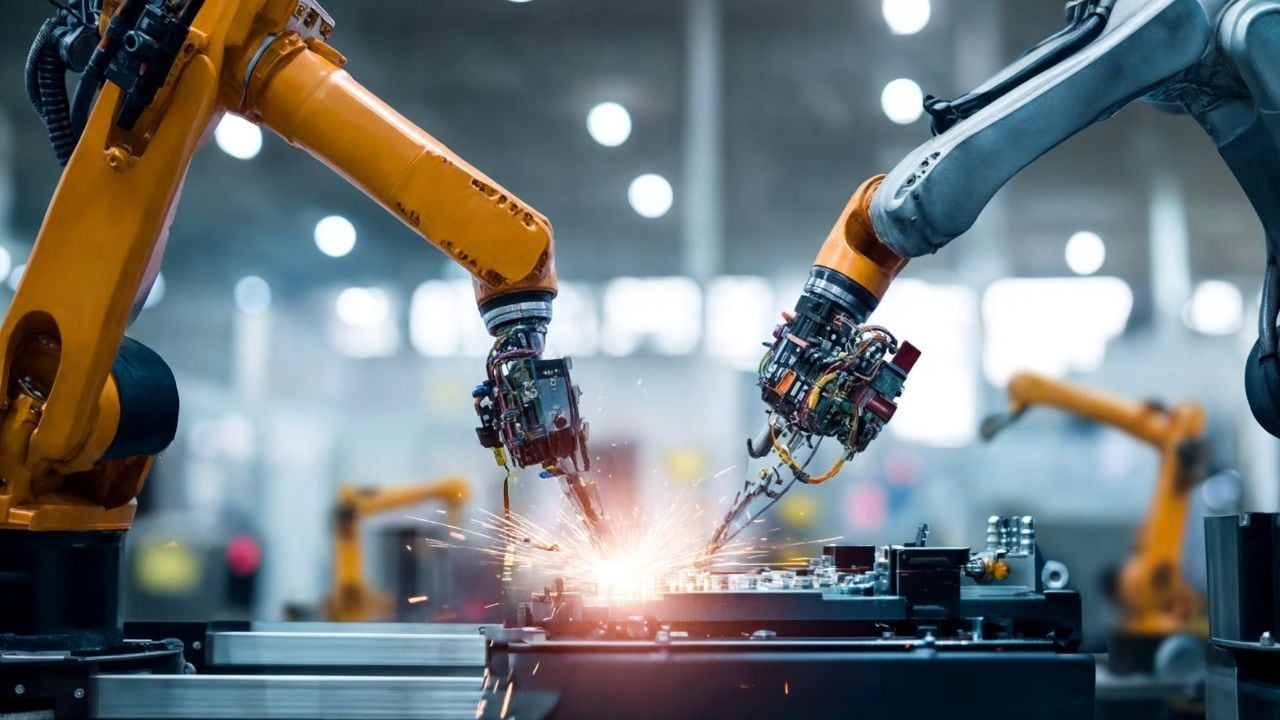
On a humid afternoon in Bengaluru, a technician named Anand adjusts a mechanical arm inside a cleanroom. He moves with a calculated stillness. A single stray eyelash, a microscopic flake of skin, or a sudden gust from an air vent can ruin a silicon wafer worth more than his annual salary. Anand works in a space scrubbed so clean that the air replaces itself every six seconds. Yet, the real friction he faces isn't inside this pristine laboratory. It is on the chaotic streets outside, where trucks carry raw materials through gridlock, and across oceans, where the vital components his machines need are stuck in a port five thousand miles away.
India wants to build the brains of the modern world. The national ambition to become a global semiconductor powerhouse is backed by billions of dollars in subsidies and fueled by fierce geopolitical pride. But a quiet truth is whispering through the corridors of the industry, echoed recently by leaders like the Chief Operating Officer of digital transformation giant UST.
The truth is simple. You cannot build a castle on shifting sand.
Right now, the global conversation about microchips focuses on the glamorous, ultra-expensive fabrication plants—the "fabs." We talk about nanometers and extreme ultraviolet lithography as if they exist in a vacuum. We act as though passing a massive funding bill will automatically cause silicon to flow. It won't. A semiconductor fab is not just a building; it is the apex predator of an incredibly fragile ecosystem. Without a massive, hyper-precise network of robotics, automated supply chains, and domestic component manufacturing, a multi-billion-dollar fab is just a very expensive monument to a dream.
To understand why, look at a single microchip.
Consider a hypothetical smartphone chip. It is smaller than a fingernail, yet it holds billions of transistors. Building it requires hundreds of individual chemical, physical, and lithographic steps. The margin for error is zero. Human hands, no matter how steady or well-trained, cannot operate at this scale. When you are moving a wafer between chemical baths at a precision measured in atoms, a human operator is not an asset. They are a biohazard. They breathe. They vibrate. They tire.
This is where India’s current strategy faces its steepest hill. The country has an legendary workforce of software engineers and chip designers. If you want a brilliant mind to write the code that tests a circuit, India is the global destination. But turning a digital blueprint into physical silicon requires physical muscle. It requires advanced robotics.
Step inside a leading-edge fab in Taiwan or South Korea, and you will barely see any people. You will see Automated Material Handling Systems—monorail cars gliding silently along the ceiling, carrying pods of wafers from one multi-million-dollar machine to the next. You will see robotic arms moving with a fluid, terrifying speed, operating in a vacuum cleaner than deep space.
If India does not build or deeply integrate a domestic robotics industry, every single automated arm, every track, every precision sensor must be imported. If a single custom valve breaks in a facility in Gujarat, and the replacement must be flown in from Stuttgart or Osaka, the line stops. In the semiconductor world, when the line stops, you lose hundreds of thousands of dollars per minute.
The stakes are entirely invisible until they fail.
This dependency stretches down into the very bones of manufacturing: components. We often lump "components" into a boring generic category. But in this industry, a component is a microscopic diamond-tipped drill, a specialized fluoropolymer pipe that can handle acid without corroding, or a printed circuit board etched to a degree that defies belief.
Think of it like a Formula 1 racing car. You can buy the best driver in the world and design the most aerodynamic chassis on a computer screen. But if you cannot manufacture high-quality spark plugs or reliable brake pads within your own garage, you will spend the entire race sitting in the pit lane, waiting for a delivery truck.
Right now, India’s electronics manufacturing sector relies heavily on "CKD" and "SKD" assembly—completely knocked-down and semi-knocked-down kits. This means factories import a box of pre-made parts from abroad and use local labor to click them together. It creates jobs, yes, but it does not create resilience. It creates an illusion of capability. If a trade route closes, or a geopolitical tremor shakes the Taiwan Strait, the assembly lines go dark.
True scaling means moving backward into the dirt. It means mastering the unglamorous arts of metallurgy, chemical refining, and precision toolmaking.
The transition is terrifyingly difficult. It requires an entirely different kind of patience from investors who are used to the rapid returns of software applications. Software can be scaled with a few server upgrades and a new marketing campaign. Hardware requires concrete, steel, and years of failure. It requires accepting that the first ten thousand pieces coming off a new automated line might be garbage, and having the financial stomach to keep the lights on anyway.
But consider the alternative.
If India successfully courts the world's largest chipmakers but fails to foster the domestic industrial machinery around them, the nation risks creating high-tech islands in an ocean of logistical vulnerability. Fabs will operate as enclaves, completely dependent on an umbilical cord of foreign machinery and parts. That is not strategic autonomy; it is just a more expensive form of dependence.
The path forward demands a shift in how we value industry. The engineer who designs a robotic gripper that doesn't shed particulates must be celebrated just as loudly as the developer who codes a viral app. The factory floor must become as prestigious as the tech park.
Back in the cleanroom, Anand finishes his adjustments and steps back. The mechanical arm moves, a silent, perfect arc of steel and code. It functions flawlessly today because every piece of its internal anatomy happened to arrive on time. But as India reaches for the summit of the tech world, the real race isn't about who can build the smartest chip. It is about who can build the machines that build the chips, down to the very last bolt, manufactured in the dust of the valley where the giant is trying to wake up.