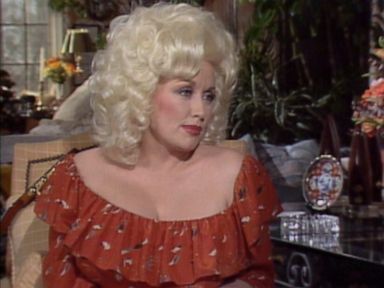
Cultural longevity is rarely an accident of talent; it is the product of a deliberate structural alignment between personal identity and commercial positioning. When media observers analyze historical broadcast artifacts, such as the 1982 television special featuring Dolly Parton at her Nashville home, they frequently reduce the interaction to charm, folksy wit, and personal magnetism. This surface-level interpretation misses the mechanics underneath. The 1982 interview serves as a masterclass in reputation management, brand architecture, and the monetization of self-deprecation during a period of acute career transition.
The Dual-Track Brand Architecture
By 1982, Parton was navigating a complex strategic crossroads. Her crossover trajectory from traditional country music into mainstream pop, film, and television had introduced friction within her core consumer base while opening broader commercial channels. Analysts of media positioning often fail to map how she managed this tension. She deployed a dual-track framework consisting of hyper-exaggerated visual artifice paired with uncompromising intellectual agency.
The visual presentation—wigs, makeup, and theatrical costume—acted as a deliberate cognitive filter. By mocking her own appearance before any critic could, she disarmed hostile interviewers and neutralized potential critique. This diversionary tactic created a protective barrier around her core asset: her catalog of songwriting equity and business independence.
The mechanics of this dual track rely on two distinct variables:
- The Aesthetic Disarmament Vector: Using self-deprecating humor about physical maintenance to lower the interlocutor's guard.
- The Commercial Execution Vector: Maintaining absolute ownership of masters, publishing rights, and corporate partnerships beneath the theatrical veneer.
Traditional celebrity profiles from this era treated these elements as quirky personal traits rather than calculated risk mitigations. In reality, the visual exaggeration was a fixed cost offset by exponential gains in memorability and public sympathy.
The Economics of Narrative Control
Media interrogation in the early 1980s, particularly under the auspices of high-profile broadcast journalism, frequently sought to trap female artists in false dichotomies—career versus family, rural authenticity versus urban sophistication, intellectual capability versus emotional intuition.
During the 1982 home broadcast, Parton systematically dismantled these traps not through emotional resistance, but by reframing the economic realities of her life. When questioned about her background of rural poverty in East Tennessee, she refused to play the victim of circumstance. Instead, she framed her early environment as an incubator for resourcefulness.
This establishes a clear behavioral principle:
- Reframing Origin Variables: Shifting the narrative from deprivation to self-reliance increases perceived authority.
- Decoupling Private Capital from Public Persona: Creating strict boundaries between the domestic sanctuary and the commercial machine.
Interviewers often attempted to locate vulnerability in her lack of formal corporate training. Parton countered by demonstrating an intuitive grasp of copyright law, publishing rights, and audience retention metrics long before modern personal branding theory codified these practices.
The Scalability of Rustbelt Realism
The 1982 snapshot of domestic life on the outskirts of Nashville also captured the nascent stages of her transition from artist to enterprise builder. The blueprint for future multi-property entertainment investments was already operational. Critics misread her rural references as nostalgia, whereas operational analysis reveals them as market research.
Understanding regional consumer psychology allowed her to construct scalable entertainment ventures that resonated with working-class demographics often ignored by coastal media conglomerates. The foundational logic relied on matching populist appeal with rigorous financial control. By retaining equity in every major undertaking, she avoided the common trap of celebrity licensing where the creator captures a linear wage while corporate intermediaries capture exponential upside.
Strategic Execution Framework
To replicate the structural resilience demonstrated in the 1982 paradigm, contemporary creators and executives must implement three operational mandates:
- Weaponize Transparency: Preempt critique by owning the most extreme interpretation of your brand before the market assigns one to you.
- Isolate Intellectual Property: Ensure that public-facing theatricality never compromises the ownership structure of underlying assets.
- Align Demographic Roots with Expansion: Use authentic origin points as a trust anchor while scaling into diversified commercial sectors.
At home with Dolly Parton in 1982
http://googleusercontent.com/youtube_content/1