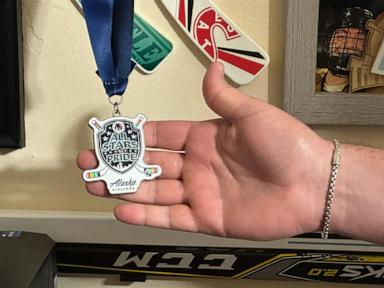
The survival of LGBTQ+ inclusive hockey leagues depends on a fragile equilibrium between cultural visibility and operational scalability. While the "Heated Rivalry" literary phenomenon—a series of romance novels depicting queer professional hockey players—has acted as a top-of-funnel marketing catalyst, the underlying infrastructure of these leagues remains precarious. Most amateur sports organizations operate on a volunteer-depleted model that lacks the bandwidth to convert sudden cultural interest into long-term member retention. To sustain this momentum, leagues must transition from informal community groups into structured entities capable of managing increased demand, rising ice-rental costs, and the specific safety requirements of their demographic.
The Cultural Acquisition Funnel
The surge in interest cited by league administrators follows a predictable pattern of media-to-participation conversion. "Heated Rivalry" and similar media properties serve as a low-friction entry point for individuals who previously perceived hockey as a high-friction or exclusionary environment. However, this influx creates an immediate strain on the Three Pillars of League Stability: Recently making news recently: A Patch of Grass to Call Their Own.
- Technical Onboarding: New participants drawn from literary fandom often lack foundational skating or puck-handling skills. Unlike legacy leagues where players enter with 10–15 years of childhood experience, inclusive leagues must act as primary educators. This necessitates a "Learn to Play" (LTP) infrastructure that consumes significant ice time—the most expensive resource in the sport.
- Financial Accessibility: Inclusion-focused leagues typically serve demographics with higher rates of economic volatility. The capital-intensive nature of hockey (gear, league fees, and insurance) creates a high "churn risk" if the league cannot subsidize costs through sponsorship or tiered membership.
- Psychological Safety: The value proposition of these leagues is not merely the sport, but the "safe space" mandate. As leagues grow, maintaining a culture that balances competitive play with an inclusive atmosphere becomes mathematically more difficult due to the widening variance in player intent and skill level.
The Ice Time Bottleneck
The primary constraint on any hockey organization is the fixed supply of ice. In North American urban centers, ice rink availability is often controlled by municipal contracts or long-term legacy agreements with youth hockey associations. Inclusive leagues, often being newer and smaller, are pushed to "marginal hours"—starts after 10:00 PM or weekend afternoons.
This creates an Elasticity of Participation problem. While a hardcore hockey player may tolerate an 11:15 PM puck drop, a newcomer attracted by cultural media is far less likely to maintain that commitment over a 20-week season. When demand surges due to a "Heated Rivalry" effect, leagues cannot simply add more capacity; they are forced to increase density (more players per bench) or implement waitlists. High density degrades the player experience, while waitlists kill the momentum of the initial cultural spark. Further information regarding the matter are detailed by FOX Sports.
Leagues that fail to secure consistent, accessible ice times will see a 40–60% attrition rate within the first two seasons of a growth spurt. The strategic counter-move is the "Multi-Rink Aggregation Model," where leagues partner with private facilities during off-peak seasons (summer) to build a track record of reliability before vying for prime winter slots.
The Safety-Visibility Paradox
Inclusive leagues face a unique operational contradiction: the more visible they become (marketing to new members), the higher their risk profile for external harassment or internal friction. This is the Safety-Visibility Paradox.
Most amateur leagues operate under a standard liability insurance policy that covers physical injury but lacks provisions for specialized security or digital harassment. As these leagues gain "fresh interest" from the public, they often become targets for political polarization. The administrative burden then shifts from sports management to risk management.
Leagues must quantify this risk by auditing their "Point of Contact" vulnerabilities:
- Physical: Unsecured locker room access in public rinks.
- Digital: Public-facing rosters or social media tags that expose members to doxing.
- Legal: The lack of formal bylaws regarding gender identity participation, which leaves the league vulnerable to both internal disputes and external legal challenges.
Failure to formalize these protections results in "Brain Drain," where the most experienced organizers—those who built the league—burn out under the weight of managing social conflict rather than sports.
Structural Attrition and the Volunteer Gap
The "Heated Rivalry" effect brings in "Consumers," but not necessarily "Producers." A sports league is a production-heavy entity requiring referees, timekeepers, gear managers, and financial treasurers.
In a standard hockey league, these roles are often filled by a rotating cast of parents or long-term players. In inclusive leagues, the burden often falls on a small core of 3–5 individuals. When membership increases by 20–30% due to cultural trends, the administrative workload does not increase linearly; it increases exponentially due to the communication overhead of managing less-experienced participants.
The Volunteer Burnout Threshold is reached when the ratio of new players to experienced organizers exceeds 15:1. Beyond this point, the quality of communication drops, league fees are collected late, and the "inclusive" atmosphere degrades into a chaotic one. To survive, leagues must implement a "Mandatory Contribution Model," where membership is contingent on either a higher fee or a designated number of volunteer hours, effectively internalizing the cost of growth.
The Gender Diversity Spectrum as a Competitive Advantage
While traditional hockey leagues are strictly binary (men’s and women’s), inclusive leagues operate on a spectrum. This is not just a social stance; it is a market differentiator. By removing binary restrictions, these leagues tap into a demographic that is currently ignored by the multi-billion dollar youth and amateur sports industry.
The Competitive Edge of Non-Binary Play lies in the removal of "Toxic Aggression" variables that often lead to injury and league folding. Standard "Beer League" hockey is notorious for high rates of fighting and dangerous play, leading to high insurance premiums and player turnover. Inclusive leagues, by prioritizing "controlled contact" or "non-check" play, significantly lower the physical cost of the sport. This increases the "Playing Life" of a member, meaning a single participant may pay league fees for 30 years rather than five.
Strategic Pivot: From Community to Corporation
For inclusive hockey leagues to move beyond "playing on amid challenges," they must adopt a corporate governance structure. The reliance on "passion" is a failing strategy.
- Diversified Revenue Streams: Stop relying solely on player fees. Develop "Friend of the League" memberships for the fandom community that may not skate but wants to support the infrastructure.
- Standardized LTP Curriculums: Create a repeatable, 8-week skating intensive that turns "fandom interest" into "hockey competency" before they enter the league ecosystem. This reduces on-ice frustration and injury.
- Regional Consolidations: Smaller inclusive leagues in the same geographic area should merge their administrative back-ends (insurance, registration software, and marketing) while keeping their individual team identities. This creates the "Economies of Scale" needed to negotiate better ice contracts.
The current cultural moment provides the energy, but the energy will dissipate. The leagues that remain in five years will be those that viewed the "Heated Rivalry" boom as a window to fund permanent, professionalized infrastructure rather than just a temporary spike in bench numbers.
Leagues must immediately audit their current member-to-organizer ratios and freeze recruitment if the ratio exceeds 20:1. Simultaneously, they should initiate "Sponsor-a-Skater" programs targeting the very media platforms and authors driving the current interest, effectively turning cultural capital into the hard currency required to buy the next hour of ice.
-1920w.jpg)