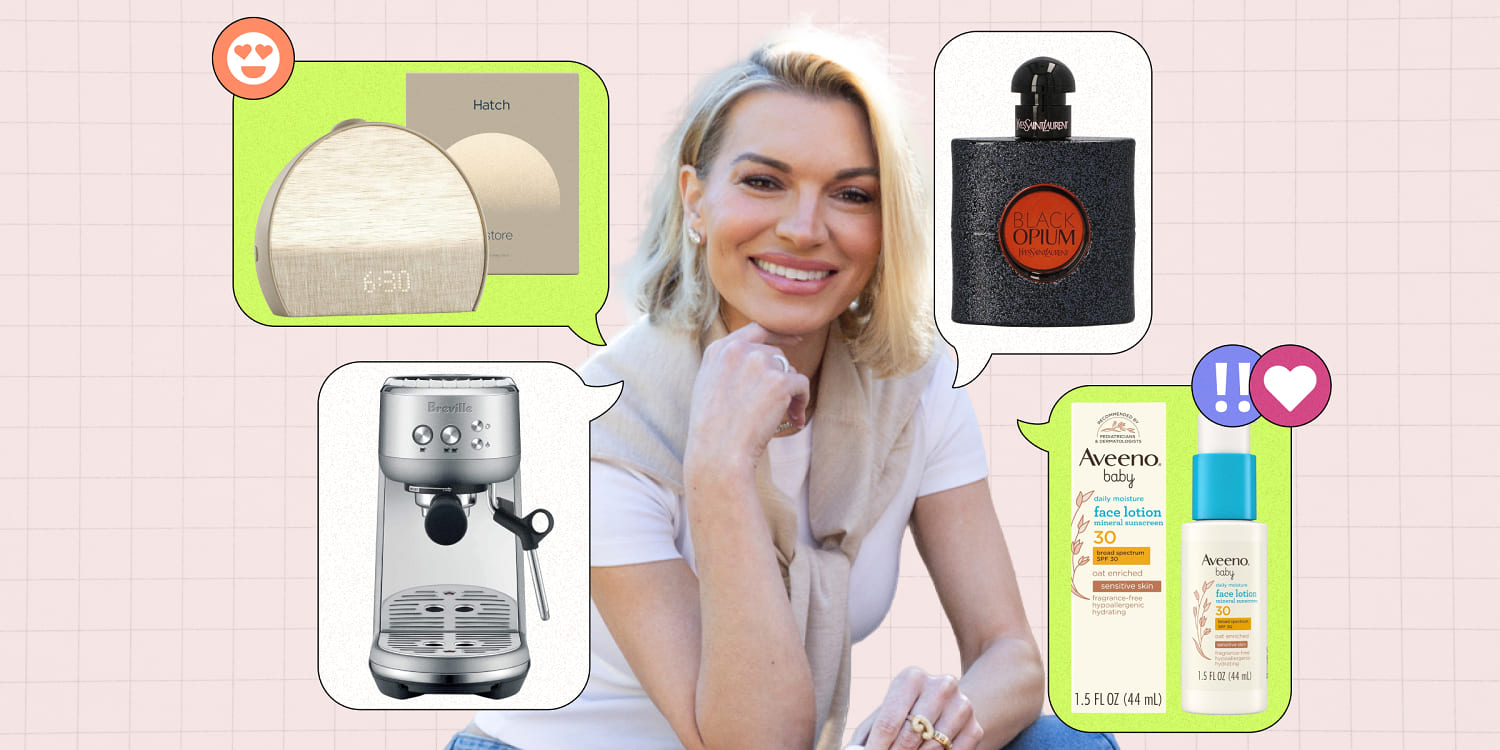
The financial lifecycle of a reality television personality operates on a highly volatile curve. Unlike traditional entertainment sectors where talent monetization is tied to intellectual property residuals or contractually guaranteed syndication fees, unscripted television talent must convert fleeting cultural relevance into sustainable commercial equity. The case of Lindsay Hubbard, a foundational cast member of Bravo’s Summer House, provides a precise framework for analyzing this conversion mechanism. The structural challenge of this business model lies in treating temporary attention asymmetric shocks as foundational capital to construct diversified, long-term revenue streams before the underlying platform depreciates or cast turnover occurs.
To evaluate the sustainability of a reality celebrity brand, one must deconstruct the ecosystem into three primary operational vectors: platform-dependent fee structures, direct-to-consumer brand equity conversion, and the institutionalization of personal narrative.
The Dual-Engine Monetization Framework
A reality television asset derives revenue from two distinct engines that operate in a feedback loop. Engine One consists of primary network compensation, which scales predictably based on tenure and viewership metrics. Engine Two encompasses external monetization vectors, including sponsored content, brand partnerships, and entrepreneurial ventures.
[Network Base Compensation] ──> [High-Visibility Cultural Placement] ──> [Audience Aggregation]
                                                                                   │
                                                                                   ▼
[Long-Term Enterprise Value] <── [Direct-to-Consumer Conversion] <── [Brand Equity Partnerships]
Engine One functions as a loss leader or a low-margin customer acquisition strategy for the talent's broader portfolio. Network fees fluctuate based on standard episodic rates, which typically scale upwards by 10% to 20% per season for returning talent who maintain high audience engagement scores. However, these fees are capped by the network's production cost models and ad-revenue margins. The true economic upside exists entirely within Engine Two.
The transition from Engine One to Engine Two requires a systematic conversion of attention into transactional intent. For an influencer or reality star, the conversion efficiency is determined by audience demographic alignment. The Summer House viewer profile skews heavily toward urban professionals aged 25–44 with high disposable income. Hubbard’s brand positioning specifically targets this segment by focusing on lifestyle curation, consumer packaged goods, and relationship dynamics. This alignment allows for premium pricing in brand partnerships, where standard cost-per-mille (CPM) valuation models are replaced by flat-rate activation fees reflecting high conversion probabilities.
The Friction Points of Personal Narrative Monopolization
The primary risk factor in reality television enterprise modeling is narrative dependency. A talent’s brand equity is inextricably linked to their on-screen storyline. When a narrative arc centers on volatile interpersonal dynamics—such as public relationship dissolutions or shifting group alliances—the corporate brand risk escalates.
Corporate sponsors evaluate reality talent through a strict brand-safety matrix. Highly volatile narratives generate immediate spikes in social media engagement but simultaneously depress long-term institutional partnership valuations. The analytical challenge is balancing the production of dramatic tension, which ensures network retention, with the maintenance of a stable, hirable corporate persona.
This tension creates a clear structural bottleneck:
- Algorithmic Vulnerability: Social media platform algorithms prioritize high-conflict or high-emotion content, incentivizing talent to lean into volatile narratives to sustain reach metrics.
- Sponsor Attrition: Corporate entities seeking predictable consumer associations actively avoid profiles associated with erratic sentiment swings.
- Equity Dilution: Frequent pivots between different product categories (e.g., shifting from fitness supplements to beverage hospitality) signal a lack of authentic category expertise, lowering consumer trust indices.
To mitigate this bottleneck, sophisticated talent assets employ a containment strategy. This involves segregating the volatile on-screen persona from the commercial entity. For instance, launching an independent consumer brand allows the talent to shift the consumer's purchasing rationale from "I support this individual" to "I derive utility from this product." This diversifies risk away from the personal reputation of the founder.
The Capital Deployment Matrix for Unscripted Talent
Survival past the median lifecycle of a reality television series (typically four to six seasons) requires aggressive capital redeployment. Talent must treat cash flows from peak visibility years as venture capital for secondary and tertiary business lines.
       High │  Brand Partnerships              Consumer Packaged Goods
            │  (High margin, high volatility)  (High scale, equity value)
Marginal    │
Return      │
            │
        Low │  Network Salary                  Affiliate Marketing
            │  (Fixed cap, high decay)         (Low margin, passive)
            └────────────────────────────────────────────────────────
              Low                                                High
                              Capital Intensity
Strategic Reinvestment in Consumer Packaged Goods (CPG)
Entering the CPG space, particularly in the beverage or hospitality sectors, leverages the talent’s distribution network without incurring traditional customer acquisition costs (CAC). By utilizing on-screen placement as a recurring, zero-cost marketing channel, reality stars can achieve distribution efficiencies that venture-backed startups cannot replicate. The limitation here is supply chain operational execution; inventory mismanagement or quality control failures can instantly destroy the brand equity accelerated by television exposure.
Real Estate and Hard Asset Allocation
Transitioning liquid capital derived from sponsored campaigns into real estate provides a deflationary hedge and stabalizes the talent’s balance sheet. For talent based in high-cost-of-living production hubs, real estate acquisition also serves a dual purpose as content creation backdrops, optimizing tax deductions via operational business expense frameworks.
The Fractional CMO Model
As traditional agencies struggle to navigate niche digital demographics, reality talent with proven track records of audience retention are increasingly taking equity stakes in early-stage startups in exchange for marketing services. This model shifts compensation from transactional cash fees to long-term capital gains, significantly altering the talent's net worth trajectory.
Mathematical Modeling of Influence Decay
The depreciation of reality celebrity equity can be modeled using a standard exponential decay function, where the attention capital ($A$) at any given time ($t$) post-show or post-season is dependent on the initial attention spike ($A_0$) and a decay constant ($\lambda$), modified by an engagement maintenance factor ($E$).
$$A(t) = A_0 e^{-(\lambda - E)t}$$
When talent is actively on air, $E$ approaches or exceeds $\lambda$, resulting in a net positive accumulation of attention capital. The moment production ceases or a cast member exits a series, $\lambda$ accelerates sharply. If $E$ is purely dependent on show-related topics, the brand equity approaches zero within 18 to 24 months.
To counteract this decay, the enterprise must introduce proprietary distribution channels—such as subscription podcasts, newsletter networks, or owned digital communities—where the talent controls the algorithm and direct consumer communication data (first-party cookies, email lists, SMS opt-ins). Controlling first-party data isolates the brand from network cancellations or social media platform policy shifts.
Operational Execution Plan for Brand Longevity
To institutionalize a personal brand into a lasting commercial enterprise, a reality personality must execute a precise three-phase transition plan designed to decouple revenue from physical screen time.
- Audience Auditing and Data Ownership: Immediately migrate social media followers to owned platforms. A 5% conversion rate of followers to an active email database provides a more stable valuation metric for future venture funding than a multi-million follower count subject to third-party algorithmic suppression.
- Category Specialization: Select a singular, high-margin industry vertical (e.g., skincare, fractional real estate, specialized hospitality) and build explicit operational competency within it. This eliminates the perception of the talent as a generic endorsement vehicle and establishes legitimate sector authority.
- Corporate Governance Structuring: Transition from a sole proprietorship operating via a loan-out corporation to a traditional corporate structure with experienced executive leadership. Hiring a seasoned Chief Operating Officer or brand strategist ensures that operational execution matches the scale of the audience distribution.
The long-term winners in the unscripted television ecosystem are not those who maximize screen time or generate the most volatile social media trends. The winners are the operators who systematically view television production as a highly subsidized, multi-year customer acquisition campaign for an independent corporate portfolio. Talent who fail to execute this pivot inevitably face financial regression when the network reallocates its production capital to a newer, lower-cost cohort of performers.