Distance used to mean safety.
For generations, geography functioned as the ultimate shield. Rivers carved borders, mountain ranges acted as stone walls, and vast expanses of earth bought time. If a fire started eight hundred miles away, you could smell the smoke eventually, perhaps. But you had hours. Days, even. You could sleep. You could pour a morning cup of coffee, watch the sun clear the horizon, and glance at a map with a detached, academic curiosity.
Geography is no longer a shield. It is merely a runway.
Consider what happens when the map shrinks. Not because the planet is smaller, but because human ingenuity, driven by desperation and the cold logic of modern engineering, has compressed space.
It is dawn in a quiet control room somewhere far from the front lines. The air smells of ozone and stale coffee. Fluorescent tubes hum a steady, nervous note against the ceiling. Outside, the world is still. Inside, fingers tap against plastic keys.
(Note: The following scenario illustrates the mechanics of long-range autonomous flight, constructed from verified technical parameters of modern long-range loitering munitions.)
A small electric motor spins to life. It is not the roaring, theatrical thunder of a fighter jet. It sounds more like a lawnmower starting in a neighbor's yard on a Saturday morning. Carbon fiber wings catch the gray morning light. There is no pilot strapped inside, no leather jacket, no family photograph tucked behind a dashboard console. There is only a lithium battery, a guidance chip receiving signals from a cluster of satellites orbiting miles above the earth, and a shaped explosive charge sitting quietly in the nose cone.
The machine rolls forward. It lifts into the sky.
And then, it flies for eight hours.
It crosses fields, rivers, highways, and sleeping towns. It drifts over forests where frost still clings to the pine needles. It passes overhead completely unnoticed, a tiny silhouette against the clouds, too small for heavy radar to care about, too quiet for the ear to catch until it is already gone.
Eight hundred miles.
That is the distance from London to Vienna. It is the distance from New York to Jacksonville. It is the vast, sprawling expanse that separates the theater of combat from what was once sanctuary.
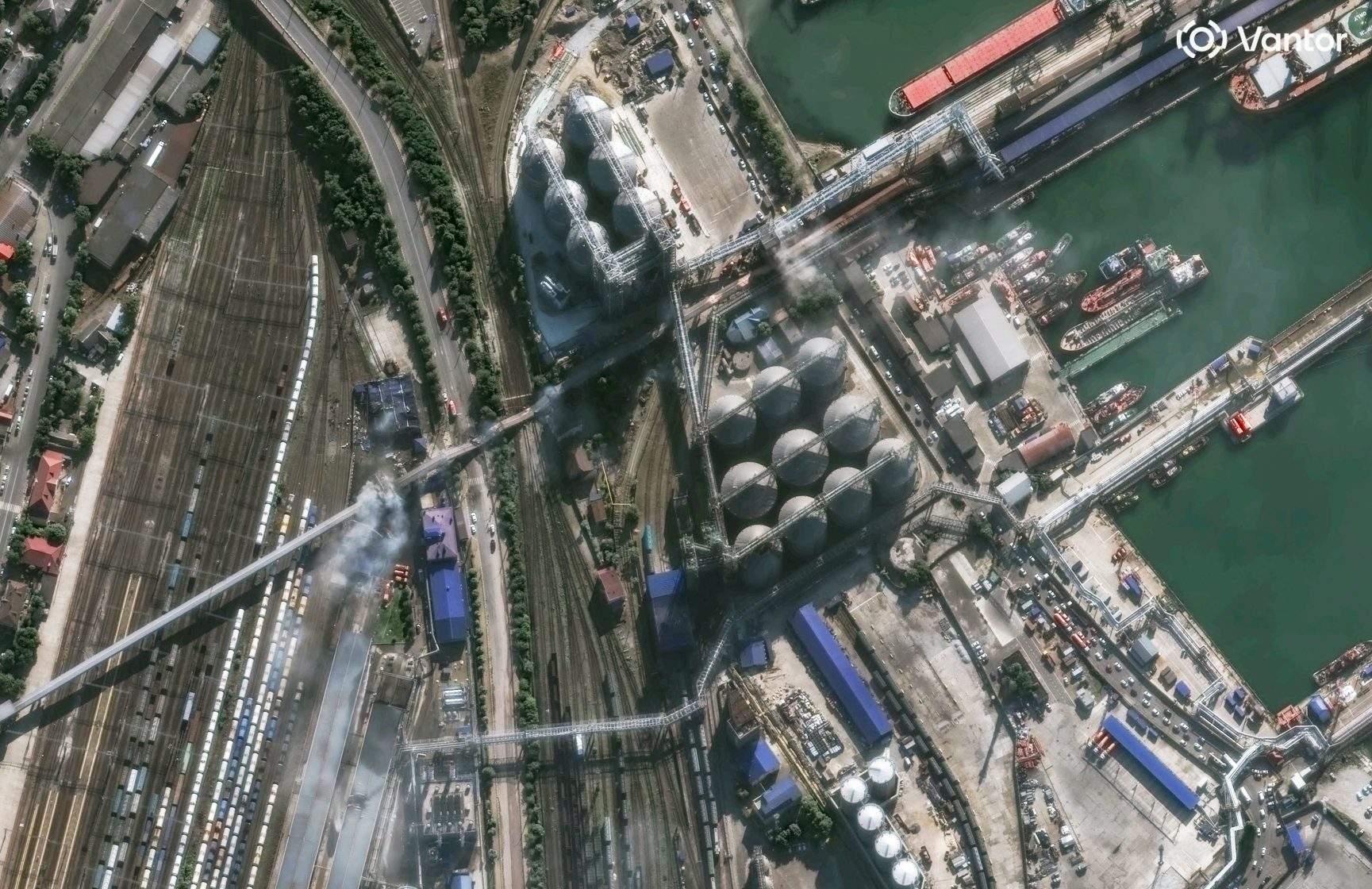
When that machine finally begins its descent, slicing through the upper atmosphere toward a massive industrial complex—a sprawling maze of steel pipes, cracking towers, and storage tanks that processes the lifeblood of an economy—the silence breaks.
Impact.
A flash of orange light blooms against the steel. The shockwave rattles windows miles away. Sirens begin their frantic, overlapping wail.
Suddenly, the cold abstractions of supply chains and strategic depth become brutally, uncomfortably real.
We talk about war in numbers. We tally barrels of oil per day, gross domestic product percentages, and coordinates on a grid. We treat conflict like a giant chessboard played by statesmen in velvet-lined rooms. But war is not played; it is suffered. And it is built on logistics.
To understand why an eighty-pound piece of fiberglass can strike a target eight hundred miles deep into enemy territory, you have to understand what a modern oil refinery actually is. It is not just a factory. It is a mechanical cathedral of pressure and heat.
Imagine a kitchen pressure cooker left on the stove, scaled up to the size of a skyscraper. Inside that tower, crude oil is heated until it boils, separating into gases, gasoline, diesel, and asphalt through precise thermal manipulation. It is a system balanced on a razor's edge.
When a precision-guided drone strikes that tower, it does not just knock a hole in the metal. It introduces chaos into a closed system. The pressure drops. The heat escapes. The automated safety valves slam shut, halting the entire operation to prevent a catastrophic chain reaction.
Suddenly, the fuel that feeds trucks, tanks, tractors, and generators stops flowing.
The ripple effect is immediate. A tractor cannot harvest wheat without diesel. A delivery truck cannot bring milk to a city supermarket without fuel. The price at the pump ticks upward, sending a shiver of anxiety through millions of households where nobody has ever held a rifle or set foot near a trench.
This is the invisible architecture of modern vulnerability. We have built a world so interconnected, so reliant on centralized nodes of energy and distribution, that a single well-placed spark can darken an entire horizon.
For months, military analysts watched the borders shift by meters. They measured success in trenches captured and fields reclaimed. It was a grinding, twentieth-century war played out in the mud, reminiscent of the Somme or Verdun. Millions of shells traded across no-man's-land in an artillery duel of attrition.
Then came the pivot.
When the land route becomes an immovable wall of concrete and mines, you do not try to climb it. You fly over it.
The development of ultra-long-range drones represents a fundamental shift in how distance is valued. Cost efficiency dictates the strategy. A sophisticated air defense missile system costs millions of dollars to build, deploy, and maintain. A long-range drone, built largely from commercial drone parts, fiberglass, and off-the-shelf electronics, costs a fraction of that.
When a multi-million-dollar missile is fired to intercept a low-cost drone, the economics of defense begin to unravel. It is a brutal mathematical asymmetry. If you spend three million dollars to stop a thirty-thousand-dollar machine, you are winning the battle and losing the war.
And that realization haunts the architects of modern security.
Back in the control room, the monitor flickers. The telemetry data flatlines. The screen goes gray.
The operators do not cheer. There are no high-fives or cinematic explosions captured in slow motion. There is only the quiet rustle of paper, the low murmur of coordinates being logged, and the heavy, suffocating weight of what comes next. Because every action in this war invites an equal and opposite reaction. The horizon has moved closer for everyone.
We are living through a compression of time and space. The oceans no longer protect us; the borders no longer isolate us. Every industrial nation is now tethered to every other by a delicate, trembling web of vulnerability.
The smoke clears over the distant refinery, but the air in the room remains thick. Outside, the sun continues its slow climb into the sky, indifferent to the maps we draw and the lines we attempt to defend.
The silence returns. But it is no longer peaceful. It is the silence of a world holding its breath, waiting to see how far the next shadow will reach.