The ink on the finger always fades before the promises do.
In a small café tucked behind the Alexander Nevsky Cathedral in Sofia, Georgi sits with a cold espresso. He is seventy-two. He has seen the transition from the Iron Curtain to the open market, and he has voted in every single election since 1990. But lately, the ritual feels less like a civic duty and more like a recurring fever. This Sunday, Bulgaria heads to the polls for the eighth time in five years.
Eight times.
Think about the rhythm of a life measured in four-year terms. Children grow, careers peak, and buildings rise. But in Bulgaria, the clock has stuttered. The political gears are jammed by a sludge of corruption that has turned the democratic process into a carousel that never stops, yet never moves forward.
The air in the café smells of roasted beans and damp pavement. Outside, the yellow cobblestones—the zhultite paveta—gleam under a grey sky. These stones are a symbol of the capital’s heart, yet even they are often the subject of scandal, poorly laid and frequently repaired at bloated costs. They are a metaphor for the state itself: beautiful in theory, crumbling in practice, and perpetually under renovation.
The Mathematics of Exhaustion
Bulgaria is the poorest member of the European Union, a fact that hits harder when you realize that billions of euros in recovery funds are sitting on a shelf in Brussels. They stay there because the Bulgarian parliament cannot agree on a budget, a government, or a way to purge the rot from its judicial system.
The numbers tell a story of a nation running in place. Since 2021, the political landscape has been a fractured mosaic. No single party can grab enough of the 240 seats in the National Assembly to rule alone, and no one wants to shake hands with the "systemic" parties accused of backroom deals with oligarchs.
Imagine trying to build a house where every three months, the architects quit, the foreman is arrested for graft, and the neighbors refuse to talk to each other. You would stop checking the progress. You would stop caring if the roof ever goes on.
That is the psychological state of the Bulgarian voter. Turnout has plummeted to historic lows, hovering around 30 percent. When seventy percent of a country decides to stay home, the "winners" aren't leading a nation; they are managing a ghost town.
The Shadow of the Magnitsky Act
The ghost in the room has a name, or rather, several names. The most prominent is Delyan Peevski.
To the outside world, he is a man sanctioned by the United States under the Magnitsky Act for his "extensive role in corruption." To many Bulgarians, he is the embodiment of the "captured state." He represents the invisible strings that tie the judiciary, the media, and the economy into a knot that no one seems able to cut.
His presence in the political arena acts as a chemical repellent for coalitions. For the reformist parties like "We Continue the Change," sitting at a table with Peevski’s faction is a betrayal of their very existence. For the established GERB party, led by the perennial Boyko Borissov, Peevski is a complicated ally who is as difficult to embrace as he is to discard.
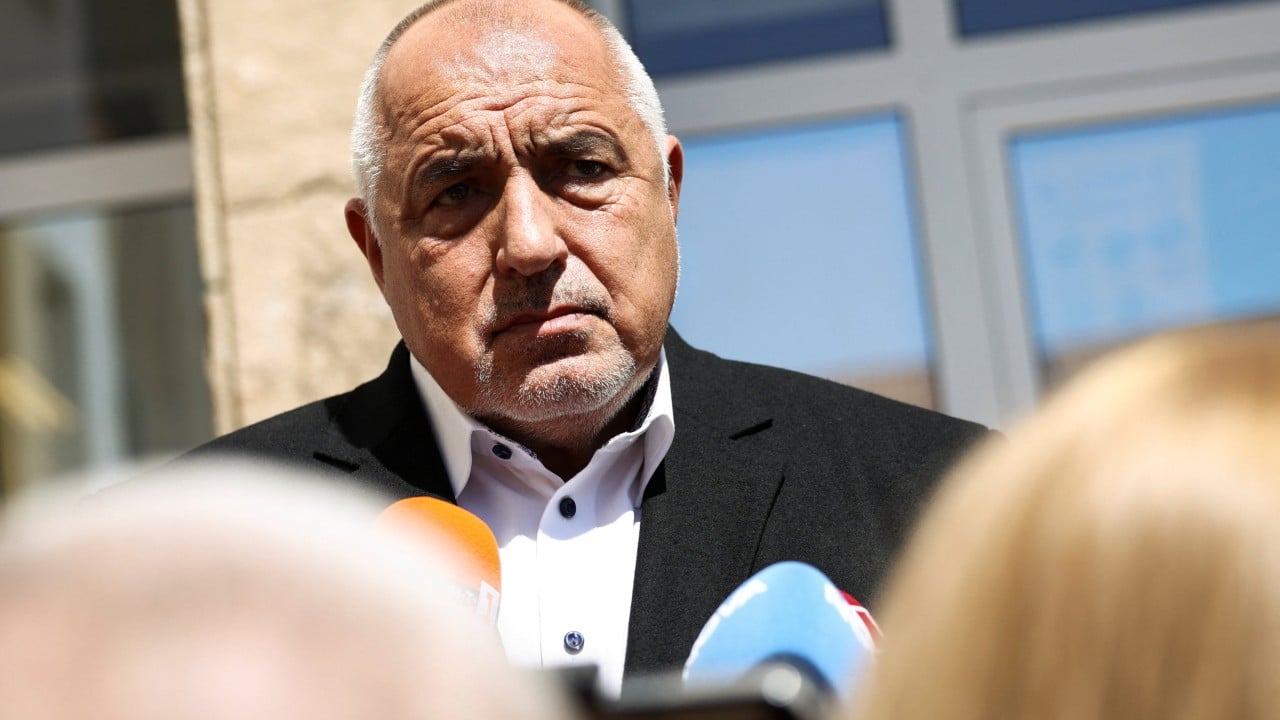
Borissov himself is a study in political survival. A former bodyguard with a populist touch, he has dominated Bulgarian politics for over a decade. He talks like a man of the people while being accused of overseeing the very systems that funnel public wealth into private pockets.
The standoff is a stalemate of egos and ethics. While the leaders bicker over who is less tainted, the average citizen watches their purchasing power evaporate. Inflation in Bulgaria isn't just a global trend; it’s sharpened by a lack of local oversight. When there is no stable government, there is no one to check the monopolies, no one to regulate the energy prices, and no one to ensure that the "euro-zone" transition happens smoothly.
The Invisible Stakes
It’s easy to dismiss this as "Balkan politics as usual." That is a mistake.
The stakes in Sofia ripple outward to the edges of the continent. Bulgaria sits on the strategic flank of the Black Sea. It is a vital corridor for energy and a frontline state in the shadow of the war in Ukraine. A paralyzed Bulgaria is a weak link in the NATO chain.
But the most painful stake is the human one.
Consider a hypothetical young woman named Elena. She is twenty-four, a software engineer in Plovdiv. She is the generation that was supposed to thrive in the "new" Bulgaria. But Elena is looking at flight prices to Berlin.
"It’s not that I don't love my country," she might say, leaning over a laptop in a co-working space. "It’s that I’m tired of being lied to by the same five men in different ties. Every election, they tell us they will fix the hospitals and the courts. Then they spend six months arguing about who gets to control the anti-corruption commission, the government collapses, and we do it all over again. I want to live in a country where the news is boring."
When the bright minds leave, they don't just take their taxes with them. They take the future. They take the possibility of a Bulgaria that functions.
The Ghost of the Ballot Box
Corruption in Bulgaria isn't always a suitcase full of cash—though sometimes it is. More often, it is a "brokerage" of influence. It’s the local mayor who ensures a construction contract goes to his cousin in exchange for a guaranteed block of votes from the village. It’s the prosecutor who conveniently loses a file.
This creates a culture of cynicism. In many rural areas, the "controlled vote" is a reality. People vote for who their employer tells them to, or for the party that provided the firewood for the winter. In a land of scarcity, a small favor is worth more than a grand ideology.
This eighth election is haunted by this cynicism. The campaign trails are quiet. There are fewer posters, fewer passionate debates on the streets. Even the scandals feel recycled. The latest photos of leaked documents or secret recordings barely move the needle.
The populace has developed a thick skin, but underneath it, the muscles are atrophying.
The Cost of Silence
What happens when a democracy enters a feedback loop?
In 2020, tens of thousands of Bulgarians took to the streets. They threw tomatoes at government buildings. They demanded an end to the "mafia state." That energy was real. It was visceral. It led to the downfall of the long-standing Borissov government.
But the revolution didn't have a plan for the day after. The "parties of change" fractured. They fought amongst themselves with the same intensity they used against the old guard.
Now, the silence on the streets is more deafening than the protests ever were. It is the silence of a people who have tried everything and found that the house always wins.
Georgi, in his café, folds his newspaper. He will vote on Sunday. Not because he believes it will change anything this time, but because he remembers when he didn't have the right to vote at all. He considers it a tribute to his younger self, the man who stood in the cold in 1990, heart hammering with the hope that Bulgaria would become a "normal" European country.
"Normal," he mutters, the word sounding like a prayer or a joke.
Normal would be a government that lasts four years. Normal would be a court system where the law applies to the billionaire and the baker equally. Normal would be an election that doesn't feel like a glitch in the Matrix.
The tragedy of Bulgaria’s eighth election isn't just the corruption or the political deadlock. It is the exhaustion of hope. It is the sight of a nation with so much potential—rich history, brilliant people, stunning landscapes—trapped in a loop by a handful of men who refuse to let go of the steering wheel, even as the car runs out of gas.
As the sun sets over Sofia, the shadows of the cathedral stretch across the yellow bricks. On Sunday, the doors to the schools and community centers will open. The plastic bins will be placed on the tables. The paper ballots will be stacked.
Millions will stay home, choosing the quiet dignity of withdrawal over the loud farce of participation. Others will go, pens in hand, marking a box with a sigh. They will fold the paper once, twice, and slide it into the slot, wondering if they will be back here in six months to do it all again.
The eighth fold is the heaviest.
It carries the weight of every failed promise, every stolen euro, and every young person who packed a suitcase and left. The ballot falls into the box with a soft thud, joining thousands of others in a pile of paper that represents a nation's desperate, stuttering desire to finally, truly, begin.