The world above is loud. Car horns blare against the humid concrete of Hong Kong, neon signs bleed pink and blue into the night sky, and millions of footsteps grind a relentless rhythm into the pavement. People rush. People talk. People live at a velocity that leaves no room for quiet.
Yet, just a few paces away from the suffocating bustle, another world exists. A vertical labyrinth of stone and shadow. A hillside where the city buries its dead.
On a Tuesday afternoon, amid the jagged gravestones of a sprawling mountainside cemetery, a woman who had ceased to exist in the ledgers of the living was found breathing.
Her name was not on the television screens. Her face was not plastered across community boards until late in the ordeal. For eleven days, time had stopped for a fifty-six-year-old soul lost in plain sight.
Eleven days.
Think about what happens in that span. The sun rises eleven times, indifferent to human suffering. The rain falls, washing over granite markers and dense thickets of wild brush. Eleven cycles of scorching heat and freezing mountain dew. Eleven nights of absolute, suffocating darkness where every rustle in the undergrowth sounds like a threat.
How does a person simply vanish into the green lung of a metropolis?
The geography of Hong Kong is an exercise in extremes. Skyscrapers cling to cliffsides like barnacles, and wild, untamed mountains rear up directly behind concrete canyons. The boundary between urban order and primordial wilderness is razor-thin. You can step off a paved path, take a dozen missteps through stubborn vines, and suddenly find yourself swallowed by a vertical jungle that defies rescue.
For eleven days, rescue teams combed the slopes. They walked the paths. They looked up, they looked down, they shone heavy-duty flashlights into the gloom. Search dogs picked up scents that led to dead ends. Families sat at home, suspended in the agonizing purgatory of not knowing. Hope dwindles on day three. By day five, it fractures. By day ten, it feels like an act of cruelty to keep believing.
And yet, beneath the canopy of trees near the cemetery, life persisted.
Survival in the wild is rarely about grand, cinematic heroism. It is small, grinding, and utterly unglamorous. It is the desperate decision to lick moisture from a broad green leaf. It is the agonizing crawl of a few inches an hour when joints seize up and muscles atrophy from lack of food and water. It is the sheer stubborn refusal of the human spirit to let go, even when the body is ready to surrender.
Consider what happens inside the human mind when isolation stretches past the breaking point. The silence becomes physical. It presses against the eardrums. Hallucinations whisper from the shadows of the rocks. Shadows twist into familiar faces. Every second stretches into an eternity, and every eternity collapses into a single, terrifying question: Will anyone ever look here?
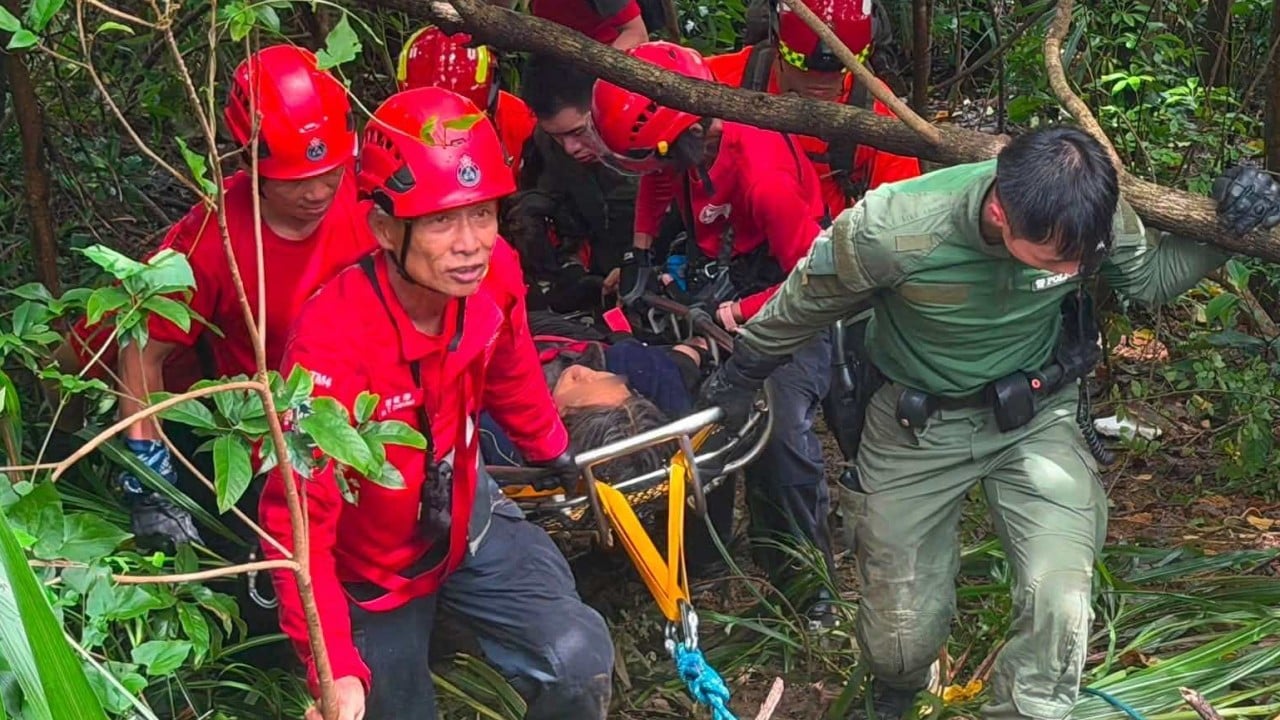
When the search party finally spotted movement, it didn't happen in a blaze of dramatic glory. There was no triumphant shout that pierced the valley. There was only a sudden, jarring contrast against the grey stone and green brush. A pair of eyes, hollowed out by hunger, blinking against the intrusive light of day.
She was weak. Dehydrated to the point where speech was impossible. Her skin bore the marks of the terrain—scratched, bruised, and weather-beaten. But her pulse was there. Faint, erratic, but undeniably beating.
When emergency workers carried her down the steep incline, past the rows of quiet headstones, a profound irony hung in the humid air. She had spent nearly two weeks surrounded by the dead, fighting with every ounce of her being to stay among the living.
We build cities to keep nature out. We pave over the earth, string up wires, and illuminate the night so thoroughly that we forget the dark still exists. We comfort ourselves with the illusion of safety, believing that a concrete wall separates us from the raw, indifferent elements of the planet.
This woman’s ordeal shatters that comfortable illusion. It reminds us that right at the edge of our hurried, modern lives, the wild remains entirely untamed. It takes only a single wrong turn, a single moment of disorientation, to fall through the cracks of civilization and find yourself entirely alone.
The ambulances drove away with sirens wailing, slicing through the heavy evening traffic, returning to the noise and the light and the crowds. The hillside cemetery settled back into its eternal quiet, the stone markers standing guard over secrets they never tell.
The city resumed its march. But deep in the woods, the damp earth holds the memory of eleven days where a human life hung by a thread, refusing to snap.