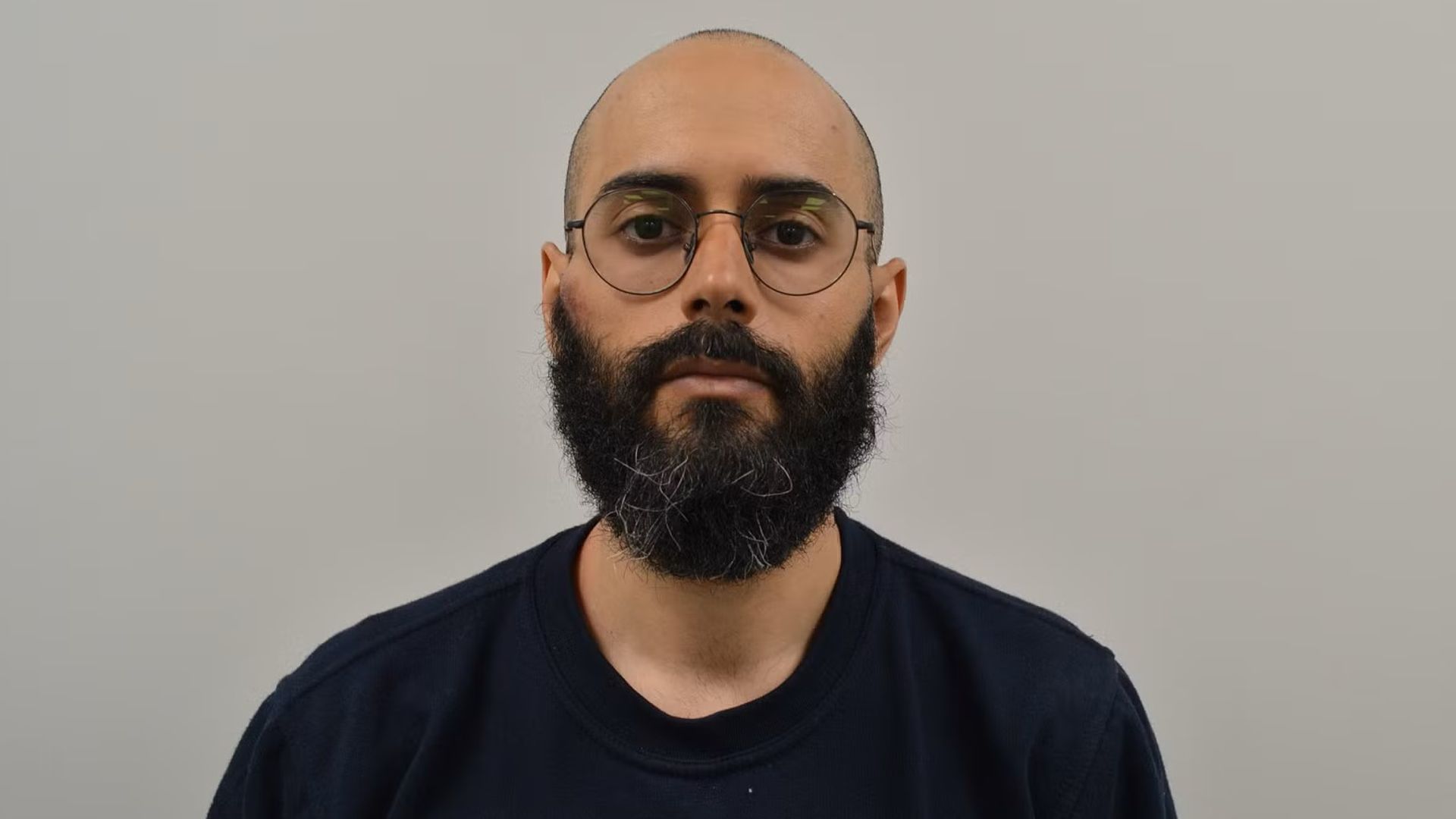
The headlines are predictable. They scream about "failed asylum seekers" and "knives at the gate." They paint a picture of a singular monster slipping through the cracks of a broken system to strike at a geopolitical lightning rod like the Israeli Embassy in London. This narrative is comfortable. It gives the public a villain to hate and a bureaucratic failure to blame.
It is also completely wrong.
By focusing on the individual drama of Hassan Alhancali, the media and security analysts are missing the structural rot. We are obsessed with the "who" and the "what" while ignoring the "how" and the "why." This wasn't just a failure of border control or a lapse in mental health services. This was a failure of predictive logistics and the outdated way we manage high-value targets in urban environments.
The Lazy Consensus of Border Control
The common outcry follows a weary script: "If he was a failed asylum seeker, why was he still here?"
This question is a distraction. I’ve consulted on high-stakes security protocols for over a decade, and I can tell you that the legal status of an attacker is the least relevant variable once they are standing on Kensington Palace Gardens with a blade. Deportation backlogs are a reality of every Western democracy, but pretending that a more efficient "removal" process is a magic shield against targeted violence is a fantasy.
The real issue is the dead zone of surveillance. We have created a system that tracks people through paperwork but fails to monitor the physical signals of radicalization or desperation in real-time. We are using 20th-century filing cabinet logic to fight 21st-century lone-actor threats.
Stop Blaming the Guard at the Gate
When someone tries to breach an embassy, the immediate reaction is to scrutinize the response time of the police or the thickness of the glass. In the Alhancali case, the Metropolitan Police did exactly what they were trained to do. They intercepted. They neutralized. They arrested.
But reactive security is just a polite way of saying "we got lucky this time."
The industry is obsessed with Hardened Perimeters. We build bigger walls and buy more expensive scanners. I have seen organizations sink millions into biometric gates while ignoring the fact that their perimeter starts five miles away in the digital and behavioral footprint of the attacker.
If a man can walk up to one of the most protected buildings in the UK armed with knives after his legal options have vanished, the failure happened months ago. It happened when the system stopped seeing him as a person of interest and started seeing him as a closed file.
The Geometry of the "Lone Actor"
The term "Lone Wolf" is a lazy catch-all for "we didn't see this coming."
In security circles, we often talk about the Attacker’s Lifecycle. It isn't a straight line from "failed asylum seeker" to "embassy attacker." It’s a series of pivots.
- Dislocation: The loss of legal status and social anchor.
- Fixation: The selection of a symbolic target (The Israeli Embassy).
- Preparation: The acquisition of low-tech weaponry.
Standard intelligence focuses on the "Preparation" phase. They look for bomb components or chatter on encrypted apps. But in the age of the kitchen knife, the "Preparation" phase is invisible. To stop this, we have to move the intervention point back to the Fixation phase.
This requires a radical shift in how we use data. Instead of monitoring everyone, we need to monitor the intersections of volatility. When a high-stress legal outcome (deportation order) intersects with a high-tension geopolitical event (conflict in the Middle East), that specific intersection should trigger an automated security escalation. We don't do this because it’s "difficult" or "controversial." We'd rather just act surprised when someone shows up with a knife.
The Myth of the "Fortress" Embassy
Let’s talk about the Israeli Embassy itself. It is a symbol. Symbols are magnetic.
Traditional security theory suggests that if you make a target hard enough, the attacker will go elsewhere. This is known as Target Displacement. But for an attacker driven by symbolic grievance, there is no "elsewhere." They aren't looking for a successful breach; they are looking for the act of the breach.
If Alhancali had wanted to kill the maximum number of people, he wouldn't have gone to a location crawling with armed police. He went there because the location provided the meaning his life lacked.
By continuing to treat these incidents as simple criminal acts, we ignore the Theatricality of Violence. The security industry is currently failing to account for the "Martyrdom ROI." If the goal of the attacker is to be caught or killed on camera at a specific GPS coordinate, then your armed guards aren't a deterrent—they are part of the set dressing for the attacker’s final act.
Breaking the Cycle of Reactive Policy
The solution isn't "better" asylum laws or "more" police. Those are blunt instruments.
We need to implement Behavioral Trigger Protocols.
- Integration of Case Management and Security: Why does the Home Office not share real-time "volatility scores" with local law enforcement for individuals whose legal appeals have been exhausted?
- Symbolic Geo-fencing: High-value embassies should not just be protected by physical barriers, but by digital perimeters that flag specific behavioral anomalies in the surrounding streets minutes before the approach.
- De-escalating the Symbol: We need to stop treating every failed breach as a national crisis. The media oxygen given to these "failed" attempts is exactly what fuels the next one.
The harsh truth is that we are currently incentivizing this behavior. We provide the stage, we provide the audience, and we provide the "villain" narrative that gives these individuals the significance they crave.
The Price of Professional Blindness
I’ve sat in rooms where "experts" argued over the caliber of rounds the embassy guards should carry. It’s theater. It’s majoring in the minors. While we argue about the equipment, the methodology of the threat has moved on.
The "Lone Actor" isn't a ghost. They are a predictable outcome of a system that manages people like inventory rather than risks. If we don't start mapping the psychological terrain of the city with the same precision we use for the physical terrain, we will keep having this same conversation every six months.
We are currently defending against the 1990s version of terrorism. We are looking for cells and networks. We are looking for logistics and funding. But the new threat is unfunded, unnetworked, and hyper-local. It is the weaponization of the mundane.
Stop looking for a conspiracy. Start looking at the data points we chose to ignore because they didn't fit into a tidy spreadsheet.
The knives at the gate weren't the problem. The fact that he was allowed to think the gate was his only remaining destination is the real security failure.
Every time we focus on the "failed seeker" headline, we lose the war of intelligence to the war of optics. The system didn't break; it functioned exactly as it was designed—to react too late and learn nothing.
Stop building better walls. Start building better eyes.
The next one is already walking toward the gate. And you're probably looking at his passport instead of his path.


