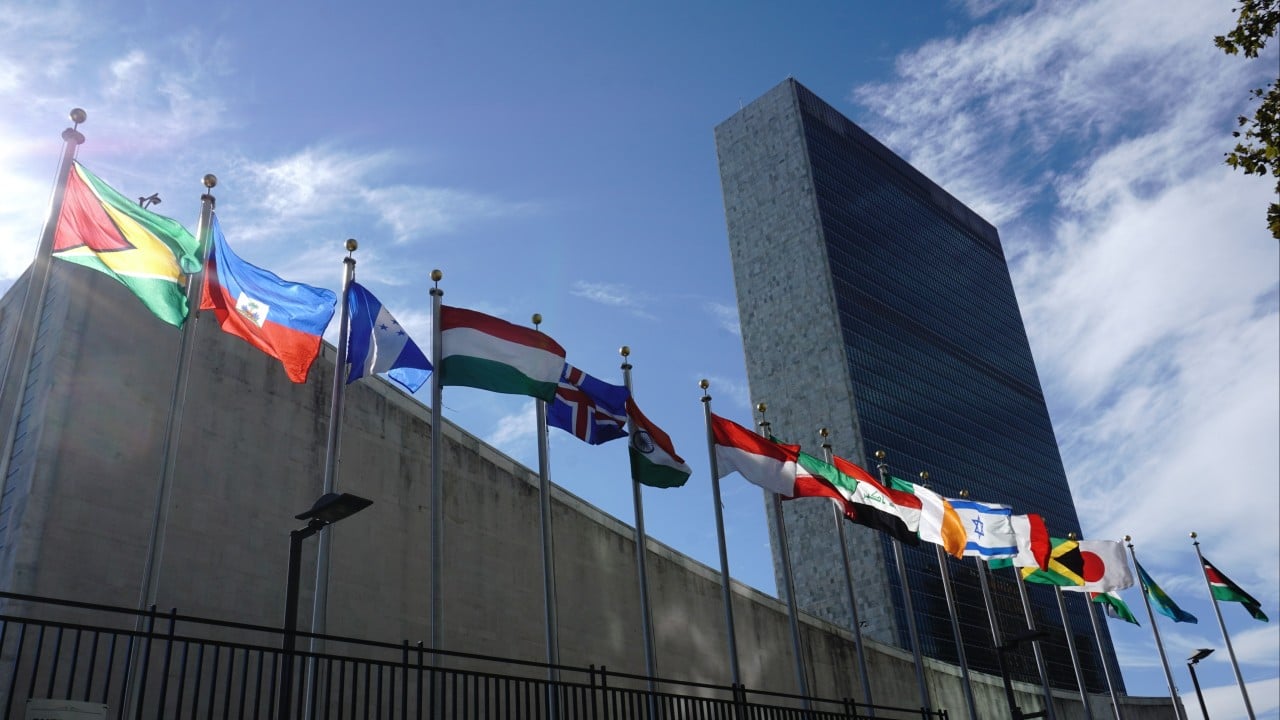
The room in the Rayburn House Office Building smells of old wood and expensive coffee, a scent that usually signals the quiet machinery of American governance. But today, the air feels thin. When experts sit before a House committee to dissect the United Nations, they aren't just talking about a sprawling bureaucracy in Midtown Manhattan. They are talking about a vacuum.
Imagine a specialized agency—let’s say the one that decides the technical standards for the 6G internet you will use five years from now. It is a small room with a long table. There are twenty chairs. For decades, the person in the American chair led the conversation. They spoke of open protocols, privacy, and the messy but vital freedom of the digital world. But lately, the American chair is often empty, or the person sitting in it is checking their watch, wondering if their funding will be slashed by the next budget cycle.
Across the table, the Chinese delegate is not just present. They are leaning in. They have brought snacks. They have brought technical blueprints. They have brought a vision of an internet that functions like a series of gated walls. If we leave the table because the bill is too high, we don't just save money. We hand over the keys to the house.
The Ledger of Frustration
The United Nations is, by any honest metric, a mess. It is a hulking, 79-year-old apparatus that often moves with the grace of a glacier and the efficiency of a DMV on a holiday weekend. We see the numbers: billions of dollars in dues, programs that overlap until they lose meaning, and a persistent, grating sense that the United States is the primary financier of its own critics.
Witnesses recently told a House Foreign Affairs subcommittee that the UN is bloated and costly. They aren't lying. It is a system where a single peacekeeping mission can cost more than the annual budget of a small city, and yet peace remains a flickering candle in the wind. The frustration is visceral. It’s the feeling of paying for a premium subscription to a service that constantly glitches.
But the ledger has a second page. It’s the invisible side—the one that doesn't show up in a standard audit.
Consider the World Health Organization or the International Telecommunication Union. These aren't just acronyms; they are the referees of the global game. When the U.S. retreats because of the "bloat," it creates a literal space. China has spent the last decade sprinting into those spaces. They aren't just filling chairs; they are rewriting the rulebooks. They are ensuring that the "international standard" for everything from facial recognition to satellite orbits looks exactly like the domestic policy of the Chinese Communist Party.
The Gravity of the Invisible
We tend to care about the UN only when it fails spectacularly—a vetoed resolution on a war, a scandal in a refugee camp. We ignore the quiet, boring stuff.
Think about the way your phone connects to a network when you land in a foreign country. Think about the safety standards of the grain in the bread you ate this morning. Think about the flight paths that keep planes from clipping each other over the Atlantic. This is the "boring" work of the UN. It is the connective tissue of a globalized species.
If the United States steps back, we aren't just saving a few billion dollars. We are opting out of the design phase of the future.
One witness pointed out that China’s influence isn't just about money; it's about people. They are placing their citizens in mid-level bureaucratic roles—the ones who actually write the memos and draft the regulations. While we debate whether the UN is worth the headache, they are treating it like a long-term investment. They are playing a game of Go while we are arguing about the price of the board.
The Cost of Staying Home
Retreat feels like a victory in the short term. It plays well on a campaign trail. It feels like common sense to stop throwing good money after bad. But the world doesn't pause when America takes a breath.
There is a hypothetical scenario that haunts the halls of the State Department. In this scenario, the U.S. decides the UN is too broken to fix and stops paying its dues entirely. We lose our vote. We lose our seat on the committees that matter. Six months later, a new global standard for data privacy is proposed. It is a standard that allows governments to back-door any encrypted message. It passes because there was no one in the room to argue for the right to be left alone.
By the time we realize the standard has been set, it’s too late. The world has moved on. The "bloat" we walked away from has become the cage we live in.
The witnesses weren't asking for the committee to love the UN. They were asking them to recognize it as a battlefield. You don't abandon a strategic hilltop just because the grass is long and the wind is cold. You stay because if you don't, your enemy will.
The Human Element of Bureaucracy
Behind the talk of "multilateralism" and "dues assessments" are actual lives.
There is a technician in a lab in Geneva. There is a peacekeeper at a lonely outpost in a desert. There is a diplomat who hasn't slept in three days because they are trying to keep a specific word out of a treaty that would give dictators legal cover to disappear dissidents.
When we talk about "the UN," we are talking about these people. We are talking about whether the American voice—which, for all its flaws, still carries the DNA of liberty—will be the one they hear when the chips are down.
The critics are right: the UN is a nightmare to manage. It is full of people who don't like us and systems that don't work. But it is the only room where every country in the world is forced to show up.
If we leave, we aren't just walking out of a building. We are walking out of the conversation that decides what it means to be a human being in the 21st century.
The most expensive thing in the world isn't a UN membership fee. It’s the cost of trying to buy back your influence once you’ve already given it away for free.
The committee sat in silence for a moment after the testimony. The coffee was cold. The wood of the desks remained polished and indifferent. Outside, the world continued its frantic, messy spin, waiting to see who would be brave enough to keep sitting in the chair.