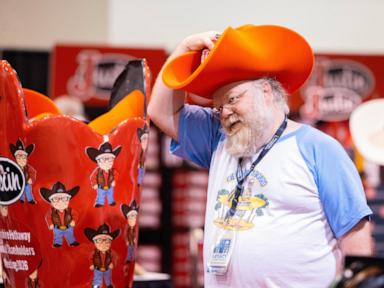
The annual pilgrimage to Omaha has long been the closest thing the financial world has to a religious revival. For decades, tens of thousands of devotees crammed into a hockey arena to hear the "Oracle" dispense wisdom that doubled as a moral compass for American capitalism. But on Saturday, the vibe shifted. Greg Abel sat in the chair formerly occupied by the late Charlie Munger, marking the first time the conglomerate’s new CEO led the proceedings. The most striking takeaway was not what was said from the stage, but the visual of the arena itself. The crowd was thinner. The energy was muted. The cult of Berkshire Hathaway is facing a cold reality that no amount of cash reserves can fix.
The shrinking attendance figures signal more than just the passing of a legendary partnership. They represent a fundamental break in the transmission of a specific investment philosophy. For forty years, the Buffett-Munger duo sold a vision of "Value Investing" that felt like a secret weapon. Today, the market views that weapon as a relic. With interest rates remaining stubborn and tech giants commanding the lion's share of global growth, the Berkshire model of buying "wonderful companies at fair prices" is competing against a digital economy that moves too fast for traditional discounted cash flow models to capture.
The Abel Era and the Problem of Charisma
Greg Abel is a brilliant operator. He understands energy, utilities, and railroad logistics better than almost anyone on the planet. He is, by all accounts, the perfect person to keep the trains running on time. But Abel is not a folk hero. He lacks the grandfatherly wit that turned Warren Buffett into a household name and the acerbic, grumpy wisdom that made Charlie Munger a cult icon.
When investors showed up in Omaha this year, they weren't just looking for a report on BNSF Railway’s quarterly margins. They were looking for the spectacle. Without the chemistry of the two founders, the meeting transformed from a global event into a standard corporate earnings call held in a cavernous room. This transition from "personality-driven" to "process-driven" management is necessary for the company’s survival, but it is lethal for the brand's cultural relevance.
Institutional investors don't care about charisma. They care about the $189 billion cash pile that Berkshire is currently sitting on. That mountain of liquidity is a double-edged sword. It provides a safety net that is unmatched in the corporate world, but it also acts as a massive drag on returns. In an era where private equity and venture capital hunt for 20% internal rates of return, Berkshire’s steady, slow-growth approach feels increasingly out of step with the younger generation of money managers.
The Apple Concentration Trap
One of the most intense points of scrutiny during the meeting involved Berkshire’s massive stake in Apple. For a man who famously avoided tech for half a century, Buffett’s pivot to the iPhone maker was the most successful trade of his career. However, recent filings showed that Berkshire trimmed its Apple position by about 13%.
This move raised eyebrows across the floor. Is it a sign that the greatest investor of all time thinks the AI revolution has left Apple behind? Buffett framed it as a tax-efficient move, suggesting that he expects capital gains taxes to rise in the future. It was a classic "Buffettism"—deflecting a strategic question with a pragmatic, almost boring, fiscal explanation.
But the underlying tension remains. Berkshire is so large that it can only move the needle by taking massive positions in massive companies. This limits their playground. They can no longer hunt for the "small-cap gems" that built the original fortune. They are now an index fund of the old American economy, tethered to the fate of big tech and heavy industry. If Apple loses its luster, or if the consumer spending that drives Berkshire’s insurance and retail arms falters, there are no "hidden" bets to save the day.
The Lost Generation of Value Investors
Walking through the exhibit hall—where shareholders can buy everything from See’s Candies to Geico-branded insurance—the demographic shift is impossible to ignore. The average age of a Berkshire shareholder appears to be climbing every year.
Younger investors, the ones currently driving the boom in AI stocks and crypto-assets, do not see their values reflected in the Omaha gospel. They see a company that refuses to pay a dividend despite its hoard of cash. They see a management team that historically avoided the very technologies that have defined the 21st century.
This isn't just a matter of taste. It’s a matter of capital flow. As the great wealth transfer begins to shift trillions from Boomers to Millennials and Gen Z, that money is not flowing into Geico or Dairy Queen. It is flowing into ETFs, sustainable energy startups, and high-frequency trading platforms. The "moat"—Buffett’s favorite term for a competitive advantage—is being bridged by software.
The Hidden Cost of the Cash Pile
Maintaining $189 billion in cash is an admission of defeat in a bull market. It means you cannot find anything worth buying. While the "Oracle" waits for a market crash to deploy his capital, he is missing out on the compounding power of the most aggressive growth cycle in human history.
- Opportunity Cost: The billions lost by not participating in the early stages of the semiconductor explosion.
- Inflationary Pressure: Even with high interest rates on T-bills, the real purchasing power of that cash is at the mercy of federal fiscal policy.
- The Size Constraint: Berkshire is now so big that a $10 billion acquisition—something that would be life-changing for most firms—is barely a rounding error for them.
The Insurance Engine is Coughing
Beneath the surface of the meeting, the insurance operations showed signs of strain. Geico has been playing catch-up with competitors like Progressive for years. Progressive’s superior use of telematics—data-driven tracking of driver behavior—has allowed them to price risk more accurately.
Berkshire’s insurance business is the "float" that powers the entire machine. If the insurance units lose their edge, the engine stalls. Abel and his team are pouring money into tech upgrades, but they are fighting against decades of institutional inertia. In the past, Buffett’s reputation alone was enough to keep shareholders from asking the hard questions about tech debt. Now that the man behind the curtain is changing, the questions are getting louder.
The Narrative is No Longer Enough
For years, the Omaha meeting was a masterclass in narrative control. Buffett would tell stories about the resiliency of the American tailwind, and the crowd would go home feeling safe. But narrative can only mask underperformance for so long.
In the last decade, Berkshire has struggled to consistently beat the S&P 500. For a "veteran" journalist watching this play out, the irony is thick. The man who taught the world to ignore the noise and focus on fundamentals is now being judged by the very fundamentals he championed. And those fundamentals say that Berkshire is a maturing utility, not a growth engine.
The shrinking crowd in Omaha is the market’s way of pricing in the end of an era. The investors who stayed home weren't just avoiding the travel costs; they were acknowledging that the information they used to get in Omaha is now available everywhere, and the "magic" that made it special has largely evaporated.
The future of Berkshire Hathaway under Greg Abel will be one of efficiency, consolidation, and steady dividends (eventually). It will be a well-run, massive, and ultimately unexciting corporation. The era of the investment superhero is over.
If you are waiting for a signal to change your strategy, the sight of those empty chairs in the CHI Health Center is all the evidence you need. The "Omaha Way" hasn't failed, but it has become common knowledge. And in the world of high-stakes finance, once a secret becomes common knowledge, the profit is already gone.
Move your capital where the moats are still being built, not where they are merely being guarded.