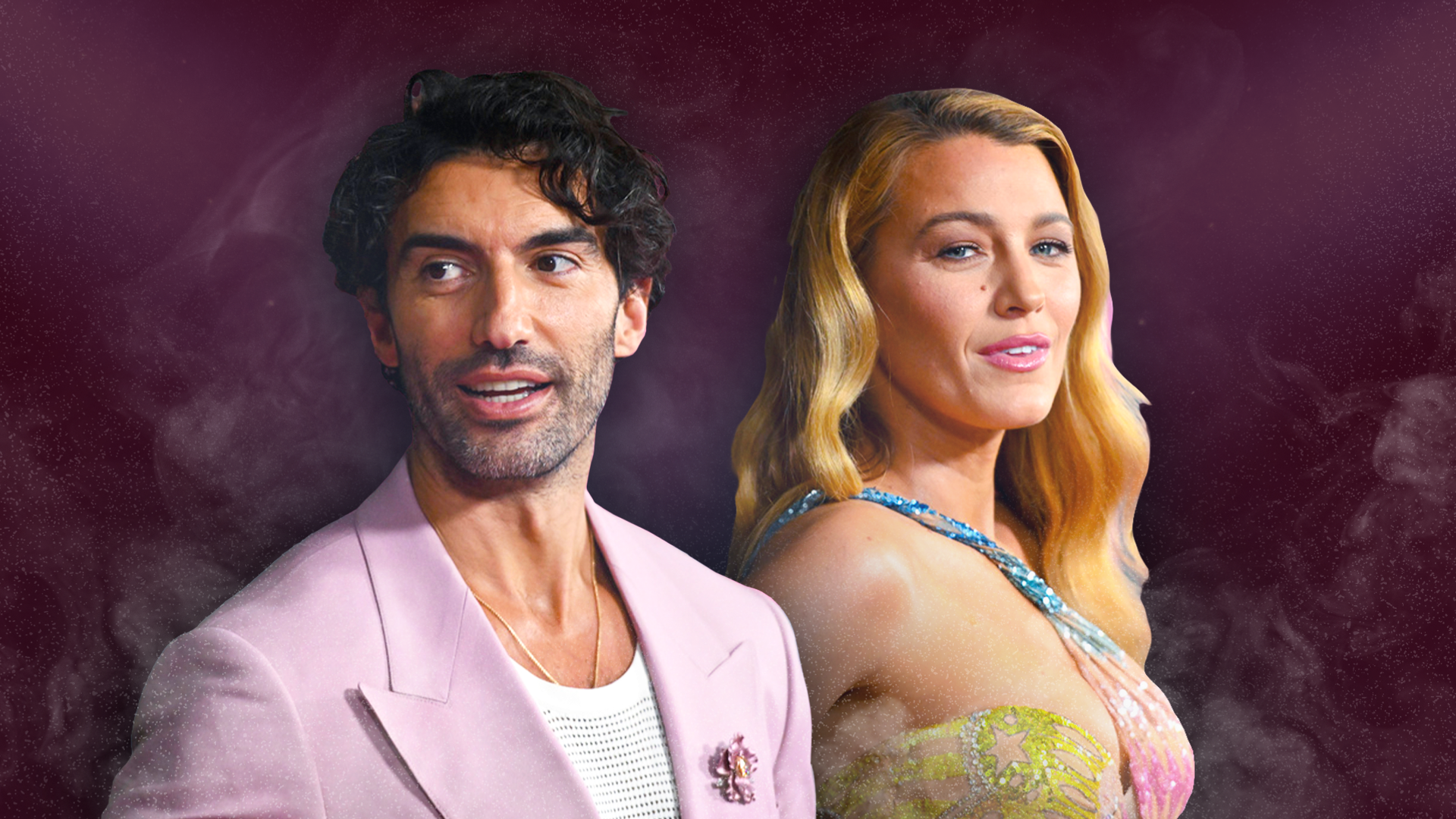
The polished facade of the summer box office has cracked. While the public watched a floral-clad press tour for It Ends with Us, a far more clinical and cold-blooded reality was taking shape behind the scenes. Justin Baldoni and Blake Lively are no longer just creative partners who drifted apart during a difficult edit. They are now the primary figures in a looming legal entanglement that could redefine how creative control and "producer power" are exercised in the modern studio system. This is not a simple case of hurt feelings or "creative differences." It is a high-stakes dispute over contractual obligations, final cut rights, and the alleged hijacking of a $100 million-plus intellectual property.
The friction point is simple. When an actor who also produces—in this case, Lively—clashes with a director who also owns the production rights—Baldoni—the fallout isn't just social. It’s financial. Sources close to the production indicate that the dispute has moved beyond the "ice-out" phase and into the hands of specialized legal teams. They are scrutinizing the fine print of the agreements made between Baldoni’s Wayfarer Studios and the various entities representing Lively and her husband, Ryan Reynolds, who reportedly exerted significant influence over the film's final shape.
The Battle for the Final Frame
In the hierarchy of a film set, the director is traditionally the ultimate authority on the creative vision. However, that tradition has been eroded by the rise of the "A-List Producer." Blake Lively was not just the star; she was a producer with significant leverage. The core of the legal tension involves the existence of two competing cuts of the film. Baldoni, as director, oversaw the standard post-production process. Lively, however, reportedly commissioned her own edit of the movie from Shane Reid, an editor she knew from her work on a Taylor Swift music video.
This isn't just an eccentric choice. It’s a potential breach of the traditional post-production pipeline. When a producer bypasses the director to create a shadow version of a film, they are effectively declaring war on the director's "right of first cut," a protected status in many industry contracts. If Baldoni can prove that his version was sidelined without due process, or that Lively’s team utilized resources outside the agreed-upon budget and scope to undermine his vision, the liability for the studio and the individual producers grows.
The industry is watching because this sets a dangerous precedent. If a star can simply outmaneuver a director by bringing in their own team and forcing their version into theaters, the title of "Director" becomes a hollow label. Baldoni has already hired public relations crisis manager Melissa Nathan, who famously represented Johnny Depp. You don't hire that kind of muscle for a simple PR pivot. You hire them because you are preparing for a long, ugly fight in the public eye and, eventually, a courtroom.
The Reynolds Factor and Shadow Directing
The involvement of Ryan Reynolds has shifted this from a standard talent dispute into a corporate governance nightmare. Lively publicly admitted that Reynolds wrote a significant portion of the iconic rooftop scene. While this was presented as a charming anecdote of a supportive husband, it sent a shockwave through the Writers Guild of America (WGA) and director circles.
Writing on a film during a strike—or even outside of a strike without being a credited writer—is a minefield. If Reynolds contributed significant material that made it into the final cut without being a member of the production's writing staff, it opens the door for grievances regarding credits and residuals. From an investigative standpoint, the question is whether Reynolds’ involvement was a breach of Baldoni’s contract, which presumably gave him the right to manage the creative contributions on his set.
We are seeing the emergence of a "super-producer" dynamic where a celebrity couple can effectively take over a project. If Baldoni’s legal team can demonstrate that his authority was systematically dismantled by an outside party—Reynolds—who had no formal role in the director’s chair, the case for "tortious interference" begins to take shape. This occurs when one party intentionally damages the contractual or business relationship of another. Baldoni had a contract to direct and produce. If the Lively-Reynolds camp made that impossible, the damages could be astronomical, especially given the film's massive financial success.
Marketing Malpractice and Brand Protection
The rift became undeniable during the press tour. Baldoni did most of his interviews alone, often focusing on the heavy themes of domestic violence that ground the story. Lively, conversely, marketed the film as a vibrant, floral-heavy "girl’s trip" experience, even using it to cross-promote her new hair care line and sparkling drink brand.
This creates a fascinating legal question regarding the "promotion and publicity" clauses in talent contracts. Actors are typically contractually obligated to promote a film in a way that benefits the project. If one party’s promotional strategy is diametrically opposed to the film’s actual content—or if they use the platform to prioritize personal business interests over the film’s messaging—the other producers may have grounds for a breach of contract claim.
Baldoni’s side can argue that Lively’s "tonal pivot" during the press tour damaged the long-term integrity of the project and his reputation as a filmmaker who handles sensitive subject matter. In Hollywood, reputation is a currency. If a director is framed as someone "difficult" to work with, or if their movie is marketed in a way that makes their creative choices look irrelevant, their future earning potential drops. The "Whisper Campaign" is a classic industry tool, but when it becomes a "Shout Campaign" on TikTok, it becomes evidence.
The Data Behind the Drama
The numbers explain why neither side is backing down. It Ends with Us outperformed every industry projection, raking in over $300 million globally. In a world where the film had flopped, both parties would likely have slunk away to lick their wounds. Success, however, creates a much larger pot to fight over.
| Stakeholder | Primary Interest | Potential Legal Exposure |
|---|---|---|
| Justin Baldoni | Directorial Credit/Future Projects | Loss of creative reputation; Breach of contract |
| Blake Lively | Brand Expansion/Creative Control | Tortious interference; Unsanctioned use of production funds |
| Wayfarer Studios | IP Protection/Sequel Rights | Failure to mediate; Contractual negligence |
| Sony/Columbia | Box Office/Distribution | Third-party liability in talent disputes |
The sequel, It Starts with Us, is currently in a state of paralysis. Baldoni owns the rights. Lively is the face of the franchise. Under normal circumstances, a sequel would be greenlit within days of a $50 million opening weekend. Instead, there is silence. The legal stalemate means that the "happily ever after" for the studio is currently locked in a vault of nondisclosure agreements and lawyer-vetted emails.
The Breakdown of Set Safety and Conduct
Rumors of an "unsafe" or "uncomfortable" set environment have been floated, primarily from the Lively camp. These accusations, while vague, are often used as a preemptive strike in Hollywood litigation. By framing a director as "problematic," a producer can justify taking over the edit or sidelining them during the release.
However, these claims are a double-edged sword. If the environment was truly toxic, why weren't the standard HR protocols followed during filming? If the studio didn't step in then, their sudden support of a "shadow edit" later looks less like a safety measure and more like a power grab. Investigative digging into the daily production reports—the "DPRs"—will eventually reveal if these complaints were documented in real-time or if they surfaced only after the power struggle moved into the editing suite.
The Future of Creative Autonomy
This conflict is the tip of the spear for a broader shift in the industry. As stars become more powerful than the studios that employ them, the traditional roles of "talent" and "management" are blurring. When a star can bring their own editor, their own writers, and their own marketing firm to a project, the director becomes a mere technician.
If Baldoni pursues a lawsuit, it will likely focus on the systemic exclusion of his voice from the project he brought to life. It will be a test case for whether a contract actually means what it says, or if it is merely a suggestion that can be ignored by the most famous person in the room. The discovery process alone—the forced release of texts, emails, and internal memos—would be a cataclysm for the Lively-Reynolds brand, which relies heavily on a curated image of effortless perfection.
The courtroom is the only place where the "nice" masks come off. For an industry built on make-believe, the looming litigation surrounding It Ends with Us is a stark reminder that the most brutal drama usually happens after the cameras stop rolling.
The real story isn't who liked whose Instagram post. It’s about who holds the deed to the footage, who signed the checks for the unauthorized edits, and who will be left standing when the credits finally roll on this legal disaster. The era of the untouchable A-list producer is about to face its most significant challenge in decades. If you think the movie was tense, wait until you see the depositions.


.jpg?width=1200&auto=webp&trim=0%2C100%2C0%2C100)