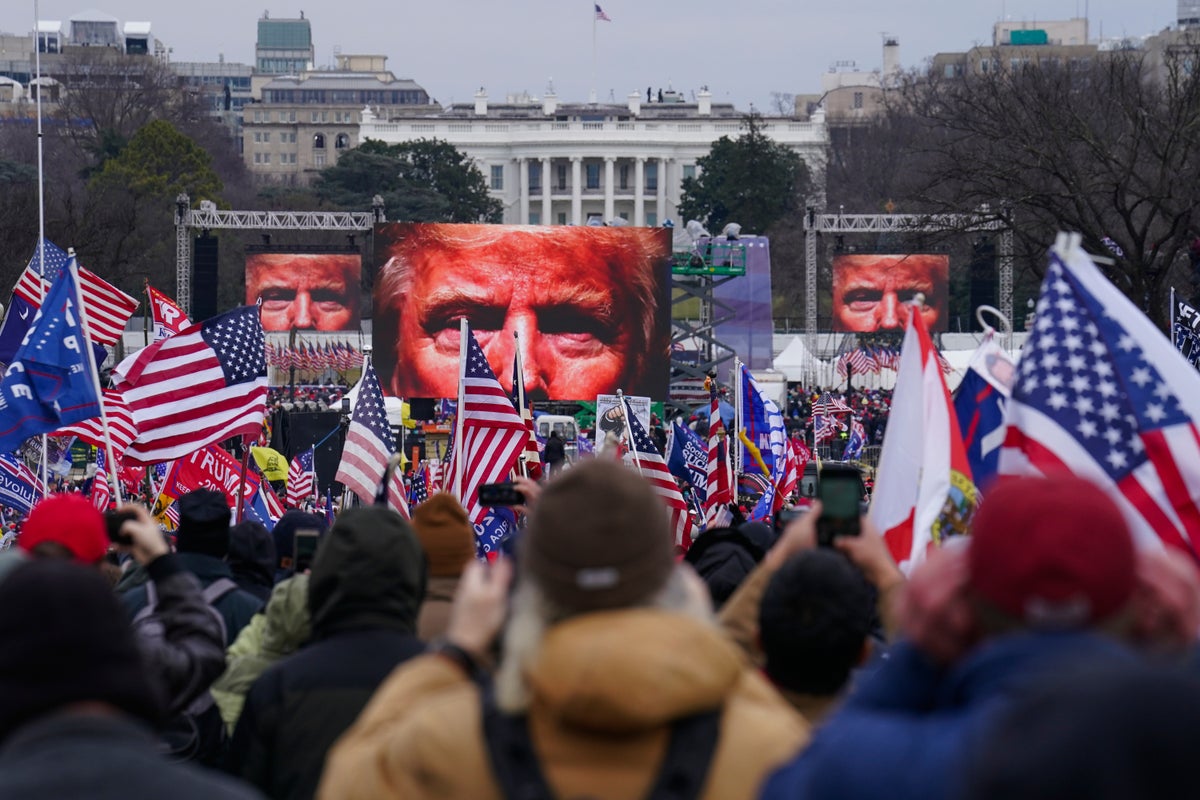
The administrative reversal of criminal convictions related to the January 6 Capitol riot represents a fundamental shift in how the American legal system treats political violence. When the Department of Justice moves to vacate or "erase" convictions—particularly those involving charges that resemble sedition or high-level interference with government proceedings—it does more than clear a docket. It redefines the boundaries of permissible dissent. For the law enforcement officers who stood in the tunnels of the Capitol, this isn’t a matter of legal theory. It is an active dismantling of the record they bled to create.
History is usually written by the victors, but in the modern era, it is edited by the bureaucracy. The recent push to recalibrate the legal fallout of the 2021 insurrection demonstrates that the rule of law is often subservient to the prevailing political wind. By stripping away convictions, the state effectively tells the victims of that day that their trauma was a clerical error. Meanwhile, you can read similar developments here: The Geopolitics of Transactional Diplomacy Analysis of the Trade Over Aid Framework.
The Mechanics of Legal Revisionism
To understand how a conviction simply vanishes, one must look at the intersection of executive clemency and prosecutorial discretion. While the public often focuses on the high-profile pardons, the quiet "erasure" of records through DOJ motions is far more clinical. It happens in quiet courtrooms where the cameras aren't rolling.
Prosecutors can file motions to dismiss charges even after a verdict has been reached, citing "the interests of justice" or newly interpreted constitutional standards. This creates a vacuum. In this space, the physical reality of a metal pole striking a police officer’s helmet is replaced by a legal memo stating that the intent of the striker was misunderstood. This isn't just a win for the defendants. It is a strategic signal to future movements that the consequences of targeting the seat of government are negotiable. To see the complete picture, check out the excellent analysis by TIME.
The Human Cost of Policy Shifts
Metropolitan Police and Capitol Police officers have spent the last several years navigating a landscape of shifting narratives. For them, the scars are permanent. When the legal system decides that the person who inflicted those scars is no longer a criminal, the officer is left holding a burden that the state has officially disowned.
This creates a crisis of morale that goes beyond the individuals involved. It suggests that the protection of the institution—the Capitol itself—is a secondary priority to the political survival of the executive branch. If the line between a riot and a protected protest is drawn based on who holds the White House, the officers on the line can no longer trust the orders they receive. They are being asked to risk their lives for a "truth" that might be deleted four years later.
The Precedent of Selective Prosecution
We are entering an era where the legal system is used as a tool for historical correction. Traditionally, a conviction stood as a permanent marker of a society’s disapproval. Now, we see the emergence of a "fluid" criminal record.
Critics of the original January 6 prosecutions argued that the charges were overblown, citing the use of obscure statutes to hammer protesters who wandered through open doors. There is a grain of truth there; overcharging is a common tactic in high-pressure cases. However, the wholesale erasure of convictions involving documented violence against police officers moves past "correction" and into the territory of absolution.
Strategic Silence in the Department of Justice
The DOJ operates on the image of an independent arbiter, yet its recent actions suggest a deep alignment with executive desire to move past the January 6 era. By declining to defend convictions upon appeal or proactively seeking to vacate them, the Department avoids the messiness of a public trial.
This silence is deafening. It prevents a public record from being solidified. In a trial, evidence is entered, testimony is taken, and a jury of peers makes a declaration. When a conviction is erased through administrative maneuvering, the evidence is tucked back into a folder. The testimony is relegated to a transcript that no one reads. The public is left with a "he-said, she-said" version of history rather than a judicial certainty.
The Erosion of Deterrence
The primary function of the criminal justice system is deterrence. If a person believes that attacking a federal building will result in a decade behind bars, they are less likely to do it. If they believe that their side might win the next election and wipe their record clean, the risk-reward calculation changes entirely.
We are watching the death of the deterrent effect in real-time. When convictions for what was once termed "treason" or "insurrection" are treated as temporary inconveniences, the state loses its monopoly on the legitimate use of force. It tells every radicalized cell in the country—on both sides of the aisle—that the law is a paper tiger.
The Myth of the Peaceful Protest
The narrative being pushed through these legal reversals often centers on the idea that the majority of those present were "tourists" or peaceful actors caught in a chaotic moment. While that may apply to some, the blanket nature of recent record-clearing often sweeps up those who were active participants in the breach.
The legal system is currently prioritizing the "right to protest" over the "duty to protect." By failing to distinguish between the two in the aftermath, the DOJ is essentially admitting that it cannot, or will not, differentiate between political speech and political violence. This blurriness is exactly what the rioters wanted. They wanted to be seen as the true representatives of the people, and the current legal retreat validates that claim.
A Broken Trust in Federal Law Enforcement
The fallout extends to the FBI and the investigators who spent thousands of man-hours tracking down suspects. Imagine the internal culture of a field office where the "Most Wanted" list from three years ago is now a list of people receiving official apologies.
The institutional damage is profound. Federal agents are increasingly viewed as political actors rather than impartial investigators. This perception isn't just coming from the public; it's growing within the ranks. If the work of an investigator can be undone by a change in administration, the motivation to pursue politically sensitive cases evaporates. The result is a neutralized law enforcement apparatus that waits for permission before acting.
The Ghost of 1876
Historical parallels are rarely exact, but the current atmosphere mirrors the end of Reconstruction. In that era, the federal government eventually tired of enforcing the law in the face of violent local resistance. They stepped back, allowed convictions to lapse, and permitted a new narrative of "lost cause" heroism to take root.
We are seeing a modern version of this fatigue. The effort required to maintain the truth of January 6—to keep the convictions on the books and the perpetrators in the public eye—is exhausting for a political system that thrives on short attention spans. The erasure is the easy way out. It provides a temporary peace at the cost of long-term stability.
The Legal Shadowland
The process of vacating these convictions often relies on technicalities that the average citizen cannot follow. It’s a war of footnotes. Whether it's the specific definition of "obstructing an official proceeding" or the way evidence was shared in discovery, these granular legal battles provide the cover for a broader political retreat.
The Supreme Court’s recent rulings on the scope of federal obstruction statutes have provided the perfect escape hatch. By narrowing the definition of the law, the Court gave the DOJ a "legal" reason to walk away from hundreds of cases. This allows the government to claim its hands are tied, even as it actively chooses not to find alternative ways to hold the violent accountable.
The Abandonment of the Blue Line
For decades, political rhetoric has been centered on "backing the blue." That sentiment appears to have a shelf life when the "blue" in question is protecting a building that the political class no longer feels a need to defend.
The officers who were crushed in the doors of the Capitol are now inconvenient witnesses. Their presence reminds the public of a day that many would rather forget. By erasing the convictions of their attackers, the government is effectively asking these officers to stop being witnesses. It is a demand for collective amnesia.
The New Standard for Political Liability
What happens the next time a mob decides that a government process is illegitimate? The precedent has been set. The message is clear: if you are going to break the law for a political cause, make sure your side wins the next cycle.
This isn't a "business as usual" shift in policy. This is the dismantling of the consensus that violence is an unacceptable tool in a democracy. When the state refuses to stand by its own convictions, it cedes the moral high ground to those who believe might makes right. The law becomes nothing more than a temporary set of rules for the losers.
The history of January 6 is currently being rewritten in the quietest way possible: through the deletion of records and the silence of those who once promised justice. The betrayal felt by the officers on the line isn't just about their specific attackers going free. It's about the realization that the institution they protected doesn't value the law as much as it values a clean slate. The record is being scrubbed, and once it is gone, the truth becomes a matter of opinion.
Go to the archives of the D.C. District Court and look for the names of the men who broke windows and fought guards. Watch how many entries now end in "Dismissed" or "Vacated." That is the sound of a system giving up.