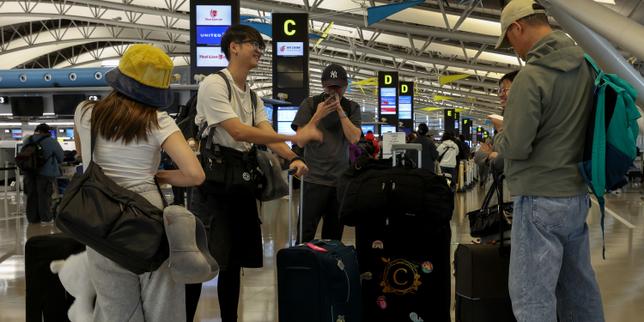
You stand at the baggage carousel after an eleven-hour flight. The conveyor belt starts up with a loud groan. Everyone crowds the line. You watch a parade of black suitcases roll past, waiting for that familiar dented piece of luggage with the neon green ribbon tied to the handle. Ten minutes pass. Twenty minutes. The crowd thins out. Soon, you are the only one left standing there.
It is a miserable feeling. Every frequent traveler knows it.
Except, it seems, if you fly into Osaka.
Kansai International Airport opened on an artificial island in Osaka Bay back in September 1994. Since the very first day planes started landing there, the airport has handled tens of millions of passengers. It has processed well over 50 million bags. Yet, its ground handling teams have never lost a single piece of luggage. Not one.
Think about that for a second. In over three decades of operation, through typhoons, earthquakes, and massive tourist booms, they maintained a perfect zero-loss record. It sounds like an urban legend or a massive corporate exaggeration. It isn't. The aviation data tracking firm Skytrax regularly names Kansai the best airport in the world for baggage delivery.
When you look at the global state of air travel, this achievement feels less like good management and more like magic.
The Global Mess vs The Osaka Miracle
To appreciate what is happening in Osaka, you need to understand how bad things are everywhere else. Aviation tech company SITA tracks these metrics closely. Globally, the industry mishandles millions of bags every year. Usually, the rate hovers around seven or eight bags per one thousand passengers. During peak summer travel rushes or sudden staff shortages, that number spikes dramatically.
Most of these bags aren't gone forever. They eventually turn up on a later flight, or they get tracked down in a dusty corner of a transit hub three days later. Still, it ruins vacations. It derails business trips.
Kansai handles a massive volume of international and domestic traffic. You might think they have some top secret, multi-billion dollar robotic network that replaces humans. That is the first big mistake outsiders make. Their infrastructure is good, but it is not fundamentally different from what you find in London Heathrow, Paris Charles de Gaulle, or New York JFK.
The difference lies entirely in human execution and an absolute intolerance for error.
How Kansai Airport Handles Millions of Bags Safely
The magic comes down to a highly disciplined set of operating procedures that ground handlers follow without exception. It starts the moment a plane pulls up to the gate.
Speed is usually the enemy of accuracy. In Osaka, they manage to balance both. The airport standard dictates that the first bag must reach the passenger carousel within fifteen minutes of the aircraft arriving at the gate. To hit this window, ground crews work in tightly coordinated teams of six to eight people.
They do not throw bags. They do not drop them. Staff members visually inspect every single luggage tag as they unload the cargo holds. If a flight has a tight connection, those bags are sorted immediately inside the belly of the plane, not after they reach the sorting terminal.
Accuracy requires constant double checks. Handlers use handheld scanners to log every barcode. If a bag ends up on the wrong cart, an alarm goes off instantly. Many airports use these systems, but in Osaka, the team members treat an alarm like an emergency. They stop the line and fix the issue immediately rather than letting the bag slide through to be sorted out later by a central office.
Small Details That Make a Massive Difference
If you watch the baggage handlers at Kansai, you will notice things that look almost obsessive. They place every single suitcase onto the conveyor belt with the handle facing outward. Why? Because it makes it easier for you to grab your bag when it passes by on the carousel.
If it rains, workers wipe down wet suitcases with clean towels before placing them on the belt. They group bags by color and size when possible to make the visual search easier for tired passengers. They ensure fragile items or strollers are hand delivered directly to travelers rather than letting them ride the automated belts where they might get snagged or damaged.
This level of care requires intense effort. Ground handling is grueling work. It involves lifting heavy objects in freezing winters and humid summers. Yet, the turnover rate among these workers is remarkably low compared to Western airports. They take immense pride in the streak. Nobody wants to be the person who breaks a thirty year record.
The Cultural Philosophy Behind Zero Losses
Western management consultants love to talk about efficiency. They write long white papers about optimization. Kansai relies on a simple Japanese concept called Kaizen, which translates to continuous improvement.
When an error almost happens, the team does not brush it off. They hold a meeting to figure out why it almost happened. If a bag tag is slightly torn and difficult to scan, they create a new protocol to handle compromised tags before they enter the main sorting system. They are constantly tweaking their physical movements, their cart positioning, and their communication methods to shave off seconds and eliminate tiny risks.
There is also a deep sense of accountability to the traveler. In many global hubs, baggage handling is outsourced to the lowest bidding third party contractor. The workers are underpaid, overworked, and completely disconnected from the airline brand or the airport identity. If a bag gets lost, the contractor blames the airline, the airline blames the airport, and the passenger gets stuck in a loop of automated customer service emails.
At Kansai, the ground handling companies operate with a shared sense of national and regional reputation. They view their work as the very first impression a visitor gets of Japan. A lost bag means a failure of hospitality.
What Travelers Can Learn From the Osaka System
You probably cannot change how your local airport operates. You can, however, adapt your own travel habits to align with the realities of modern baggage systems. Ground handlers around the world point to specific mistakes passengers make that drastically increase the chances of a bag going missing.
First, remove old stickers. Those tiny barcode stickers from your trip to Miami three years ago are still stuck to the side of your suitcase. Automated sorting machines at major transit hubs scan those old barcodes by mistake. When that happens, your bag gets routed to a rejection lane for manual sorting, causing it to miss your connecting flight. Clear your bag of every old tag before you check it.
Second, secure your straps. Loose straps, long backpack cords, and dangling baggage tags get caught in the cracks of conveyor belts. When a strap gets stuck, the belt jams. The system keeps moving other bags, which pile up, fall off the track, or get crushed. Buy a simple luggage strap that stays tight, or pack loose straps away inside the bag pockets.
Third, use technology to your advantage. Ground handlers are human. Even in excellent systems, mistakes happen during chaotic weather delays or tech outages. Drop a bluetooth tracker into your suitcase. Knowing your bag is sitting on the tarmac in Chicago while you are boarding a flight to London gives you the data you need to alert gate agents before the plane takes off.
Moving Past the Excuses
Whenever people praise Kansai Airport, airline executives in other parts of the world offer excuses. They say Osaka is unique because it handles fewer connecting flights than massive transit hubs like Atlanta or Dubai. They argue that the layout of the island airport makes logistics simpler.
These arguments miss the point. While Kansai might have fewer complex international to international transfers than Heathrow, it still processes massive volumes of baggage under intense time pressure. The layout does not automatically prevent a worker from dropping a suitcase or misreading a tracking tag.
The success of the Osaka model proves that baggage loss is not an inevitable tax on air travel. It is a choice. It is the result of how much an organization values its customers' peace of mind versus how much it wants to cut labor costs.
Next time you plan an international trip, think about where you connect. Choosing hubs known for operational excellence changes your entire travel experience. If you ever pass through Osaka, skip the stress at the carousel. Stand back, relax, and watch a masterclass in logistics roll right past your feet.