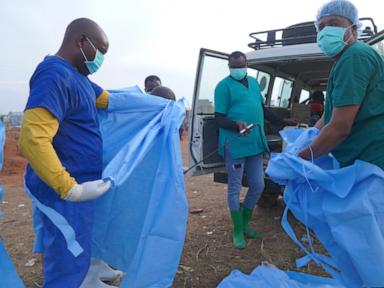
Panic sells. Calm competence gets buried on page four. Every single time a rare strain of filovirus pops up in a rural clinic, the media industrial complex dusts off the 1990s apocalyptic playbook, cranks the volume to maximum, and starts treating a localized containment challenge like an extinction-level event.
You have read the standard panic-inducing copy a dozen times. A scary-sounding headline warns about a rare kind of Ebola. The text immediately pivots to breathless comparisons with Hollywood disaster movies. Experts quoted on background express grave concern. Within forty-eight hours, nervous passengers are canceling flights to entire continents, and public health officials are forced to spend half their energy fighting hysteria rather than treating patients.
Stop buying the script.
The lazy consensus in modern outbreak reporting assumes that any filovirus is an unstoppable, fast-moving shadow waiting to wipe out the commuter train you are riding tomorrow morning. That assumption is biologically illiterate, historically lazy, and profoundly damaging to the communities actually dealing with the pathogen.
The Biology They Ignore
Filoviruses are terrifying on paper, but they are remarkably clumsy in the real world. Unlike respiratory viruses that spread because you breathed the same elevator air as an infected stranger, Ebola requires direct contact with infectious bodily fluids. You do not catch it by walking past someone at a market. You catch it through intensive, high-risk physical exposure, often through traditional burial practices or bedside nursing without basic barrier protection.
When a rare variant emerges, the immediate panic assumes exponential transmission. Mathematics does not support this. The basic reproduction number for these strains in modern epidemiological settings rarely sustains unchecked exponential growth outside of specific, highly disrupted healthcare environments lacking basic gloves and bleach.
I have watched international response teams descend on affected districts with millions of dollars of high-tech gear, completely missing the human friction points on the ground. They treat the virus as a generalized cloud rather than a localized chain of transmission that requires targeted, surgical intervention.
Dismantling the Rare Strain Myth
The phrase rare kind of Ebola is designed to induce vertigo. It implies a mutated super-bug that has somehow bypassed our defenses. In reality, filovirus taxonomy includes distinct species like Sudan, Bundibugyo, and Reston, each with different baseline case fatality rates and transmission dynamics.
When a less common species appears, laboratories sequence the genome, and journalists treat normal viral diversity as an existential plot twist.
Let us look at the actual mechanics of containment. It is boring. It is tedious. It involves contact tracing, community engagement, ring vaccination where available, and absolute respect for local customs. It does not involve military cordons or closing national borders, which usually backfires by driving sick individuals underground where contact tracers cannot find them.
The public health establishment loves to talk about systemic readiness, but they often fail at the most basic level of local trust. If you treat a village like a biohazard zone, they will hide their sick relatives. When people hide their sick relatives, chains of transmission go dark. The panic generated by sensationalist headlines directly fuels the spread of the disease by alienating the very people holding the frontline.
The Real Threat Is Institutional Fatigue
We are not facing a rising tide of unstoppable hemorrhagic pathogens. We are facing an institutional apparatus that has learned how to monetize anxiety. Every time an outbreak is hyped beyond recognition, donor fatigue sets in six months later when a real, grinding public health crisis needs funding.
Real expertise means acknowledging limits. The downside of a hyper-local, calm containment approach is that it lacks the cinematic drama of a quarantine zone. It requires trusting local health workers who have managed these exact containment protocols dozens of times before without needing a single pundit from a distant capital to tell them how to wash their hands.
Next time you see a breaking news alert screaming about a rare filovirus variant, look past the sirens. Check the actual case counts. Look at the transmission chains. Ask yourself who benefits from making you terrified of a virus that requires direct physical contact to cross a room.
Stop waiting for the contagion narrative to play out. The only thing spreading out of control is the laziness of the reporting.