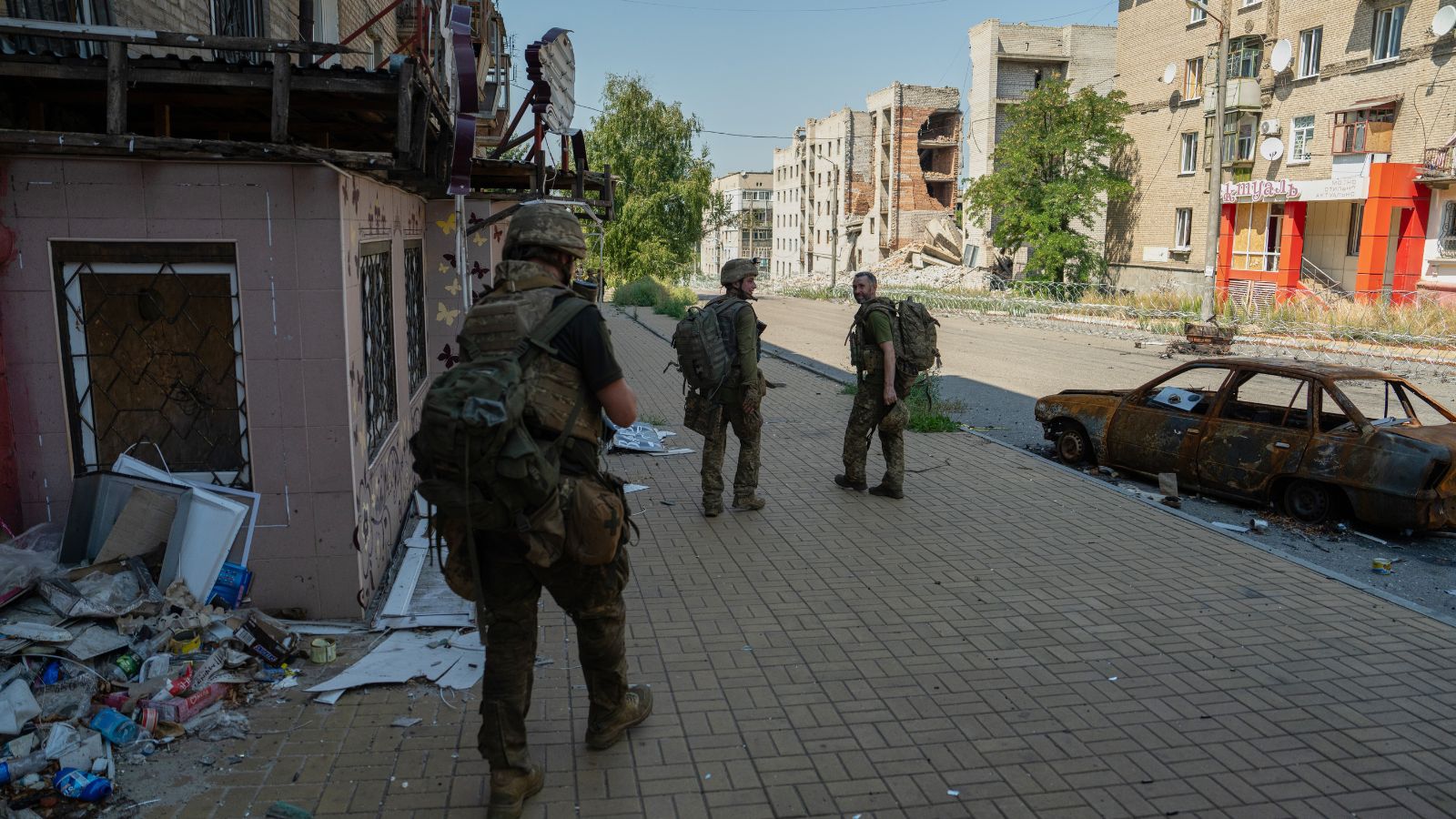
Every major newsroom is running the exact same story right now. Russian strikes hit the Izmail port infrastructure. Grain silos burn. Sirens wail. Analysts pop champagne or mourn, depending on their politics, pointing at the blazing concrete and screaming about escalation. They treat the burning of a Danube river port as a tactical checkpoint in a linear video game.
They are missing the plot entirely.
Focusing on the charred metal at Izmail misses the structural evolution of modern logistical warfare. I have spent years tracking how secondary supply chains adapt under industrial bombardment, and the lazy consensus is that a burning terminal equals a dead corridor. That logic belongs in 1945. Modern supply chains do not break; they fracture, multiply, and route around damage like water through a broken dam.
The Fallacy of the Fixed Asset
The mainstream narrative assumes that trade routes depend on concrete, cranes, and permanent installations. If you bomb the dock, the grain stops moving. Simple math for simple minds.
Real logistics do not work like that anymore. Izmail matters not because it is an indestructible monument, but because it represents the chaotic decentralization of export routes forced by the blockade of Odesa. When the primary deep-water ports faced complete naval lockdown, trade squeezed through the shallow bottleneck of the Danube River.
Now, those river terminals take hits. The knee-jerk reaction from commentators is to measure the tonnage lost and extrapolate a total economic collapse for Ukrainian agriculture. This is a fundamental misunderstanding of asset elasticity.
Ports are not monoliths. They are nodes in a web. When a node burns, the web shifts.
- Fixed Infrastructure is a Target: Large terminals invite precision strikes because they are stationary and loud.
- Micro-Logistics are Invisible: Barges, mobile conveyor systems, truck convoys, and cross-border rail spurs do not sit on a map as a single red dot.
Targeting a fixed port facility like Izmail achieves a temporary psychological victory and a minor logistical tax, but it fails to permanently sever a riverine network that relies on hundreds of kilometers of decentralized shoreline shared with a NATO neighbor. Romania sits across a narrow stretch of water. You cannot bomb a logistical doctrine out of existence when the border is literally a stone's throw away.
The Misunderstood Economics of Danube Shipping
Let us look at the data the pundits ignore. Shipping grain down the Danube was never about efficiency; it was about survival. Pre-war costs for deep-water container ships made river barging look absurdly expensive. But war economics turn standard cost-benefit analysis on its head.
When your alternative is zero revenue and rotting domestic stockpiles, paying triple for barge transit to Romanian outposts like Constanța is not a loss. It is a margin squeeze that keeps the lights on.
Critics claim that repeated strikes on Izmail and neighboring Reni will price Ukrainian grain out of global markets entirely. They argue that insurance premiums will skyrocket to infinity, making river transit economically unviable.
They are half-right about the risk, but entirely wrong about the outcome.
Insurance underwriters do not pull out of markets because missiles land; they pull out when risk cannot be priced. The moment risk is priced into the freight rate—passed down the line to global commodities traders—the system absorbs it. Grain is a fungible asset with inelastic global demand. When people need calories, price spikes absorb the cost of destruction. The consumer pays, the trader hedges, and the barge keeps moving under the cover of night.
The Strategic Miscalculation on Both Sides
Moscow believes that turning Izmail into a debris field strangles the export engine. Kyiv and its Western backers frame every strike as an unmitigated humanitarian and economic catastrophe designed to starve the Global South.
Both narratives are marketing campaigns masking a deeper reality: Izmail is a decoy of significance.
The real battle for export dominance is not happening at the docks. It is happening in regulatory backrooms across Brussels, in the quiet expansion of private rail gauges, and in the grey-market fleet of aging bulk carriers operating outside standard Western insurance pools.
Imagine a scenario where every major terminal on the Ukrainian side of the Danube is reduced to rubble. Does trade drop to zero?
Not a chance. Lightering operations shift mid-river. Cargo transfers happen directly onto vessels anchored safely in territorial waters where kinetic strikes carry too high a geopolitical price tag for the Kremlin. Logistics professionals know a dirty secret: you can bomb the shore facilities, but you cannot easily stop two ships from tying up next to each other in the middle of a wide river and pumping grain across via portable pneumatic tubes.
The infrastructure of modern commodity export is infinitely more stubborn than the ordnance designed to erase it.
Dismantling the Global Food Security Panic
Every time a warehouse goes up in flames along the Danube, headlines scream about impending global famine. Let us inject some brutal, unfiltered reality into this panic.
Ukraine's primary grain exports no longer dictate global caloric survival to the extent they did in early 2022. Global markets adjusted. Brazil ramped up soy and corn production with terrifying efficiency. Russian wheat floods the market at discount prices, bypassing sanctions through creative re-branding and shadow-fleet logistics.
When Izmail takes hits, it hurts Ukrainian producers' margins. It forces them to swallow higher transport friction. But it does not starve Cairo or Nairobi. Pretending that a single river port's damage threatens planetary stability is economic illiteracy designed to generate clicks and political leverage.
The journalists writing these updates want you to believe in total systemic fragility. They want you to view the war as a fragile house of cards where one missile brings down the global pantry.
The truth is much colder and much more resilient. Systems adapt because money hates a vacuum. Where there is a spread between a cheap bushel of wheat in Ukrainian silos and a hungry buyer abroad, human ingenuity will find a way to bridge the gap—even if the dock workers have to load the ships by hand under flickering emergency lights.
Stop looking at the smoke rising over the Danube and wondering when the system will break. It is not going to break. It is simply mutating into something far harder to kill.