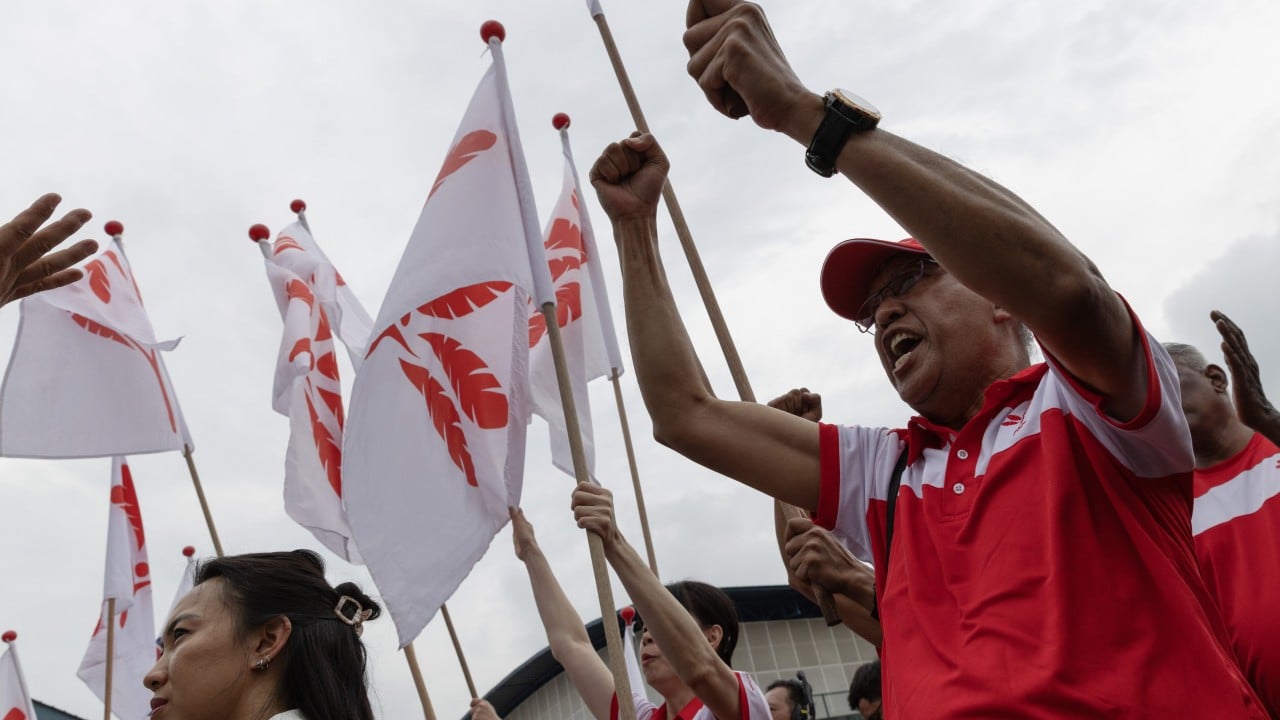
The political commentary class is panicking over the wrong things again. Following the post-General Election mass departures from Singapore’s minor political parties, mainstream analysts have uniform reactions. They wring their hands over an existential crisis. They call it a period of strategic recalibration. They write long, academic post-mortems about how the Progress Singapore Party or the People’s Power Party can rebuild their leadership structures to fight another day.
They are missing the entire point.
The exit of prominent figures like Stephanie Tan and Samuel Lim from the PSP, alongside the resignation of political veterans like Goh Meng Seng from the PPP, is not a tragedy. It is an act of creative destruction. The conventional narrative insists that Singapore needs a multi-party ecosystem where a dozen micro-entities contest different corners of the island. That belief is a myth. The structural collapse of these minor parties is the best thing that could happen to political competition in Singapore.
For decades, the political arena outside the ruling People's Action Party has been choked by vanity vehicles, historical grudges, and single-issue protest movements. By treating every minor party as a serious democratic alternative, observers validate structures that are fundamentally incapable of governing. The current exodus of younger, competent talent proves that the micro-party model is dead. It cannot be salvaged, and it should not be.
The Myth of the Structural Recalibration
When a high-performing newcomer like Stephanie Tan walks away from a party after securing 34.55% of the vote in Pioneer SMC, the lazy consensus blames "differences in opinion." This is a sanitized euphemism for a deeper systemic failure. The major media outlets paint these departures as routine organizational churn. They use corporate-adjacent ideas of leadership renewal to suggest that these parties are merely cleaning house to build a better version of themselves.
They are not cleaning house. The house is falling down because it has no foundation.
Minor opposition parties in Singapore function less like political institutions and more like loose fan clubs centered around a single charismatic founder or an outdated grievance. When the founder steps back or the initial wave of anti-establishment anger fades, the entity has nothing left to offer. The structural reality of Singapore’s electoral system means that running a political party requires massive capital, organizational discipline, and institutional depth. Micro-parties possess none of these.
Consider the operational reality. To mount a credible challenge in a Group Representation Constituency, a party must field a team of coordinated, highly vetted candidates who can project a unified policy front. Yet, minor parties routinely patch together arbitrary coalitions weeks before Nomination Day, relying on ideological contradictions to fill the ballot. The result is predictable. In the last election cycle, the PPP saw its candidates lose their financial deposits entirely after failing to cross the basic threshold of voter support in multiple areas. This is not a failure of branding. It is a failure of execution.
The False Promise of Personality Politics
I have watched political organizations throw millions of dollars and thousands of volunteer hours into campaigns built entirely on the personal brand of a single leader. It fails every single time.
The Progress Singapore Party was built on the back of Tan Cheng Bock’s personal capital. It was a brand derived from his history as a popular former PAP Member of Parliament. But personal brands do not pass down through institutional heredity. The moment a party relies on the gravity of one individual to attract voters, it signs its own death warrant. The departure of younger leaders like Tan and Lim is a direct consequence of this structural trap. Young, ambitious professionals enter these organizations believing they can shape policy, only to discover that the party's internal mechanics are tightly bound to the whims and historical baggage of an older guard.
Imagine a scenario where a corporate startup tries to scale a product based entirely on the unique charisma of its founder, without writing down a single operational manual or building a scalable sales team. The startup will fail the moment the founder retires. This is exactly what we are witnessing in Singapore's political fringe.
The standard defense from minor party sympathizers is that these entities provide a necessary platform for alternative viewpoints that might be silenced elsewhere. This defense is completely disconnected from how modern voters make decisions. The contemporary Singaporean voter is highly educated, risk-averse, and transactional. They do not vote for an opposition party simply because it is not the PAP. They vote for an opposition party when they believe that party can manage a multi-million-dollar Town Council without mismanaging the budget.
Micro-parties cannot demonstrate that capability because they lack the scale to win or manage a constituency in the first place. This creates a vicious cycle. Because they cannot win, they cannot gain administrative experience. Because they lack experience, they attract fewer high-caliber candidates, leaving them dependent on erratic personalities who alienate the middle ground of the electorate.
Why Consolidation Is the Only Path Forward
The mainstream discourse frames the dominance of the Workers' Party as a separate phenomenon from the collapse of the minor parties. In reality, they are two sides of the same coin. The WP has spent decades building a disciplined, risk-managed brand that mimics the institutional stability of the ruling party. They do not run on erratic outbursts or conspiracy theories. They run on meticulous organizational discipline and long-term talent cultivation.
The existence of a half-dozen minor parties actively harms the growth of a credible alternative voice by fragmenting the non-governmental vote. It dilutes the limited pool of professional talent willing to risk their careers in opposition politics. When capable individuals split themselves across five different micro-parties, they guarantee that none of those parties achieve the critical mass required to challenge the status quo.
The brutal truth is that Singapore’s political system has no room for a third or fourth choice. The geopolitical risks, economic vulnerabilities, and small geographic footprint of the city-state create an environment where political instability carries immense penalties. Voters understand this instinctively. They are willing to support a strong, rational second party that acts as a check on power, but they have zero tolerance for chaotic fringe groups that look like a liability.
The exit of founders and the resignation of young leaders is the market correcting itself. The political market is signaling that the era of the amateur politician is over.
The Cost of Professional Politics
Admitting that minor parties need to disappear comes with an uncomfortable truth. A consolidated political environment makes it significantly harder for independent, radical, or genuinely unconventional voices to enter the national conversation. When politics becomes a game played exclusively by large, highly disciplined machines, the policy debate narrows. The institutional pressure to appeal to the median voter forces everyone toward the center, leaving bold or experimental ideas without a platform.
This is the price of political maturity. You cannot have professional, competent oversight while simultaneously maintaining a playground for eccentric political hobbyists.
The minor parties that emerged over the last two decades served a historical purpose. They acted as safety valves for political frustration during periods of rapid economic change. They forced conversations on issues that the ruling party was slow to address. But their historical utility has expired. The current wave of resignations should not be met with attempts to resuscitate these dying brands. They should be allowed to dissolve completely, freeing up talent, resources, and voter attention for a more concentrated, serious political alternative.
Stop trying to fix the minor parties. Let them close down. The future of political balance in Singapore depends on their exit.
The current shifts in the political environment require an understanding of how institutional credibility is built, which this breakdown of the larger political landscape provides in Workers Party Internal Dynamics, illustrating why disciplined party structures outlast personality-driven entities.