The establishment always panics when the taxpayers ask for the ledger.
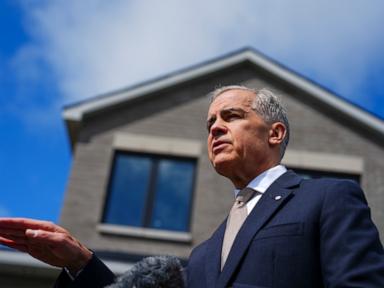
Prime Minister Mark Carney is deploying a familiar script. Confronted with Alberta Premier Danielle Smith’s announcement of an October referendum on independence, Carney immediately reached into his closet of technocratic terrors and pulled out the ghost of Brexit. He calls the vote a "dangerous bluff." He claims he saw firsthand in the United Kingdom what happens when voters demand structural autonomy, warning that Alberta will spend the next decade trying to undo a mistake it did not understand. For an alternative view, read: this related article.
This is a lazy, historically illiterate comparison. It is the defensive reflex of a central banker who views entire economies as spreadsheets to be managed from Ottawa or London, rather than ecosystems of production.
The comparison between Alberta and Brexit is fundamentally flawed because the economic mechanics are reversed. The United Kingdom left a massive, wealthy free-trade zone to assert regulatory independence, taking a calculated hit on trade friction to reclaim sovereignty. Alberta is contemplating the opposite: freeing a massive, wealth-generating engine from a dysfunctional, parasitic federal framework that actively suppresses its primary exports while consuming its tax dollars. Similar insight regarding this has been published by BBC News.
Carney’s warnings do not reflect a fear of economic chaos in Alberta. They reflect a panic over fiscal insolvency in Ottawa.
The Wealth-Transfer Illusion
To understand why the establishment is terrified of an Alberta independence vote, look at the structural reality of Canadian fiscal federalism. The media landscape treats the referendum as a petulant tantrum by right-leaning oil enthusiasts. They refuse to address the underlying numbers.
For decades, Alberta has been the primary engine of Canada’s equalization system. This system redistributes wealth from "have" provinces to "have-not" provinces. Let us look at the actual accounting:
- Net Fiscal Contribution: Alberta has consistently contributed tens of billions of dollars more to the federal government in taxes than it receives back in federal spending and transfers.
- The Equalization Drain: Between 1961 and 2025, Alberta’s net contribution to the rest of Canada exceeded $600 billion in inflation-adjusted terms.
- The Structural Deficit: While Ottawa borrows money to fund an expanding federal bureaucracy, Alberta subsidizes the social programs of provinces that actively block its economic development.
I have watched corporate boards and political administrations pull this exact stunt for decades. When a subsidiary generates 80% of the cash flow but receives only 20% of the capital allocation, it eventually rebels. The parent company never responds with an honest audit. Instead, it launches a public relations campaign claiming the subsidiary could never survive on its own.
Carney’s thesis is that Alberta has no leverage, making the referendum a toothless bluff. That is a fundamental misunderstanding of structural leverage. If Alberta votes "yes" to explore independence, it does not instantly trigger a border wall. It forces a constitutional negotiation under the terms of the Supreme Court of Canada’s own Secession Reference. It gives Alberta the legal mechanism to stop asking for permission and start dictating terms.
Decoupling the Bureaucracy
The lazy consensus argues that Alberta would face immediate, crippling economic isolation if it pursued separation. Pundits point to the landlocked geography of the province as an absolute veto over its independence.
This argument ignores international law and basic trade realities. Imagine a scenario where a sovereign Alberta operates under the United States-Mexico-Canada Agreement (USMCA) framework or seeks direct integration with the American market. The United States does not buy Albertan energy out of charity; it buys it because its heavy oil refineries in the Midwest and Gulf Coast require Canadian feedstock to operate.
The real friction in the Canadian economy does not come from geographic borders. It comes from federal regulatory choices. For years, the federal government used mechanisms like Bill C-69 to choke off pipeline infrastructure and delay projects. While Carney has attempted to soften these policies since taking office, the structural threat remains.
A sovereign Alberta would immediately eliminate a layer of regulatory duplication that costs billions in delayed capital projects. Consider the structural advantages:
+-----------------------------------+-----------------------------------+
| Canadian Federal Framework        | Sovereign Alberta Framework       |
+-----------------------------------+-----------------------------------+
| Dual environmental reviews        | Single, streamlined regulatory    |
| (Federal and Provincial)          | approval authority                |
+-----------------------------------+-----------------------------------+
| Equalization drain funding        | Retained capital for domestic     |
| external provincial deficits      | infrastructure and tax reduction  |
|                                   |                                   |
+-----------------------------------+-----------------------------------+
| Energy policy subject to          | Energy policy aligned directly    |
| non-producing voter bases         | with economic output              |
+-----------------------------------+-----------------------------------+
The downside to this contrarian approach is obvious, and it must be stated honestly: the transition period would involve intense capital volatility. Currency mechanics, the division of the national debt, and immediate trade renegotiations would create a multi-year window of instability.
But comparing this to Brexit ignores a vital structural truth. The United Kingdom had a diversified, service-heavy economy that relied on frictionless access to European financial markets. Alberta is a resource superpower with a highly specialized, capital-intensive asset base. You cannot move an oil sands deposit to Toronto. You cannot relocate the fertile soil of the Canadian Prairies to Ottawa. The physical assets remain precisely where they are, and the global market will always find a way to clear those commodities.
Dismantling the Consensus
The establishment relies on specific talking points to shut down this conversation. Let us address the standard arguments directly.
Does a non-binding vote create economic uncertainty that drives away investment?
The chamber of commerce crowd loves this question. They argue that even discussing separation scares off capital. This is backward. The uncertainty was not created by Danielle Smith’s referendum announcement; the uncertainty was created by a decade of federal policy that treated the energy sector as a sunset industry to be phased out. Capital fled Alberta long before anyone muttered the word "referendum" because institutional investors realized Ottawa had stacked the deck against resource development. A referendum is a search for certainty, a mechanism to determine the permanent rules of the game.
Can a landlocked province actually function independently?
Global trade is full of landlocked sovereign states that outperform their maritime neighbors. Switzerland, Austria, and various global resource enclaves manage international commerce through treaty frameworks. Under international law, landlocked states have specific rights of access to the sea and freedom of transit. More importantly, Alberta’s primary market is south, not east or west. The economic gravity of the North American continent runs north-south, a reality that Ottawa’s artificial internal trade barriers have tried to fight for over a century.
Isn't support for independence low in the polls?
Current polling indicates that a majority of Albertans prefer to remain in Canada. But focusing on the headline number misses the point of political leverage. The referendum is a mandate-seeking exercise. If a substantial minority or a narrow majority votes to authorize constitutional negotiations, the federal government's leverage changes instantly. The mere existence of a credible exit option forces Ottawa to compromise on resource taxation, environmental mandates, and fiscal transfers.
The Institutional Failure
The institutional elite view political boundaries as permanent fixtures, while viewing economic policy as something to be tinkered with by committee. The reality is precisely the opposite. Political arrangements are temporary syndicates designed to serve the mutual interests of their participants. When those arrangements stop serving those interests, they change.
Carney’s tenure at the Bank of England was defined by managing the fallout of a vote he did not expect and did not want. He treats Brexit as a cautionary tale of populist delusion. He fails to see it as a predictable reaction to an insulated political class ignoring regional economic realities.
By lecturing Albertans that asking questions about their constitutional future is "not helpful," Carney is repeating the exact mistake David Cameron made a decade ago. He is telling a productive, wealth-generating population that their frustration is illegitimate and that they must continue to fund a system that works against their economic survival.
The threat to Canada is not that Alberta will leave and fail. The threat to Canada is that Alberta will demonstrate it no longer needs the federal apparatus to survive, leaving Ottawa to fund its massive liabilities without the Western balance sheet.
Stop looking at the referendum as a dangerous bluff. Look at it as a long-overdue corporate restructuring where the majority shareholder is finally being called to account.