Four hundred retired intelligence officers just signed a letter demanding an investigation into a declassified memo about Chinese election interference. Their core complaint? That the document might have been cooked up outside standard analytic channels to serve a political narrative.
The media has treated this as a defense of bureaucratic integrity. That framing is naive garbage.
When retired spooks clutch their pearls over politicized intelligence, they are hoping you suffer from total historical amnesia. The entire apparatus they are defending spent years weaponizing anonymous sources, selective leaks, and procedural gymnastics to skew domestic politics.
Let us look at the mechanics of how intelligence actually works, why this panic from the retired class is defensive posturing, and why focusing on the memo's format misses the entire game being played.
The Myth of the Immaculate Analyst
The lazy consensus in mainstream coverage rests on a comforting fairy tale: that the CIA functions as an objective monastery of truth, untouched by political incentives, operating under rigid scientific guidelines.
Anyone who has spent five minutes inside national security circles knows that finished intelligence is routinely shaped by the consumer who requested it. Analysts do not write in a vacuum. They anticipate what leadership wants to hear, package raw data accordingly, and massage confidence levels to fit the policy climate.
When the White House declassifies a summary of raw reporting on foreign actors scraping voter databases, the establishment screams about procedural protocol—the missing author tags, the lack of traditional analytic caveats, the bypass of the Directorate of Analysis. They treat these formatting anomalies as a smoking gun of corruption.
This is a diversion. They are attacking the metadata because attacking the substance is too dangerous.
The Hypocrisy of the Signatories
Consider who is actually signing these letters. These are the same networks of former officials who routinely lend their prestigious titles to media narratives, cable news hits, and coordinated public statements designed to tilt domestic debates.
Imagine a scenario where a group of retired senior intelligence figures coordinates an open letter right before a high-stakes presidential election to label a major domestic news story as foreign disinformation—only for that assertion to later fall apart under scrutiny. We do not have to imagine it; we lived through it.
Yet when those same officials use their former clearances as a shield for partisan messaging, it is celebrated as civic duty. When a sitting executive declassifies raw reporting that challenges the institutional narrative, it is branded as an existential threat to democracy.
That double standard exposes the real game. The outrage is not about protecting intelligence standards. It is about protecting the monopoly on who gets to spin the intelligence.
Raw Reporting Versus Finished Fiction
The critics love to point out that raw intelligence reporting is unverified. That is true by definition. Raw intelligence is a snapshot of what a foreign asset said, what a signal intercept captured, or what a database sweep uncovered before it has been scrubbed, cross-referenced, and blessed by a committee of desk officers.
The establishment uses this distinction to dismiss the entire disclosure, arguing that because the memos do not prove votes were physically flipped or machines hacked, the entire premise of foreign interference is a fabrication.
That argument is a straw man. No serious analyst claims that foreign powers changed vote tallies on election night. The threat vector has never been about altering digital ballots in real-time. It is about data aggregation, psychological profiling, systemic vulnerability mapping, and long-term influence operations designed to erode trust from the inside out.
When foreign entities scrape hundreds of millions of voter registration files, they are building target profiles. To brush that off as benign because the data is technically accessible via commercial sites ignores how scale changes the weapon. A public phone book is legal to read; photocopying the entire nation's personal political preferences into a foreign state database is an intelligence operation.
The retired officials want you to fixate on whether the CIA memo followed proper formatting guidelines. If you are arguing about office serial numbers and routing slips, you are not asking why our data architecture is porous enough to allow mass harvesting in the first place.
Dismantling the Oversight Illusion
The demand for congressional investigations and inspector general probes into these declassifications sounds rigorous, but it is fundamentally toothless theater. It treats the intelligence bureaucracy as an independent branch of government rather than an arm of the executive branch built to serve whoever sits in the Oval Office.
Classification and declassification are tools of power, not academic exercises. Every administration weaponizes declassification to support its worldview. Pretending this is a novel constitutional crisis is either breathtaking ignorance or calculated dishonesty.
If you want to fix the relationship between intelligence and governance, stop pretending the spooks are neutral arbiters. Strip away the aura of infallibility. Judge intelligence products by their empirical tracking, not by whether they carry the official stamp of an analytic directorate that has been wrong on nearly every major geopolitical miscalculation of the last three decades.
The real scandal isn't that a declassified memo lacks a formal author tag. The scandal is that an entire class of retired officials believes their institutional pedigree grants them veto power over what information the public is allowed to see.
Stop worrying about their procedural hurt feelings. Look at the data, audit the infrastructure, and stop confusing bureaucratic compliance with the truth.
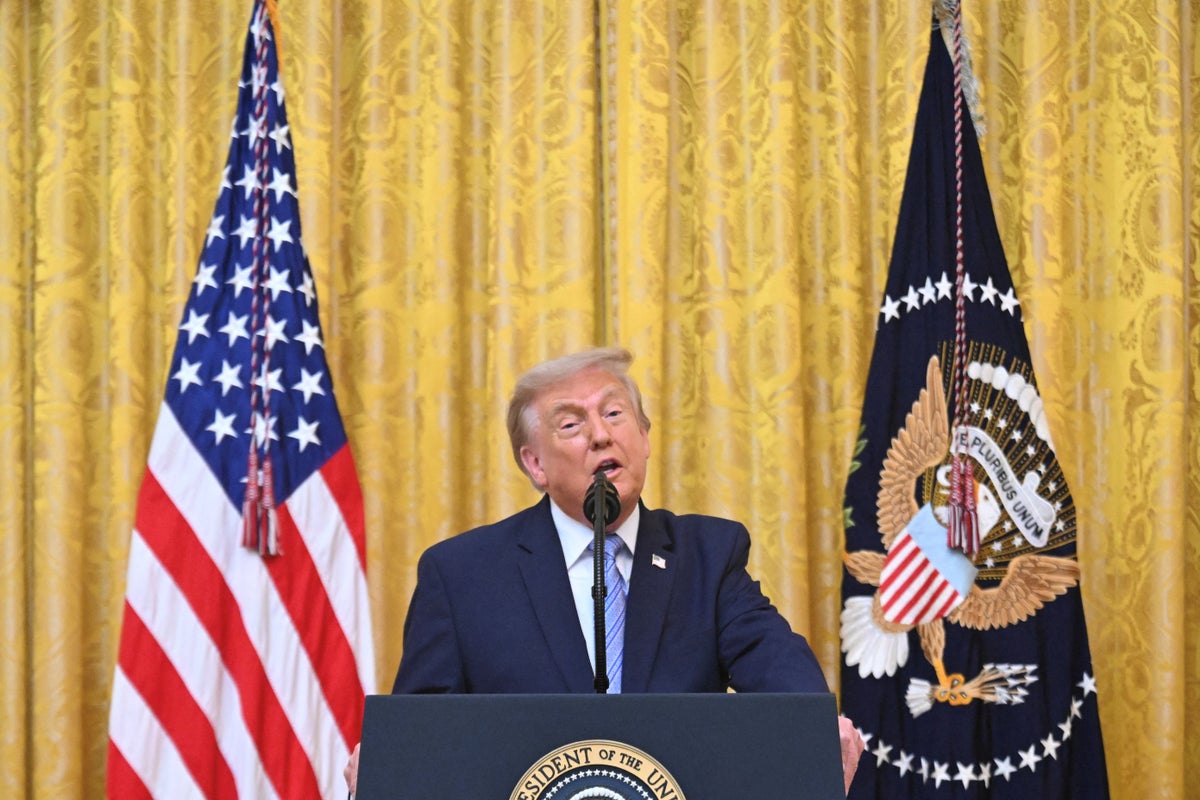
Trump Alleges China Stole 220 Million Voter Files, Questions Voting Security Ahead Of Midterms |N18G
This video provides direct coverage and footage of the political and data security controversies surrounding the declassified election documents and the ensuing debates over foreign data harvesting.