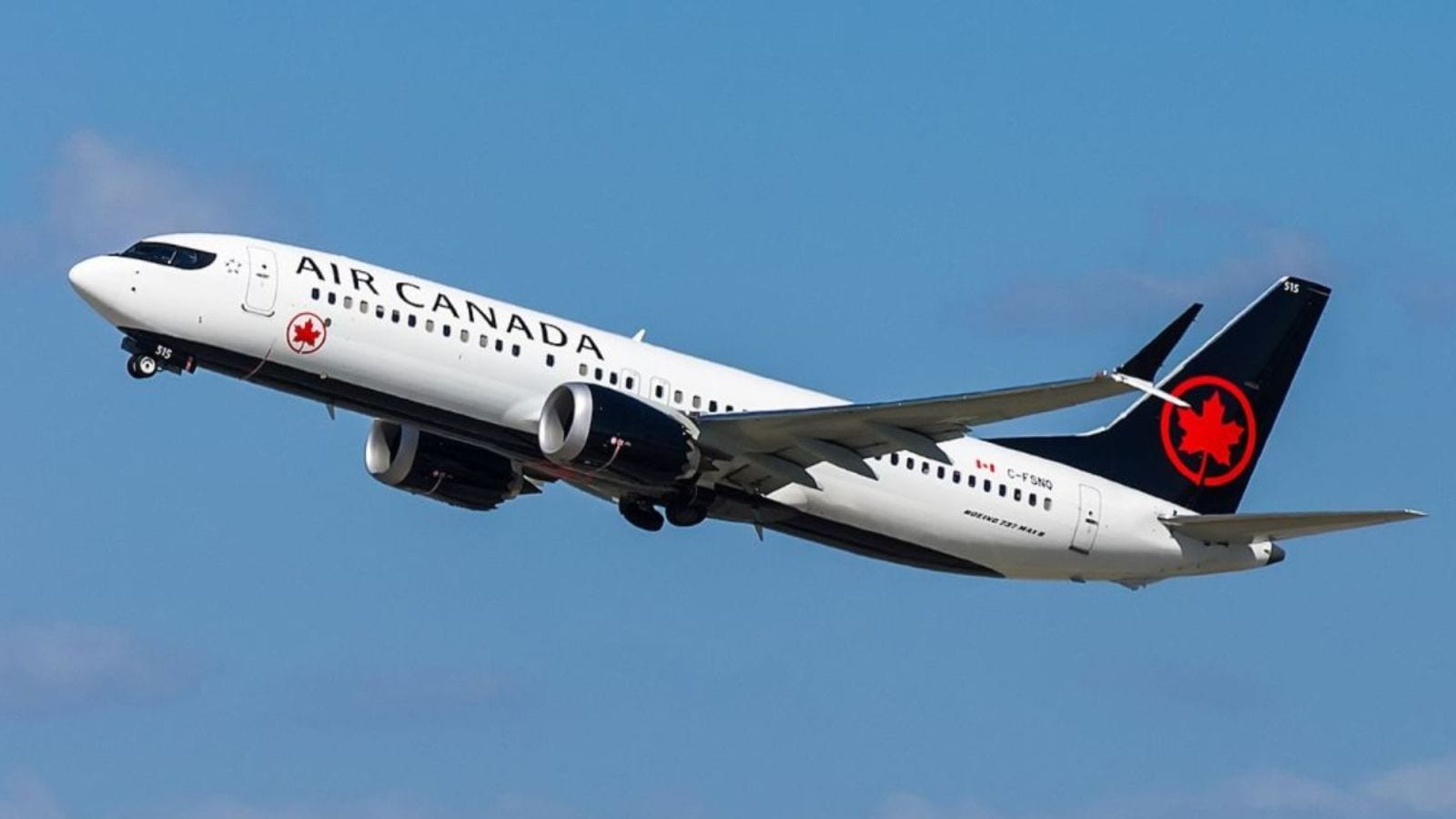
The headlines practically wrote themselves. A former Air Canada captain gets caught flying over 900 commercial flights on Boeing 767, 777, and 787 aircraft without a valid Airline Transport Pilot Licence (ATPL). The public panics. The media screams about a catastrophic breach of security. The industry clutches its collective pearls, demanding heavier audits, tighter bureaucratic loops, and harsher penalties.
Everyone is asking how this man slipped through the cracks.
They are asking the entirely wrong question.
The real question we should be asking is much more uncomfortable: If a man can successfully operate complex, wide-body commercial airliners for over 900 flights without a catastrophic incident, what does that say about the true necessity of the multi-year, hyper-expensive bureaucratic hazing ritual we call commercial pilot licensing?
The lazy consensus loves a villain. It allows airlines and regulatory bodies like Transport Canada and the Federal Aviation Administration (FAA) to point at a rogue actor, call him an anomaly, and avoid looking in the mirror. But as an aviation insider who has watched legacy carriers burn millions on redundant compliance measures while ignoring actual, systemic operational risks, I am here to tell you that this story is not about a security failure. It is a glaring revelation that our current aviation training and licensing model is built on outdated, protectionist assumptions that confuse paperwork with actual competency.
The Paperwork Fallacy: Checking Boxes vs. Flying Planes
Let us dismantle the core premise of the outrage. The media wants you to believe that an unlicenced pilot is the equivalent of a random person off the street hijacking a bus. It is a terrifying mental image. It is also completely detached from reality.
To fly a Boeing 777 or 787 for a major global airline, you do not just walk up to the gate with a fake ID and turn a key. You go through rigorous, mandatory carrier-specific type rating training. You spend dozens of hours in Level D Full Flight Simulators (FFS) that cost tens of millions of dollars and replicate the exact physics, failures, and environmental conditions of the aircraft. You face check rides with company line check pilots who do not care about your background—they care if you can handle a dual-engine failure at V1 over the Rockies.
The individual in question passed these checks. He held the type ratings. He possessed the fundamental stick-and-rudder skills and the systems knowledge required to command these massive machines. What he lacked was a specific piece of paper from a government regulatory body—likely due to a lapse, a forged medical certificate, or an administrative omission that invalidated the legal status of his ATPL.
Aviation Insider Fact: A pilot who loses their medical certificate due to a minor, treatable condition like mild hypertension is legally "unlicenced" the next day. Functionally, their ability to fly a Boeing 787 has changed by exactly zero percent.
When we conflate administrative non-compliance with operational incompetence, we jeopardize the integrity of the entire system. We train pilots to become master bureaucrats instead of master aviators.
People Also Ask: Dismantling the Flawed Premises
The public reaction to this incident highlights a deep misunderstanding of how modern flight decks operate. Let us address the most common, flawed queries circulating the industry right now.
How could a major airline let an unlicenced pilot fly for years?
The question assumes that airlines have direct, real-time digital links into government licensing databases that update flawlessly across international borders. They do not. The aviation industry, for all its advanced avionics, still relies heavily on manual verification, physical certificate copies, and periodic self-reporting during annual medical renewals.
But more importantly, the airline did not check because the pilot was doing the job perfectly. His peers did not report him because his cockpit resource management (CRM) was indistinguishable from a legally compliant captain. The system failed to catch him precisely because his operational performance was flawless.
Does this mean commercial flights are unsafe?
No. It proves the exact opposite. It proves that the redundancies built into modern commercial aviation—dual-pilot cockpits, advanced flight management computers, automated envelope protection, and strict Standard Operating Procedures (SOPs)—are so resilient that they can absorb a massive compliance anomaly without a single scratch on a single piece of luggage. The safety is in the system and the practical training, not the stamp on the license.
The Monopolistic Gatekeeping of Flight Hours
Why do regulators protect this paper-heavy status quo so fiercely? Follow the money.
The path to an ATPL is a highly lucrative gatekeeping mechanism. In the United States, the infamous "1,500-hour rule"—enacted after the Colgan Air Flight 3407 crash—requires pilots to log 1,500 hours of total flight time before they can act as a regional airline copilot.
How do young pilots get these hours? They fly single-engine Cessna 172s in circles on sunny days as flight instructors, or they drag banners over beaches.
Ask any veteran captain the brutal truth: Does flying a Cessna in perfect weather for 1,000 hours prepare you to manage a thermal runaway on a lithium-ion battery in a Boeing 777 over the Pacific at night? Absolutely not. It is dead time. It is a financial barrier to entry designed to restrict pilot supply, drive up wages for incumbents, and enrich low-tier flight schools.
The European Union Aviation Safety Agency (EASA) allows pilots to sit in the right seat of an Airbus A320 with a Multi-Crew Pilot Licence (MPL) and as few as 250 hours of highly targeted, simulator-heavy, airline-specific training. And guess what? European safety records are exemplary.
The Canadian and American obsession with raw flight hours and traditional ATPL paperwork is an outdated religion. The "fake captain" did not endanger passengers because he had passed the only training that actually matters: intensive, multi-crew, heavy-jet type training.
The Dark Side of Our Bureaucratic Obsession
I have seen legacy carriers ground entirely serviceable aircraft and strand hundreds of passengers because a pilot’s physical licence booklet had a smudge on the signature line or an administrative clerk forgot to log a digital endorsement. We disrupt global commerce to satisfy the gods of paperwork.
Meanwhile, actual, insidious threats to aviation safety go ignored:
- Pilot Fatigue: Chronic, systemic fatigue induced by predatory scheduling practices that technically comply with legal flight time limitations but ignore human circadian rhythms.
- Automation Addiction: A generation of younger pilots who can program a Flight Management Computer (FMC) flawlessly but experience acute anxiety when forced to hand-fly an aircraft above Flight Level 290.
- Mental Health Stigmatization: A regulatory framework that punishes pilots for seeking therapy or reporting mild depression by grounding them indefinitely, forcing pilots to hide severe psychological issues just to keep their jobs.
The system will spend millions prosecuting a man who flew 900 safe flights without a piece of paper, but it will do nothing to fix the fact that thousands of legally licenced pilots are currently flying while exhausted, depressed, and terrified of seeking help.
Rethinking the Flight Deck: A Radical Blueprint
If we want to actually improve aviation rather than just feel safer, we need to completely overhaul how we define and verify a qualified pilot.
Imagine a scenario where we abandon the traditional, chronological hours-based ATPL entirely. Instead, we move to a continuous, blockchain-verified, competency-based matrix.
+-----------------------------------------------------------+
|               TRADITIONAL ATPL SYSTEM                     |
|  Log Hours -> Pass Paper Exam -> Permanent Paper Licence   |
|  (Focuses on time served and administrative compliance)   |
+-----------------------------------------------------------+
                             VS
+-----------------------------------------------------------+
|               COMPETENCY-BASED MATRIX                     |
|  Continuous Sim Evaluation -> Real-time Biometric Health  |
|  -> Cryptographic Skill Verification                      |
|  (Focuses on live capability and actual flight metrics)    |
+-----------------------------------------------------------+
Under this model, a pilot's right to fly is not dictated by a renewal date on a card. It is updated continuously by data pulled from every simulator session, every line check, and every digital flight data monitoring (FDM) log. If a pilot’s landing metrics drift outside acceptable parameters over a three-month period, the system flags it automatically. If they are sharp, they fly.
If we implemented a real-time, skill-first verification system, the administrative status of a licence would be irrelevant. You would either possess the demonstrated, verifiable capability to command a Boeing 777 today, or you would not.
The Final Blow
The Air Canada incident is not a cautionary tale about the dangers of deception. It is an indictment of an industry that has allowed bureaucracy to cannibalize common sense.
The aviation establishment wants you to look at this case and demand more red tape, more background checks, and more centralized control. They want you to believe that safety flows from the pen of a government regulator.
It does not. Safety flows from rigorous, practical, high-fidelity training and the relentless execution of cockpit discipline. The man who flew 900 flights proved that the empire of paperwork has no clothes. He exposed the fact that the industry's most sacred barrier to entry is largely a mirage.
Stop looking at the missing licence. Start looking at the system that could not tell the difference between a bureaucratic ghost and a highly competent captain.