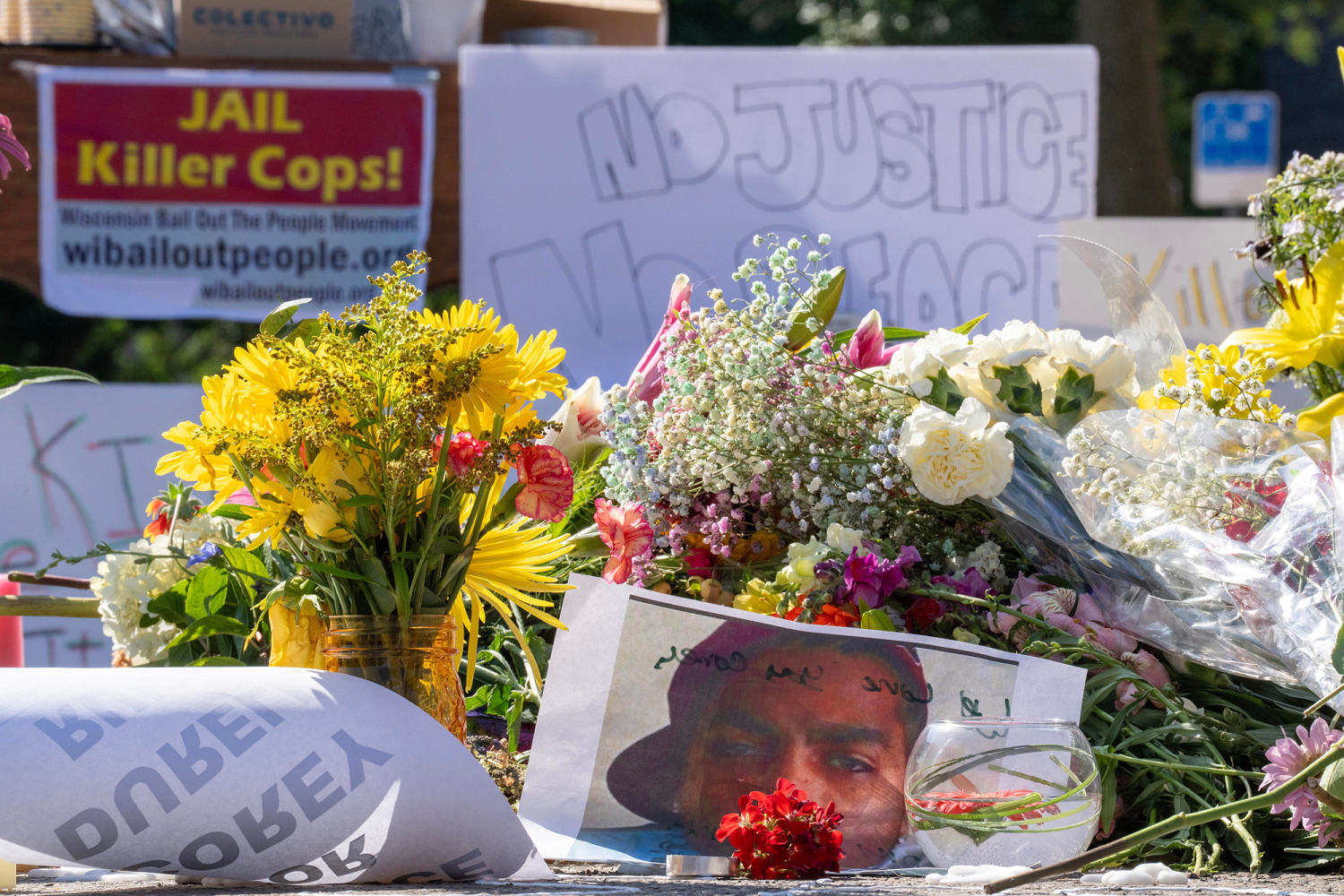
A routine call about someone checking car doors ended in a fatal shooting on a busy street corner in Madison, Wisconsin. The victim, identified as Corey Ruiz, was killed by police in broad daylight at the intersection of Williamson and Baldwin Streets.
Bystanders recorded the incident on their phones as four officers wrestled Ruiz to the pavement. The confrontation escalated rapidly from a chase on a bicycle to a lethal shooting at point-blank range. Now, local residents are angry, officials are demanding answers, and protests are spilling into press conferences.
Here is what happened on Willy Street, why video evidence raised immediate questions, and what needs to happen to ensure accountability.
What Bystander Video Shows vs What Police Say Happened
Officers responded to reports of a man checking handles on parked vehicles on Wednesday afternoon. When police approached, Corey Ruiz fled on a bicycle, riding through nearby backyards before officers trapped him at a busy intersection.
According to Madison Police Chief John Patterson, a physical struggle began when officers tried to detain Ruiz. Patterson stated that Ruiz produced a fixed-blade knife and injured a veteran officer during the scuffle. An officer deployed a Taser, but police claimed it was ineffective. Shortly after, the injured officer fired three gunshots into Ruiz at point-blank range.
Videos captured by drivers stuck at the intersection tell a troubling story.
Footage shows four officers on top of Ruiz as he was held down on the asphalt. One officer appears to stomp or kick him while another pins him with a knee before gunshots ring out. Bystanders can be heard screaming in horror as Ruiz stops moving.
The gap between official claims and bystander video is where community trust breaks down completely. When four officers hold a man on the ground, lethal force feels like a massive failure of de-escalation.
The Body Camera Gap in Madison
None of the four officers involved were wearing body cameras.
Madison Police Department still lacks widespread body camera deployment across its force. That detail has triggered immense backlash from community advocates and local leadership.
Without body cameras, the public has to rely on fragmented bystander clips or internal police narratives. Independent Police Monitor Aeiramique Glass voiced deep frustration publicly, pointing out that local law enforcement agencies have delayed sharing evidence with her oversight office.
Transparency isn't an option in high-stakes public safety—it's the baseline requirement. When officers lack recording equipment in 2026, every official statement gets viewed with heavy skepticism.
Public Outcry and Tensions in the Community
Outrage spread across Madison within hours of the shooting. Demonstrators gathered at the scene Wednesday evening before marching downtown, interrupting local community events and demanding justice for Ruiz.
Corey Ruiz was a Black resident experiencing homelessness in Madison. His death opened up raw wounds in a city that still remembers the 2015 police killing of Tony Robinson just blocks away.
During a Thursday press conference held by Mayor Satya Rhodes-Conway and Common Council President Sabrina Madison, protesters interrupted the briefing. A group of roughly 20 residents walked into the room, took over the microphone from Chief Patterson, and demanded direct answers.
Sabrina Madison spoke candidly about her personal connection to the situation, noting that her own brother is homeless and frequently rides a bike. She questioned why officers didn't manage to handcuff Ruiz when he was already on the ground, calling the situation heartbreaking and infuriating.
Independent Investigation and Legal Procedures
Wisconsin state law requires that all officer-involved shootings undergo an independent investigation by an outside agency. The Division of Criminal Investigation (DCI) under the Wisconsin Department of Justice is leading the inquiry.
Once the DCI completes its investigation, the findings go to the local district attorney, who decides whether to press criminal charges against the shooting officer. All four officers involved are on administrative leave pending the investigation's outcome.
Historically, criminal charges against police officers in Wisconsin remain extremely rare. That track record leaves many community members skeptical that the formal process will deliver meaningful accountability.
Practical Steps to Prevent Future Tragedies
Resolving police violence requires concrete policy changes rather than standard press releases. Here is what local governments and police departments need to implement immediately:
- Mandate Universal Body-Worn Cameras: Police departments must equip every field officer with active body cameras to ensure an objective record of every encounter.
- Enforce De-Escalation Protocols: Departments need rigorous, ongoing training that prioritizes physical space, non-lethal tools, and verbal de-escalation before resorting to deadly force.
- Empower Independent Civilian Oversight: Offices like the Independent Police Monitor must receive immediate, unhindered access to evidence and crime scenes without department delays.
- Deploy Non-Police Crisis Responders: Calls involving non-violent offenses or unhoused residents should involve social workers and crisis intervention teams rather than relying solely on armed officers.
Demand full transparency from local officials by attending city council meetings, supporting independent civilian oversight boards, and pushing for mandatory body camera policies in your city.