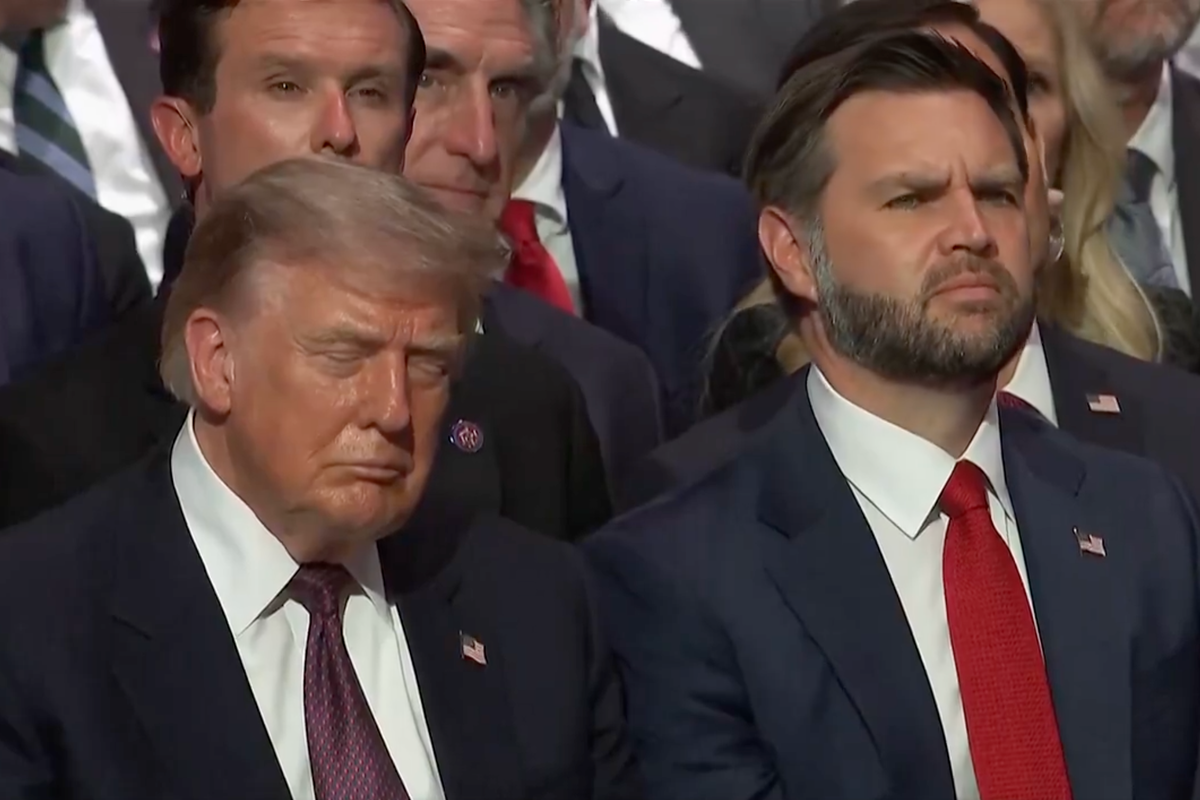
The marble of the Washington National Cathedral absorbs sound the way grief absorbs time. It stretches it out, makes it heavy, forces every breath to echo against centuries of American myth-making. Beneath the soaring Gothic vaults, world leaders sat shoulder-to-shoulder. Ukrainian President Volodymyr Zelenskyy was there. Israeli Prime Minister Benjamin Netanyahu was there. Heads of state, cabinet secretaries, and lawmakers who had spent decades shouting across congressional aisles gathered in a rare, fragile silence. They were there to say goodbye to Senator Lindsey Graham, who had died suddenly at seventy-one, an abrupt exit that left a jagged hole in the machinery of Washington.
Then came the snapshot that launched a thousand digital arguments.
Across social media feeds, a single frame began to circulate with the predictable velocity of modern outrage. President Donald Trump, seated prominently among the mourners, appeared with his eyes closed. For hours, the internet erupted. Observers dissected the posture, assigning motives, weaponizing the frozen image, turning a moment of physical stillness into a political referendum. Was it fatigue? Was it a calculated snub? Was it indifference masked behind heavy lids?
The internet demands perpetual alertness. It requires its public figures to perform vigilance every second of the day, transforming human biology into a breach of protocol.
Consider what actually happens inside a cathedral during a state funeral. The air is thick with incense and sorrow. The speeches stretch on for hours. Presidents and prime ministers operate on grueling, brutal schedules, crisscrossing time zones, managing wars, negotiating treaties, and absorbing relentless streams of crisis data. When a leader closes his eyes in a pew, the digital mob calls it a scandal. Reality calls it exhaustion.
To understand the weight of that room, you have to look past the frozen pixels of a smartphone screenshot and remember the bizarre, complicated human relationships that built modern Washington. Trump and Graham had been political adversaries before they were allies, morphing into a tight-knit partnership that survived ideological earthquakes, policy clashes, and relentless media scrutiny. Just hours before Graham passed away from an aortic dissection, he had been on the phone with the President, discussing foreign policy, returning from a grueling wartime diplomatic mission to Kyiv.
When someone you have argued with, laughed with, and strategized with for over a decade is lying in a casket a few dozen feet away, the body responds in strange ways. Grief is not a political strategy. It is a physical weight.
The online uproar missed the entire point of the afternoon. While digital commentators zoomed in on a pair of shut eyelids, the actual work of the Senate continued outside those walls. Hours after the final hymn faded, the Senate voted overwhelmingly to advance the foreign policy legislation Graham had spent his final weeks fighting to pass. Zelenskyy watched from the gallery. Bipartisan majorities aligned, driven by the momentum of a man who was no longer there to whip the votes himself.
We live in an era that treats every human gesture as a cryptographic puzzle to be solved. Every micro-expression is clipped, magnified, and judged by an audience sitting safely behind glowing glass screens. We demand constant theatrical perfection from leaders who are, underneath the tailoring and the security details, simply older human beings sitting in uncomfortable pews, listening to a choir sing for a colleague they will never see again.
The cameras flash. The screenshots circulate. The digital mob finds its momentary fuel, burning bright and fast before flickering out into the next cycle of manufactured outrage. But inside the cathedral, beneath the ancient stone, none of that noise mattered. There was only the quiet finality of a life lived loud, ending in absolute stillness.
Senator Lindsey Graham passes away after brief illness
This video report covers the sudden passing of Senator Lindsey Graham, providing essential context on his final days and the immediate tributes from political leaders ahead of his memorial services.