Every single time you strap into an airplane seat and half-heartedly listen to a flight attendant explain how to inflate a life vest, you're experiencing the direct legacy of Pan Am Flight 526A.
On Good Friday in April 1952, a Douglas DC-4 named the Clipper Endeavor ditched into the rough Atlantic waters off the coast of San Juan, Puerto Rico. The plane hit the water hard, but every single one of the 69 people on board survived the initial impact. Meanwhile, you can read related developments here: Why India is Quietly Bet Big on Southeast Europe.
Three minutes later, 52 of them were dead.
They didn't die from the crash. They died because panic broke out in the dark, waterlogged cabin. Nobody knew where the life jackets were hidden, there was no pre-flight safety demonstration, and language barriers made the chaos exponentially worse. Only 17 survivors were pulled from the waves. To see the bigger picture, check out the detailed article by NPR.
For nearly three-quarters of a century, the wreckage lay hidden 2,000 feet beneath the ocean. Explorers finally located the missing airliner on the seabed, ending a 74-year-old mystery that quietly reshaped modern air travel.
The Discovery Deep Beneath the Atlantic
Finding a lost airplane in two thousand feet of water isn't something you do on a casual weekend.
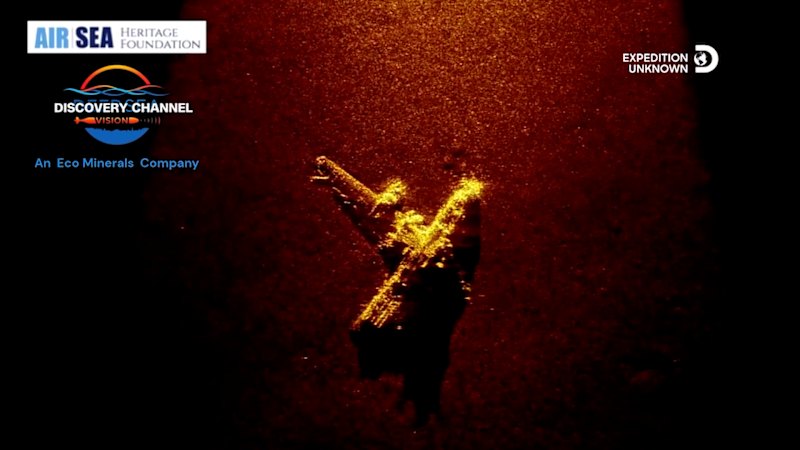
The breakthrough came on June 2, 2026, when an exploration team combining members from the Air/Sea Heritage Foundation, Deep Sea Vision, and Discovery’s Expedition Unknown deployed an autonomous underwater vehicle into a targeted ten-square-mile search box off Puerto Rico’s northern coast. Equipped with side-scan sonar, the torpedo-shaped drone swept the dark seafloor, capturing high-resolution acoustic images.
When the data came back, researchers gasped.
Resting on the ocean floor, broken into two primary sections, was the surprisingly well-preserved aluminum frame of the DC-4. Saltwater had done little to dim the plane’s history. High-resolution photographic passes revealed the iconic Pan American World Airways winged globe logo and the white painted letters "PAA" on the nose section. Even the cockpit landing gear and passenger cabin windows were clearly visible in the murky gloom.
Pan Am Flight 526A Fast Facts
--------------------------------------------------
Date of Crash:       April 11, 1952 (Good Friday)
Aircraft Type:       Douglas DC-4 (Clipper Endeavor)
Location:            5 miles off San Juan, Puerto Rico
Depth:               2,000 feet
Total Passengers:    69 (64 passengers, 5 crew)
Fatalities:          52
Survivors:           17
How Engine Failure Turned into "La Tragedia del Viernes Santo"
To understand why finding this wreck matters so much, you have to understand the horror of what happened inside that cabin.
Flight 526A departed San Juan’s Isla Grande Airport bound for New York’s Idlewild Airport (now JFK). Minutes after takeoff, two of the four engines failed. Captain John Burn realized the heavy aircraft couldn't maintain altitude and was forced to execute an emergency water landing in open ocean swells.
Burn brought the airliner down masterfully. The initial touchdown went as smoothly as anyone could hope. But as water rushed into the cabin, the absence of basic safety protocols turned a survivable forced landing into a catastrophe.
Passengers didn't know where the life jackets were stowed beneath their seats. Flight attendants had never briefed anyone on emergency exits before takeoff. Fear took over. Many terrified passengers froze or refused to jump into the rough waters. The crew struggled to deploy the large rubber life rafts in the dark while the tail broke off, causing the fuselage to sink like a stone within three minutes.
Known in Puerto Rico as La Tragedia del Viernes Santo (The Good Friday Tragedy), the event shocked civil aviation authorities.
Why This Forgotten Crash Changed How You Fly Today
Before 1952, taking an ocean-crossing commercial flight was a very different experience. You boarded, sat down, and hoped for the best. Safety demonstrations simply didn't exist in standard airline operations.
Investigators from the Civil Aeronautics Board (the precursor to the FAA) realized that most of the 52 victims on Flight 526A didn't die from impact trauma—they drowned simply because they didn't know what to do. The disaster forced regulatory agencies to mandate sweeping global reforms:
- Mandatory Pre-Flight Safety Briefings: Airlines were legally required to demonstrate emergency exit locations, life vest usage, and evacuation steps before every departure.
- Standardized Equipment Storage: Life jackets were standardized to easily accessible locations under every seat.
- Multilingual Instructions: Safety cards and crew announcements were updated to overcome language barriers during emergencies.
- Rapid Evacuation Drills: Emergency raft deployment systems and crew safety training were completely overhauled.
Every modern flight demonstration—from pointing out the nearest exit to pulling the inflation tabs on a life vest—traces directly back to the lessons learned in the waters off San Juan.
The Breakthrough Technology That Found the Wreck
Locating the Clipper Endeavor was a triumph of modern deep-sea technology. Historians had searched historical archives, Coast Guard records, and original flight logs for years, narrowing the crash zone down to a 10-square-mile patch of ocean.
The real work happened when researchers brought in autonomous underwater vehicles (AUVs) equipped with synthetic aperture sonar. Unlike older towed sonar systems that bounce around on cables behind a surface ship, these torpedo-like drones glide silently a few dozen feet above the seabed, mapping terrain with incredible clarity.
The team took over 350,000 photos of the site. Because the wreckage sits in 2,000 feet of water where there is no light and little oxygen, the aluminum fuselage remains largely preserved, serving as a underwater time capsule from 1952.
A Resting Place Left Intact
There are no plans to raise the Clipper Endeavor or recover artifacts.
Because 39 victims were never recovered after the 1952 sinking, the wreck site is treated as an official maritime grave. The search team and local officials in Puerto Rico are working together to secure legal protections for the area, ensuring it remains an undisturbed memorial to the lives lost on that Good Friday.
Next time you hear a flight attendant start the routine safety speech before pushback, don't tune it out. It's a reminder of a long-lost Pan Am flight that paved the way for modern aviation safety.