The marble floors of the Apostolic Palace have a way of swallowing sound. They are ancient, cold, and indifferent to the status of whoever walks upon them. When Donald Trump arrived at the Vatican, he brought the heavy air of a man used to the gilded ceilings of Fifth Avenue, where every surface reflects a specific kind of power. But the Vatican is a different beast entirely. It does not reflect power; it absorbs it.
Pope Francis did not meet him with the fanfare of a business mogul or the rehearsed grin of a career politician. He met him with the stillness of a man who knows that his office outlasts every empire it has ever hosted. This was not a clash of ideologies. It was a clash of frequencies. One man spoke in the language of the "deal," where everything is a transaction and every interaction is a chance to win. The other spoke from a tradition that views the world as a shared home, currently on fire.
The tension was not loud. It was subterranean.
The Gift of the Encyclical
There is a specific kind of silence that occurs when two people realize they are standing on opposite sides of a canyon. During their meeting, the exchange of gifts usually serves as a polite diplomatic formality. Trump handed over a boxed set of books by Martin Luther King Jr. It was a safe choice, a nod to American history that required no immediate self-reflection.
Then came the counter-move.
Francis handed Trump a copy of Laudato si’. This was not a coffee table book. It was a manifesto. In those pages, the Pope argues that the "cry of the earth" and the "cry of the poor" are the same sound. He writes about the "technocratic paradigm"—the idea that we can solve every problem with more consumption and more control—as a spiritual sickness. By handing this specific document to a man who had recently moved to dismantle environmental protections, Francis wasn't just giving a gift. He was issuing a subpoena.
Imagine the room in that moment. You have the leader of the free world, a man who views gold as the primary color of success, holding a treatise that calls for a "bold cultural revolution" against the very consumerism that built his brand. It was a masterclass in soft power. No shouting. No viral tweets. Just the quiet weight of a 184-page document resting in the hands of a man who rarely reads past a bulleted list.
The Invisible Stakes of a Handshake
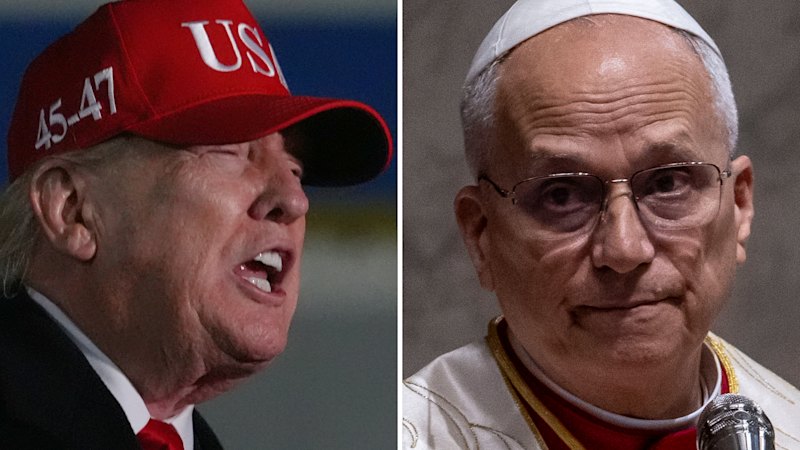
We often look at these summits through the lens of policy. We talk about the Paris Agreement, border walls, and trade. But the human element is found in the body language. Look at the photos from that day. Trump is beaming, his chest puffed out, performing the role of the global protagonist. Francis looks like a man who has just seen a car crash and is waiting for the driver to realize they’re bleeding.
This look—this weary, patient observation—is the hallmark of the Jesuit tradition. It’s a refusal to play the game of optics. By refusing to smile for the cameras, Francis stripped away the PR value of the visit. He signaled to the world that a photo op does not equal an endorsement.
This matters because our modern world is built on the belief that everything can be bought or branded. We assume that if you are famous enough or rich enough, the doors of the world swing open and the residents bow. But the Pope represents a lineage that claims a higher authority than the stock market. When he stood there, stone-faced, he was reminding the world that some things are not for sale. Not even for a President.
The Architecture of the Moral High Ground
To understand why this encounter felt like a "schooling," you have to look at the history of the men involved. Trump is a creature of the immediate. His power is a flicker—bright, hot, and dependent on the news cycle of the next ten minutes. Francis plays the long game. He is the 266th man to sit in that chair. He knows that the Church has seen Caesars, Tsars, and Titans come and go.
Consider the hypothetical case of a small-town fisherman in the Philippines, a character Francis often invokes in his writings. To this fisherman, the rising tide isn't a political debate. It’s the loss of his front porch. To him, "climate change" isn't a keyword; it’s the death of the reef that feeds his children.
When Francis speaks to a world leader, he isn't speaking for himself. He is bringing that fisherman into the room. He is forcing the man in the bespoke suit to look at the man in the tattered net. This is the invisible stake of their meeting. It’s the confrontation between the abstract world of high finance and the physical reality of a warming planet.
The "schooling" didn't happen because Francis is a better debater. It happened because he changed the scale of the conversation. Trump wanted to talk about the greatness of a single nation. Francis wanted to talk about the survival of the species.
The Weight of the Ring
There is an old story about the Fisherman’s Ring, the signet worn by the Pope. It is destroyed upon his death to ensure that no one can forge his authority. It is a symbol of the temporary nature of the man, and the permanent nature of the office.
During the visit, the contrast in their approach to legacy was jarring. One man builds towers with his name in giant letters, desperate to be remembered by the skyline. The other wears a ring that will be crushed into dust when his heart stops.
This difference in perspective changes how you treat the person sitting across from you. If you believe you are the center of the universe, everyone else is a supporting character or an obstacle. If you believe you are a temporary steward of a two-thousand-year-old tradition, you treat your power with a kind of holy fear.
The real drama of the Vatican visit wasn't found in the official transcripts. It was found in the realization that for once, Donald Trump was in a room where he wasn't the biggest thing. He was dwarfed by the statues, yes, but more importantly, he was dwarfed by a moral framework that didn't care about his ratings.
The Echo in the Hallway
But let’s be honest about the outcome. Did the encounter change the course of history? Did Trump read the encyclical on the flight back and have a sudden change of heart about the coal industry?
Probably not.
Human nature is stubborn. We see what we want to see. But the power of that meeting wasn't in the immediate policy shift. It was in the clarity it provided for the rest of us. It was a moment of absolute transparency.
We saw, in high definition, the two paths available to the modern world. One path is built on the assertion of the self—the belief that the world is a resource to be extracted and a competition to be won. The other path is built on the recognition of our entanglement—the belief that we are responsible for one another, and that the "blessed sight" of power is not when it is used to dominate, but when it is used to protect the vulnerable.
As the motorcade pulled away from St. Peter’s Square, the silence returned to the Apostolic Palace. The marble floors remained, indifferent as ever. The gifts were boxed. The photos were uploaded. But the image of the stoic priest and the grinning billionaire remained burned into the public consciousness.
It was a reminder that while kings and presidents may occupy the stage for a season, there is a different kind of authority that doesn't need a microphone or a tower. It only needs the truth, and the patience to wait for the world to listen.
The fisherman is still there, cast against the rising tide. The king has moved on to the next deal. But the book remains on the desk, its pages open, waiting for someone to finally read the warning written in the stars.