The conference room in Washington looks exactly like you would expect. Polished mahogany. Muted carpets. The heavy, stifling silence of institutional power. When the Chair of the Federal Reserve steps to the microphone, the rest of the world stops to listen to a series of dry, heavily parsed sentences. To the uninitiated, it sounds like an alien language spoken in percentages and basis points.
But out in the real world, those sentences translate into raw, human friction.
Consider a hypothetical business owner named Marcus. He runs a mid-sized auto parts distribution center in Ohio. Marcus does not spend his days studying economic theory. He spends his days looking at spreadsheets, tracking the soaring cost of cardboard shipping boxes, and watching his utility bills climb. For Marcus, inflation is not a line graph on a slide deck. It is a slow, relentless leak in his life savings. It is the reason he had to look a twenty-year employee in the eye last week and explain why a four percent raise feels like a pay cut.
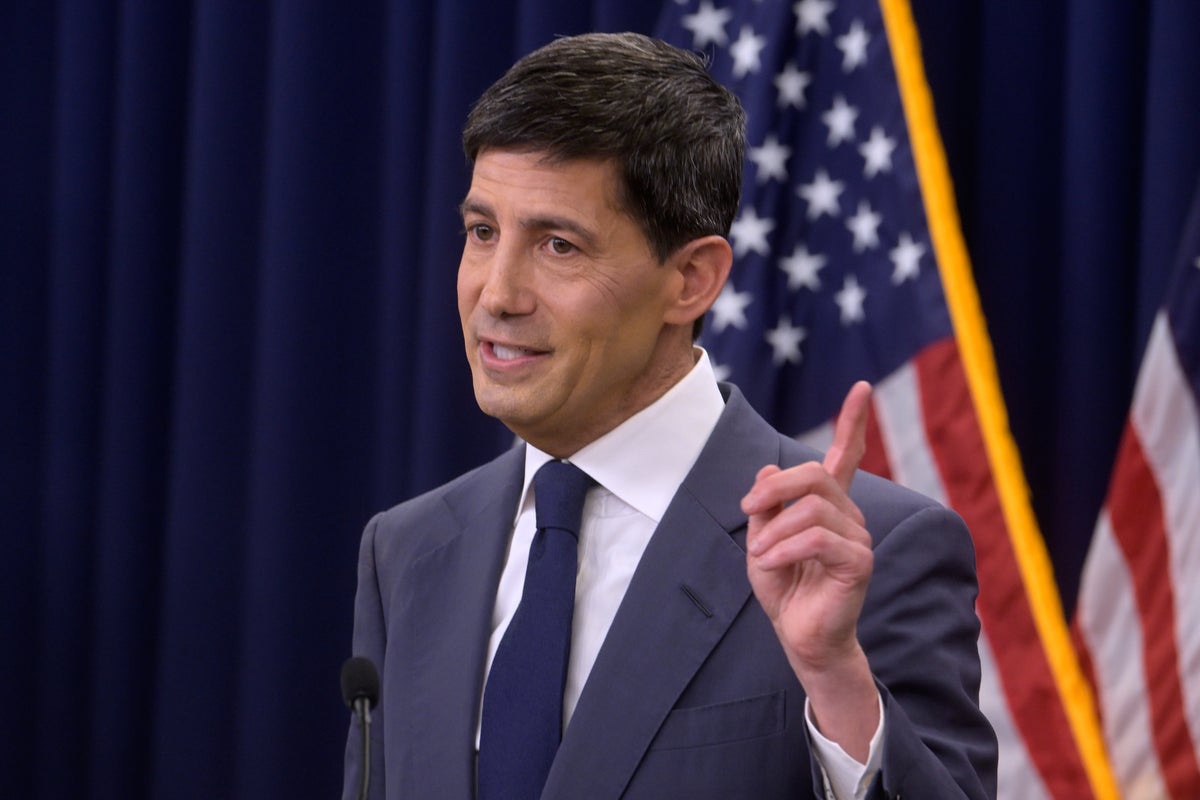
When Federal Reserve Chair Kevin Warsh stood before the microphones recently to signal his absolute focus on crushing that inflation, he was speaking directly to the anxiety keeping Marcus awake at midnight.
Warsh laid down a marker that defines the modern economic struggle. He drew a line in the sand between the immediate, chaotic demands of political arenas and the quiet, long-term stability of the American economy.
The Pressure Inside the Pressure Cooker
Every politician wants the same thing. They want cheap money. They want low interest rates that make the economy feel like a roaring sports car, especially when an election is shimmering on the horizon. Cheap money creates a temporary illusion of endless prosperity. Houses sell faster. Stock portfolios swell. The crowd cheers.
But the Federal Reserve was designed to be the adult in the room.
The central bank exists on a fortified island, intentionally separated from the winds of Capitol Hill and the White House. This independence is not a bureaucratic quirk. It is the entire point of the institution. A central bank tied to the whims of politicians is a dangerous thing. History is littered with nations that allowed the printing presses to run hot just to satisfy the short-term popularity of a ruling party. The result is always the same. Hyperinflation. Ruin.
Warsh used his platform to send a clear message to the political apparatus: the fortress walls will hold.
The pressure on a Fed Chair is immense. It arrives in the form of public criticisms, angry social media posts from elected officials, and whispered warnings from Wall Street titans. To stand against that tide requires a specific kind of institutional stubbornness. Warsh signaling a hard line on political independence is an acknowledgement of the storm outside the building. He is telling the markets, the public, and the politicians that his decisions will be guided by hard data, not hard feelings.
Understanding the Hidden Thief
Why is this independence so fiercely guarded? Because the enemy they are fighting is incredibly destructive.
Inflation is a thief that operates in broad daylight. If a burglar sneaks into your home and steals a hundred-dollar bill from your dresser, you call the police. You feel violated. But when inflation takes ten percent of the purchasing power of that same hundred-dollar bill while it sits quietly in your bank account, there is no siren. No flashing lights.
Money is more than paper. It is a promise. It represents the hours you spent away from your family, the sweat of your labor, and the sacrifices you made today for a better tomorrow. When the value of money rots, that promise breaks.
Think back to Marcus in Ohio. He remembers a time when a dollar felt heavy. Today, it feels light, slipping through his fingers before he can even catalog where it went. When the cost of everything from steel components to coffee beans rises unpredictably, businesses cannot plan for next month, let alone next year. They stop investing. They freeze hiring. The entire economic engine begins to sputter under the weight of uncertainty.
The Fed has one primary tool to fight this thief. Interest rates.
By raising the cost of borrowing, the central bank intentionally cools the economy down. It makes it more expensive to buy a car, take out a mortgage, or expand a factory. It sounds counterintuitive. Why would the government want to make things harder for consumers?
Because the alternative is worse. An economy where inflation runs unchecked eventually burns itself to the ground.
The Tightrope Walk
The strategy Warsh outlined is not without risk. It is a high-wire act performed over a canyon.
If the Fed raises rates too quickly or keeps them high for too long, they risk triggering a recession. Factories close. Unemployment spikes. The very people the central bank is trying to protect from inflation end up losing their livelihoods.
Conversely, if the Fed relents too early because the political pressure becomes unbearable, inflation can take root permanently. It becomes psychological. If consumers believe prices will be higher next month, they rush out to buy goods today. That surge in demand drives prices even higher. A vicious cycle begins, and once that wheel starts turning, it takes a massive economic crisis to stop it.
This is the invisible burden carried by those who sit in the marble halls of the Marriner S. Eccles Federal Reserve Building. Every decision is a trade-off. Every choice carries a human cost.
Warsh’s explicit focus on inflation signals that he views the risk of inaction as far greater than the pain of tightening. He is willing to endure the inevitable complaints from real estate agents, tech startups, and members of Congress because he knows that a stable dollar is the bedrock upon which everything else is built. Without it, the entire financial system becomes a house of cards.
The Long Road to Stability
We often look at the economy as a massive, abstract machine driven by computers and algorithms. We forget that the economy is simply millions of human beings making decisions based on trust.
Trust that their paycheck will buy the same amount of groceries on Friday as it did on Monday. Trust that their savings will survive until retirement. Trust that the rules of the game will not change overnight because a politician needed a bump in the polls.
The statement from the Fed Chair was an attempt to restore and anchor that trust. It was an insurance policy signed in public view.
The months ahead will reveal the true test of this philosophy. Economic data is notoriously messy. One month shows cooling prices; the next shows a sudden spike. The political commentary will undoubtedly grow louder, harsher, and more personal. There will be moments when the temptation to blink, to lower rates just a fraction to ease the immediate tension, will be incredibly strong.
But true independence is measured when the wind is blowing at gale force.
Back in Ohio, Marcus turns off the lights in his warehouse. He locks the door and walks to his truck. He knows the coming year will be difficult. Borrowing money to buy new delivery vans will cost him more. His margins will remain tight. Yet, as he drives home through the darkening midwestern streets, there is a strange comfort in knowing that someone in Washington is finally acknowledging the monster he fights every day.
The battle against inflation is not won with a single speech or a single policy shift. It is a long, grinding war of attrition. By prioritizing political independence and making inflation the primary target, Warsh has chosen his battleground. The stakes are nothing less than the preservation of the economic foundation that allows ordinary people to build a life.
The microphone is turned off. The reporters have left the room. The statement has been analyzed by algorithmic trading programs across Wall Street. Now comes the quiet, difficult work of turning those parsed sentences into a reality that restores value to the dollar in your pocket.