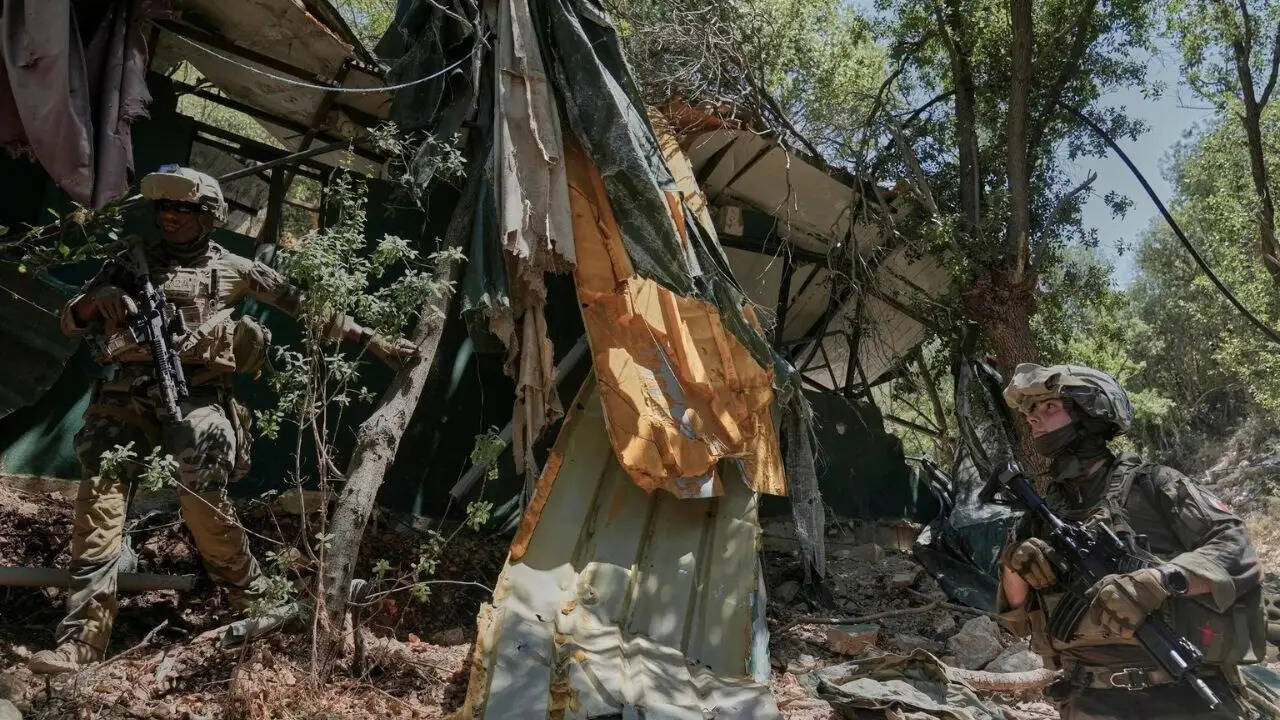
The long-standing consensus that protected the uneasy peace in Southern Lebanon has officially crumbled. Following the death of a French peacekeeper serving with the United Nations Interim Force in Lebanon (UNIFIL), Paris has taken the unprecedented step of pointing the finger directly at Hezbollah. This isn't just another diplomatic protest. It is a fundamental shift in French foreign policy that signals the end of "strategic ambiguity" in the Levant. For years, France attempted to play the role of the middleman, maintaining lines of communication with Hezbollah’s political wing while officially condemning its militant activities. That balancing act died on a dusty road in South Lebanon.
The reality on the ground is grim. While UNIFIL is technically tasked with ensuring the area remains free of unauthorized weapons and personnel, the region has become a dense network of underground fortifications and hidden missile batteries. French intelligence services, usually known for their cautious rhetoric, have reportedly gathered evidence indicating that the "incident" leading to the peacekeeper's death was not a chaotic accident or a misunderstanding by local villagers. It was a targeted message. By blaming Hezbollah specifically, France is telling the world that the group has moved from obstructing the UN mission to actively hunting its members. In similar updates, read about: War and Secrets The Distraction Myth and the Machiavellian Reality of Geopolitics.
The Mirage of Neutrality in the South
For decades, the United Nations mission has operated under a set of rules that required the consent of the governed—or, more accurately, the consent of the armed. UNIFIL patrols often found their paths blocked by "angry locals" whenever they drifted too close to sensitive sites. These encounters were frequently dismissed as organic civilian friction. They were nothing of the sort.
Hezbollah maintains a sophisticated grip on the social and physical geography of the south. Nothing happens without their knowledge. When a UN vehicle is intercepted or a peacekeeper is fired upon, it happens because a command was issued or a boundary was crossed. France’s decision to name the group reflects a realization that the old ways of doing business—appeasing the local power brokers to keep the peace—only resulted in more daring provocations. NPR has provided coverage on this fascinating issue in extensive detail.
The French government is now grappling with the failure of Resolution 1701. This UN mandate was supposed to keep the area between the Blue Line and the Litani River clear of any armed personnel other than the Lebanese Army and UNIFIL. Instead, the zone is one of the most heavily militarized strips of land on the planet. The death of a French soldier serves as the ultimate proof that the Lebanese state has no monopoly on force in its own territory.
A Rupture in the Elysee Strategy
President Emmanuel Macron has invested significant political capital in Lebanon since the 2020 Beirut port explosion. He traveled to the city twice, hugged survivors, and tried to shame the Lebanese political elite into forming a functional government. His strategy relied on the idea that France could talk to everyone. By engaging with Hezbollah’s political representatives, Macron hoped to coax the group into a more "Lebanon-first" posture.
This strategy is now in ashes. The hardliners within the French military and intelligence community have long argued that Hezbollah cannot be bifurcated into "good" political and "bad" military wings. They view the group as a singular entity under the influence of Tehran. The killing of a peacekeeper has provided these hawks with the leverage they needed to force a harder line.
France is no longer asking for cooperation; it is demanding accountability. This shift puts Paris in direct alignment with Washington and Jerusalem, a position it usually tries to avoid to maintain its unique diplomatic flavor. The move also isolates Hezbollah further on the European stage, where several nations still hesitate to fully designate the group as a terrorist organization. If France, the historic "tender mother" of Lebanon, says the group is responsible for murdering its soldiers, the rest of the European Union will find it increasingly difficult to look the other way.
Tactical Reality vs Mandate Limitations
The tragedy highlights the impossible position of the peacekeepers themselves. UNIFIL soldiers are equipped for observation, not combat. They drive white SUVs and armored personnel carriers that are easily tracked and frequently harassed. When they encounter resistance, their rules of engagement are so restrictive that they often have to retreat to avoid escalation.
Hezbollah exploits this restraint. The group uses a "gray zone" tactic—using civilians as a front for military objectives. If a UN patrol enters a village where a weapons cache is hidden, "civilians" will appear to block the road, seize cameras, or smash windows. If the peacekeepers defend themselves, Hezbollah’s media machine paints them as occupiers attacking the Lebanese people. If they don't defend themselves, they are seen as weak and ineffective.
The death of the French peacekeeper happened in this gray zone. Initial reports often try to muddy the waters, suggesting a stray bullet or a case of mistaken identity. However, the French investigation suggests a high level of intentionality. The hit was precise. It happened in an area where Hezbollah’s security apparatus is absolute. In such a controlled environment, there are no accidents of this magnitude.
The Geopolitical Ripple Effect
We cannot view this event in isolation from the broader regional conflict. Lebanon is currently a secondary front in a much larger war. As tensions between Israel and various regional proxies simmer, the presence of Western peacekeepers acts as both a tripwire and a shield.
By targeting a French soldier, the perpetrators are testing the resolve of the West. They are asking: "How much are you willing to pay to stay here?" If France pulls back, the buffer between the Israeli Defense Forces and Hezbollah evaporates. This would almost certainly lead to a full-scale ground invasion, as Israel has repeatedly stated it will no longer tolerate the presence of elite militant units on its northern border.
France’s decision to blame Hezbollah is a high-stakes gamble to prevent that exact scenario. By calling out the group, Paris is attempting to create a "shame barrier." They are signaling to Tehran and the Hezbollah leadership that the cost of killing Europeans will be a total loss of diplomatic cover in the West. It is an attempt to use words to stop bullets, but in the brutal logic of the Middle East, words are rarely enough.
The Lebanon Armed Forces Dilemma
The French have traditionally been the biggest backers of the Lebanese Armed Forces (LAF). The logic was simple: strengthen the national army so it can eventually replace the need for Hezbollah’s militia. This has been the cornerstone of Western policy for two decades. Millions of dollars in equipment, training, and even salaries have flowed from Paris and Washington to the LAF.
However, the peacekeeper's death exposes the fatal flaw in this plan. The LAF is often operating in the same space as Hezbollah, but it lacks the political will or the military strength to confront them. In many cases, the LAF and Hezbollah have a de facto coordination agreement to avoid clashing. When a UN patrol gets into trouble, the LAF is often "too late" to the scene or stands by while the situation escalates.
France is now forced to ask if its support for the LAF is actually achieving anything. If the national army cannot protect the very peacekeepers who are there to support them, the entire justification for French aid begins to dissolve. This creates a vacuum that only the most radical elements are happy to fill.
The End of the UNIFIL Era
The current mandate for UNIFIL is up for renewal soon. Usually, this is a rubber-stamp process in New York. This year will be different. France, as a permanent member of the Security Council, will likely push for more aggressive language and greater freedom of movement for the blue helmets.
They will meet stiff resistance. Russia and China have shown little interest in expanding Western military influence in the region, and the Lebanese government—heavily influenced by Hezbollah’s political bloc—will fight any change that gives the UN more power to "spy" on the resistance.
This creates a deadlock. If the mandate isn't strengthened, more peacekeepers will die. If it is strengthened, it could spark the very war it is designed to prevent. The French peacekeeper’s death has forced this contradiction into the light. You cannot have a "peacekeeping" mission where there is no peace to keep and one side views the peacekeepers as legitimate targets.
The Ground Reality for the Soldiers
While diplomats argue in the marble halls of the UN, the soldiers on the ground are living in a state of constant high alert. The mood in the French camps is one of somber frustration. They are professional soldiers who feel they are being asked to do a job with one hand tied behind their backs. They see the missile launchers being moved; they see the "civilian" observers following their every move with binoculars; they see the signs of an impending conflict that they are powerless to stop.
The death of their comrade has changed the atmosphere. The "friendly" waves from the roadside have been replaced by suspicious glares. The patrols are now more heavily armored, the drone surveillance more frequent. But no amount of technology can fix a broken political reality. The peacekeeper was killed because he was a symbol of a world order that Hezbollah and its patrons no longer respect.
The investigation will continue, and there will be more speeches from the Quai d'Orsay. There will be demands for the Lebanese judiciary to act, knowing full well that no judge in Beirut would dare sign an arrest warrant for a high-ranking Hezbollah operative. The cycle of impunity is the defining characteristic of the Lebanese state.
France’s decision to name the culprit is an act of desperation and a final warning. It is the sound of a door slamming shut on a decade of failed engagement. The "special relationship" between France and Lebanon has always been a mix of romanticism and cold-blooded interests. Today, only the cold-blooded interests remain. The killing of a soldier in a white helmet has stripped away the last of the illusions.
South Lebanon is no longer a peacekeeping theater. It is a waiting room for a catastrophe. The French have finally admitted who is holding the key to the door.
Remove the armor and the diplomatic plates, and you are left with a simple, brutal truth: the presence of the West in the south is now viewed as an obstacle to be removed, by any means necessary.