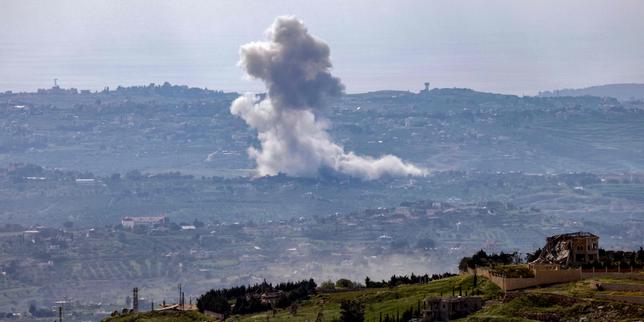
The transition from active kinetic warfare to a durable ceasefire is rarely a binary switch; it is a high-friction process where tactical friction frequently overrides strategic intent. In the current Middle Eastern theater, the fragility of the Lebanese ceasefire is not a failure of diplomacy, but a predictable outcome of misaligned incentives between local operational commanders and central political authorities. When Israel strikes Southern Lebanon post-ceasefire, it is not necessarily a return to war, but an enforcement of a "security envelope" designed to prevent the reconstitution of Hezbollah’s infrastructure. The risk is not a sudden escalation into total war, but the crystallization of a "frozen conflict"—a state of permanent instability that drains regional resources while providing no definitive resolution.
The Mechanics of Enforcement and the Violation Paradox
A ceasefire agreement functions as a contract with significant enforcement costs. In the Lebanese context, the primary variable is the "Buffer Zone Integrity." Israel’s military strategy centers on the proactive destruction of any perceived attempt by Hezbollah to re-establish positions south of the Litani River. This creates a functional paradox: to maintain the peace, one must frequently utilize force to signal that the terms of the agreement are non-negotiable.
The "Violation Paradox" can be broken down into three specific operational triggers:
- Re-entry Thresholds: The movement of armed personnel or the transport of hardware back into prohibited zones. IDF strikes are calibrated to reset these thresholds, forcing Hezbollah to weigh the cost of re-occupation against the risk of renewed aerial campaigns.
- Intelligence-Driven Pre-emption: When surveillance identifies the preparation of launch sites or tunnel networks that survived the initial conflict, the decision to strike is often decentralized to regional commanders. This local autonomy ensures rapid response but complicates the diplomatic narrative of a "quiet" border.
- The Signaling Gap: There is an inherent delay between a diplomatic agreement and its implementation by various splinter groups or decentralized units. Until the Lebanese Armed Forces (LAF) and UNIFIL demonstrate a credible capacity to occupy and hold territory, the IDF acts as the default enforcer.
Qatar’s "Frozen Conflict" Hypothesis and the Economics of Stalemate
The concern expressed by Qatari mediators regarding a "frozen conflict" reflects a deep understanding of the economic and political costs of status-quo instability. A frozen conflict occurs when the active fighting stops, but no political settlement is reached, leaving the underlying drivers of the war intact. This creates a specific set of systemic pressures.
The Capital Flight Constraint
Investors and regional partners require predictability. A "neither peace nor war" state prevents the reconstruction of Lebanon’s crippled economy. The lack of a definitive end-date for hostilities means that reconstruction funds remain locked in escrow or diverted to more stable markets. For Qatar and other Gulf states, the risk is that Lebanon becomes a permanent ward of the international community, requiring constant humanitarian infusions without ever reaching a state of self-sustained recovery.
The Political Paralysis Factor
A frozen conflict serves the interests of hardliners on both sides. For Hezbollah, it allows them to maintain a "resistance" posture without the immediate threat of annihilation. For certain Israeli political factions, it justifies the continued expansion of security measures and avoids the difficult internal debate over a long-term political settlement. This stalemate effectively blocks any progress on the demarcation of land borders, which is a prerequisite for long-term stability.
The Strategic Architecture of Lebanon’s Security Buffer
To understand why the ceasefire is being tested, we must analyze the structural requirements of the security buffer. This is not merely a line on a map; it is a complex layering of human, electronic, and kinetic assets.
- The Physical Layer: This includes the demolition of structures within 1-2 kilometers of the Blue Line to create a "kill zone" or "no-man's land." Any movement within this layer is automatically categorized as hostile.
- The Surveillance Layer: Comprising UAVs, seismic sensors, and signals intelligence (SIGINT). The IDF’s continued presence in Lebanese airspace is a critical component of this layer, providing the real-time data necessary for enforcement strikes.
- The Kinetic Layer: The readiness of artillery and air wings to respond within minutes to any breach. This layer operates on a "shoot-to-deter" logic, where the goal is to make the cost of violating the ceasefire prohibitively high.
The current friction arises because the Lebanese Armed Forces (LAF) lack the technical and material capacity to replace these layers. Until the LAF can provide equivalent security guarantees to Israel—specifically the prevention of rocket fire and cross-border raids—Israel will likely continue to execute unilateral "enforcement strikes," regardless of the diplomatic fallout.
The Asymmetric Incentive Structure
The primary obstacle to a durable peace is the asymmetry in how each actor perceives the ceasefire.
Israel views the ceasefire as a tactical pause to consolidate gains, allow for the return of displaced civilians to the north, and pivot focus toward Iranian regional influence. For the Israeli leadership, the ceasefire is only valid so long as it achieves the total neutralization of Hezbollah’s southern infrastructure.
Hezbollah, conversely, views the ceasefire as a survival mechanism. Their objective is to maintain their command structure and wait for the international pressure on Israel to mount. By engaging in low-level violations or allowing "third-party" groups to fire occasional projectiles, they can test the limits of Israeli patience without triggering a full-scale re-invasion.
This creates a high-stakes game of chicken. If Israel ignores minor violations, it risks a gradual erosion of its security buffer. If it responds too aggressively, it risks being labeled the aggressor by the international community, potentially losing the diplomatic cover provided by the US and European allies.
Regional Contagion and the Gulf Strategy
The Gulf states, led by Qatar and Saudi Arabia, are operating on a different strategic horizon. Their priority is the containment of the conflict to prevent it from disrupting regional energy markets and trade routes. The fear of a "frozen conflict" is rooted in the realization that an unstable Lebanon is a vacuum that will inevitably be filled by Iranian influence.
The Gulf strategy involves a "Carrot and Stick" approach:
- The Carrot: Promises of massive infrastructure investment and debt relief for Lebanon, contingent on the total disarmament of non-state actors south of the Litani.
- The Stick: The threat of total diplomatic isolation and the withdrawal of banking support if the Lebanese government fails to assert its sovereignty over Hezbollah.
This strategy faces a bottleneck in the form of Lebanese internal politics. The central government is too weak to challenge Hezbollah militarily, and the Lebanese army is too underfunded to act as an independent security guarantor. This creates a dependency on external enforcement, which brings us back to the IDF’s unilateral strikes.
The Probability of Permanent Friction
Data from previous conflicts in the region suggest that ceasefires without a clear political endgame have a high rate of decay. The "decay constant" in the Lebanon-Israel theater is driven by the frequency of small-scale provocations. If violations occur more than three times per week, the ceasefire is statistically likely to collapse into localized skirmishes within 90 days.
Current engagement patterns indicate that we are entering a phase of "managed instability." This is characterized by:
- Periodic Israeli airstrikes on Hezbollah logistics hubs.
- Small-scale incursions by Hezbollah "lookouts" into the buffer zone.
- Increasing diplomatic rhetoric regarding the failure of UNIFIL.
The lack of a robust, third-party enforcement mechanism with the authority to use force against violators means that the two primary combatants will continue to self-police. Self-policing in a high-distrust environment is inherently volatile.
Strategic Forecast and the Path to Institutionalization
The only viable path out of a frozen conflict is the institutionalization of the security buffer. This requires moving beyond a mere "cessation of hostilities" toward a "security regime."
The first step is the deployment of a modernized Lebanese Armed Forces unit, specifically trained and equipped for border surveillance, with a mandate that includes the use of force against any armed entity other than themselves. This unit must be supported by a technical monitoring mission—potentially involving non-UN actors with higher technological capabilities—to provide impartial verification of violations.
Second, a clear "De-escalation Protocol" must be established. This would define specific categories of violations and the agreed-upon non-kinetic or limited-kinetic responses. Without such a protocol, every minor breach risks an over-response that could ignite a broader conflict.
The current situation is a race between the establishment of these institutions and the inevitable erosion of the ceasefire's credibility. If the institutional layer is not built within the next six months, the "frozen conflict" will likely thaw into a renewed campaign of attrition, as both sides conclude that the ceasefire has ceased to serve their strategic interests. The strategic play for regional powers is to move from mediation to the active financing and training of the LAF, bypassing the gridlock of Lebanese domestic politics to create a functional security partner on the ground.