The arrival of heavily armored tactical vehicles at a newly christened staging base near the Kerem Shalom crossing marks the beginning of the most audaciously corporate geopolitical experiment of the century.
Donald Trump’s Board of Peace is preparing to launch its first "Hamas-free humanitarian zone" in the devastated southern Gaza district of Tel al-Sultan. Ostensibly designed to house tens of thousands of thoroughly vetted Palestinian civilians, the pilot project is being sold as a triumph of operational efficiency—a secure sanctuary managed by technocrats and policed by a private, multinational mercenary force.
But strip away the public relations gloss and a much darker reality emerges. This is not a standard humanitarian intervention. It is a radical blueprint that effectively strips the United Nations of its historical mandate, legalizes a system of open-ended civilian internment, and provides a convenient logistical shield for the permanent Israeli military occupation of the Gaza Strip.
The Anatomy of the Tel al-Sultan Enclave
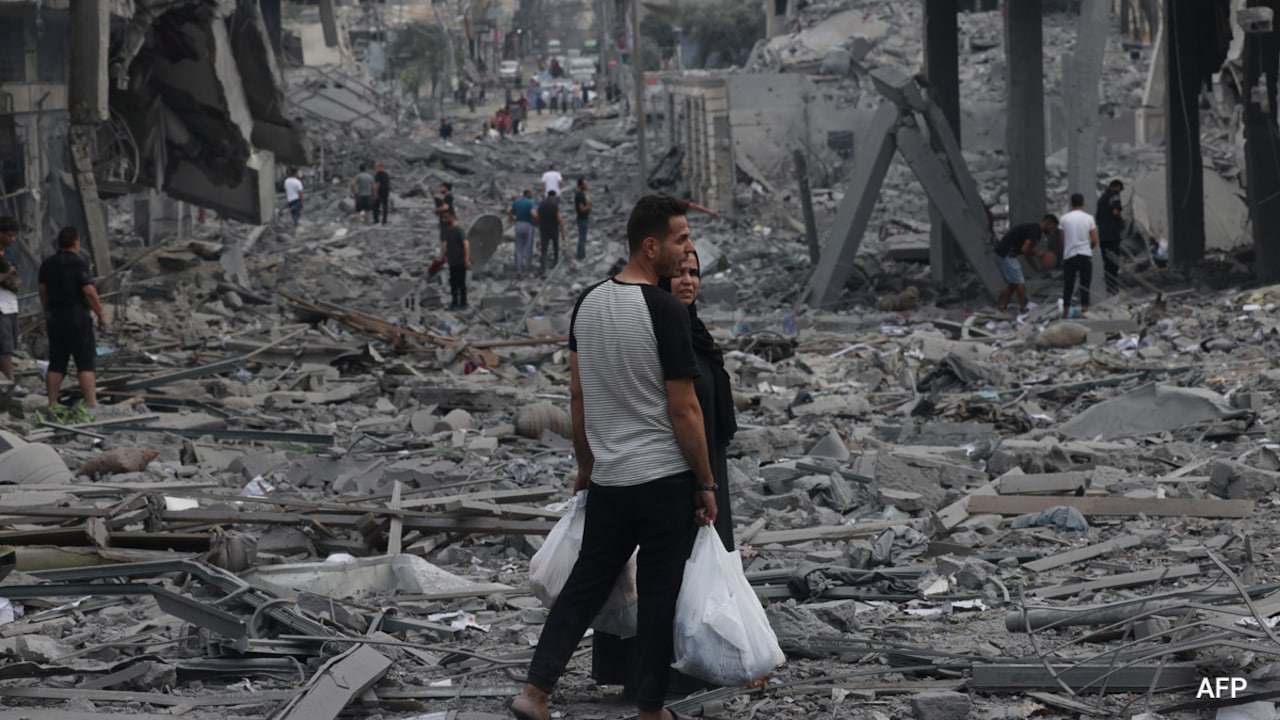
The mechanism of the Board of Peace's pilot program relies on deep-tier civilian screening and absolute physical control. Under the plan, civilians fleeing the broader wreckage of Gaza will be directed into Tel al-Sultan, a neighborhood near Rafah that was largely pulverized during active hostilities.
[ Gaza Strip ] --------> [ Screening by NCAG ] --------> [ Tel al-Sultan Zone ]
  (Civilians)              (Identity Vetting)             (Policed by ISF)
                                                                 |
                                                          [ Strict Rules ]
                                                      - No concrete allowed
                                                      - Non-lethal policing
Once there, they will not find standard refugee camps. They will enter an environment governed by strict, non-negotiable parameters:
- Vetting and Access Control: The National Committee for the Administration of Gaza (NCAG)—a body of Palestinian technocrats assembled by the Board of Peace—will handle the screening process. Only civilians with zero demonstrated ties to Hamas or militant factions will be permitted entry.
- The Private Military Shield: Security inside the perimeter will not be provided by the Israeli Defense Forces (IDF) or local police. Instead, the International Stabilization Force (ISF), a newly minted multinational army operating under the Board of Peace's direct command, will patrol the interior using non-lethal weaponry.
- The Concrete Ban: In a move that ensures the area remains inherently temporary, the Board of Peace has explicitly guaranteed to Israeli authorities that no concrete will be imported into the zone. Residents will live in mobile caravans and modular containers.
The official narrative positions this as a safe, voluntary transition zone. Yet human rights workers and international diplomats operating in the region are already raising alarms, noting that isolating civilians into strictly monitored, micro-managed corrals directly challenges international conventions regarding forced displacement and freedom of movement.
Crowding Out the United Nations
To understand why this is happening now, one must look at the structural architecture of the Board of Peace itself. Established on the sidelines of the World Economic Forum, the body functions less like a diplomatic coalition and more like a private corporation with sovereign immunity. Donald Trump serves as its chairman for life, holding unilateral power to appoint successors and dictate policy.
For decades, the United Nations—primarily through UNRWA—held the keys to humanitarian logistics in Gaza. The Board of Peace is actively designed to break that monopoly. Trump has openly bragged that the board could entirely replace the UN, calling it the most prestigious board ever assembled.
By funneling international aid through its own massive logistics warehouses near the border fence, the board bypasses traditional NGO channels. A leaked draft memo revealed that the organization is even seeking blanket legal immunity from any wrongdoing in Gaza, alongside the right to acquire public property free of charge. It is a complete corporate takeover of a humanitarian catastrophe.
The Tactical Upside for Israeli Control
While the Board of Peace promotes the Tel al-Sultan enclave as the baseline for a new, technocratic Palestinian governance model, the strategic benefits to the Israeli military are immense.
Since the ceasefire took effect, Israeli forces have quietly expanded and consolidated their grip, holding more than 60 percent of Gaza's physical territory. By warehousing the civilian population inside monitored humanitarian zones, the IDF is freed from the logistical nightmare of policing an active, hostile population.
IDF Military Expansion (Outer Gaza)
====================================== [ Yellow Line Border ]
ISF Non-Lethal Patrols (Inner Zone)
--------------------------------------
Civilians in Mobile Caravans (No Concrete)
The ISF acts as a convenient buffer. With international mercenaries managing the civilian interior, the IDF can maintain and expand its presence beyond the "Yellow Line" without direct civilian friction. It provides the perfect geopolitical cover: the world sees aid trucks and modular housing, while the reality on the ground reflects an ongoing, hardened partition of the Gaza Strip.
A Fractured Transition
The Board of Peace is moving forward with the Tel al-Sultan pilot despite massive operational friction. The NCAG technocrats tasked with running the day-to-day administration have been marooned in Cairo for months, struggling to establish actual legitimacy on the ground. Hamas, despite announcing the dissolution of its formal government, has explicitly refused to disarm, directly defying the board's core principle of consolidating all weapons under a single authority.
Treating a highly volatile geopolitical conflict like a real estate development project is an unprecedented gamble. By replacing international law with corporate mandates, and permanent reconstruction with a ban on concrete, the Board of Peace may not be building a launchpad for peace. Instead, it is constructing a highly sophisticated, privatized system of containment that transforms Gaza into a series of strictly managed company towns.