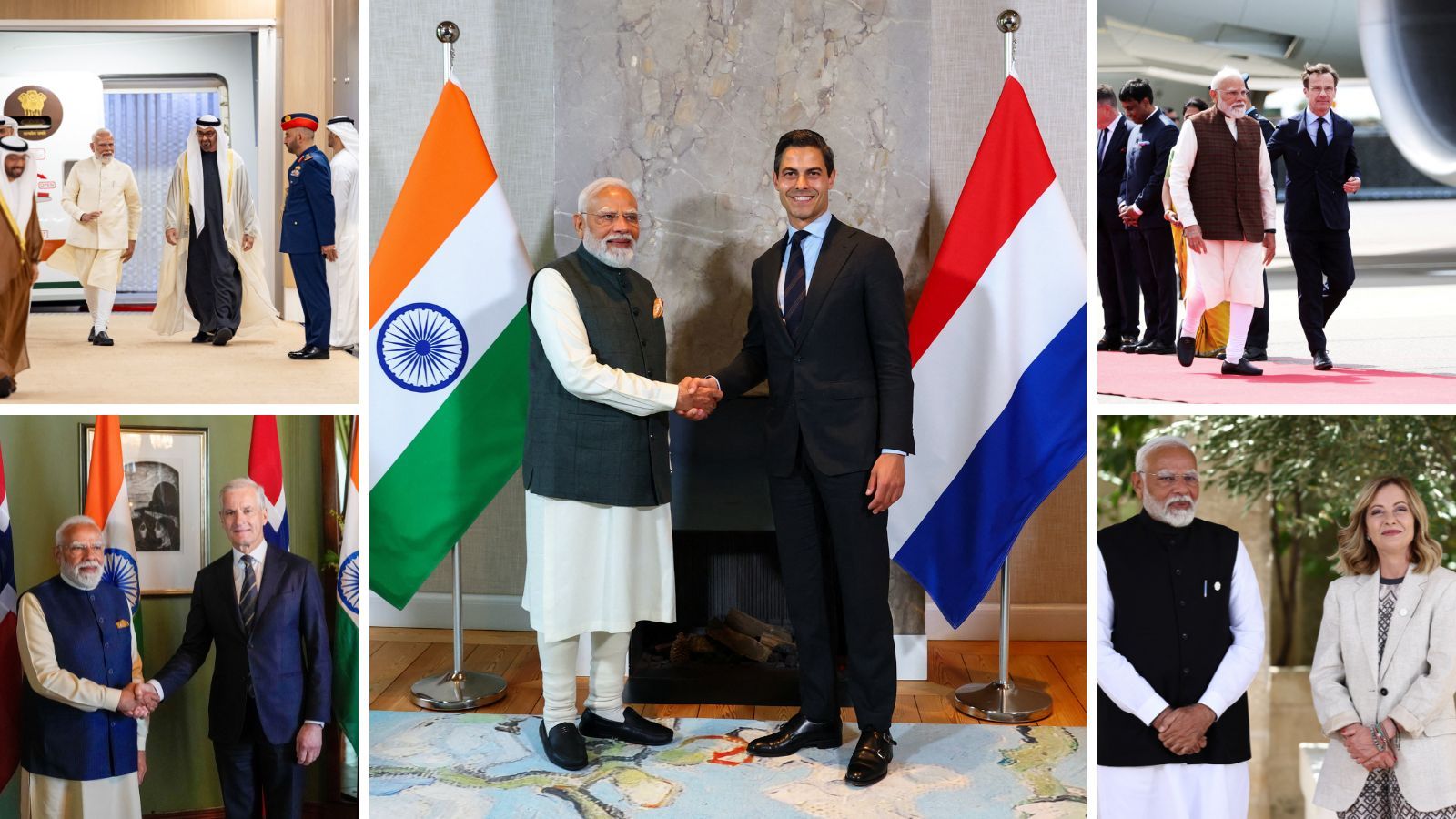
India’s statecraft functions through an interlocking grid of resource dependencies, technology acquisition, and soft-power validation. The mid-2026 diplomatic itinerary covering the United Arab Emirates, the Netherlands, Sweden, Norway, and a fifth partner state provides a structural blueprint for how emerging powers convert immediate material needs into structural global influence. Moving beyond the surface-level reporting of trade pacts and cultural exchanges reveals a calculated calibration of energy security, high-performance computing, sovereign wealth deployment, and civilizational restitution.
Understanding this strategy requires mapping the interactions between hard economic variables and historical narrative control. The primary mechanism rests on a dual framework: stabilizing critical domestic resource flows while positioning the state as the preferred destination for Western European technology and Gulf capital.
The Asymmetrical Energy Corridor: India-UAE Strategic Architecture
The foundational leg of the tour established an integrated framework targeting India’s domestic energy vulnerability. India relies on external sources for more than 80% of its crude oil requirements, creating an economic vulnerability to supply-chain disruptions and price volatility. The agreements signed with the Abu Dhabi National Oil Company (ADNOC) alter the mechanics of this relationship by shifting from standard buyer-seller transactions to structural operational co-dependency.
The Strategic Petroleum Reserve Cost Function
The agreement between Indian Strategic Petroleum Reserves Limited and ADNOC expands the volume of commercial-strategic crude stored within domestic facilities. The economic rationale operating here minimizes the state's storage maintenance costs while securing immediate physical access to supply during geopolitical friction.
By allowing Gulf state entities to hold commercial inventories within Indian reserves, the economic model functions through specific variables:
- Zero-Capital Inventory Holding: India reduces the fiscal burden of purchasing and holding millions of barrels of non-yielding crude assets.
- Operational Priority Rights: Under supply emergencies, the contractual framework guarantees domestic refineries first-right-of-refusal over the stored volume, neutralizing shipping delays through the Strait of Hormuz.
- Downstream Infrastructure Collocation: Paving a pathway for liquefied natural gas (LNG) and liquefied petroleum gas (LPG) infrastructure shifts the baseline from raw commodity imports to shared processing systems. This stabilizes the long-term price structure of industrial and domestic fuel lines.
Capital Offsetting and Infrastructure Clusters
The financial reality of industrializing the domestic coastline requires a continuous influx of non-debt-creating capital. The commitment of $5 billion from UAE financial institutions and sovereign wealth funds into Indian infrastructure directly targets specific capital deficits.
This capital flow connects directly to maritime industrial planning via the proposed ship repair and maritime infrastructure cluster at Vadinar, Gujarat. This structural allocation addresses two key operational limitations:
[Domestic Workforce Deficit] ---> [Skill Development Framework] ---> [High-Value Marine Service Capture]
[Foreign Ship Maintenance Drain] -> [Vadinar Infrastructure Cluster] -> [Capital Retention within Domestic Economy]
The establishment of this cluster changes the shipping life-cycle economy. Currently, a substantial percentage of Indian-owned commercial vessels undergo deep-sea repairs and maintenance in foreign docks, draining foreign exchange reserves. Activating the Vadinar cluster under a structured skill-development framework changes the domestic cost structure. It converts a servicing liability into a domestic industrial asset, retaining service capital within the local financial ecosystem.
Computational Sovereignty and High-Performance Compute
The deployment of an eight-Exaflop Supercomputer Cluster involving India’s Centre for Development of Advanced Computing (C-DAC) and the UAE’s G-42 represents a clear break from standard technology transfers. This initiative establishes an independent computing architecture outside conventional Western and East Asian supply chains.
The strategic value of an Exaflop architecture rests on three operational realities:
- Algorithmic Independence: Sovereign AI development and cryptographic security models require massive datasets processed on domestic or allied hardware. Relying on third-party cloud infrastructure introduces structural data-exfiltration vulnerabilities.
- Resource Optimization: Processing complex geological, meteorological, and economic models at scale reduces the error margins in agricultural forecasting and public infrastructure spending.
- Geopolitical De-risking: By co-developing compute clusters with non-aligned liquidity hubs like the UAE, India insulates its deep-tech infrastructure from sudden export controls or semiconductor sanctions imposed by singular trade blocs.
Civilizational Restitution and Soft Power Arbitrage
Diplomacy cannot operate on resource calculation alone; it requires a foundational narrative that validates a nation's position at the negotiating table. The formal repatriation of the 11th-century Chola dynasty copper plates from Leiden University in the Netherlands serves as a primary example of cultural restitution used for sovereign positioning.
The Provenance Leverage Model
The Anaimangalam Copper Plates—weighing approximately 30 kilograms and containing inscriptions in Tamil and Sanskrit—are not mere museum pieces. They represent historical evidence of an era when southern Indian kingdoms exercised maritime dominance and diplomatic influence across Southeast Asia.
The strategic utility of their return functions on specific levels:
[National Historiography Validation]
               |
               v
[Colonial Restitution Policy Exploitation (Netherlands 2022 Framework)]
               |
               v
[Assertion of Historical Maritime Dominance (Chola Blue-Water Precedent)]
               |
               v
[Soft-Power Grounding for Modern Indian Ocean Strategic Security Claims]
               |
               v
[Counter-Narrative to Eurocentric/Western Geopolitical Systems]
The mechanism driving this repatriation was the calculated utilization of the Netherlands' 2022 colonial restitution policy. By aligning domestic historical research with the shifting legal frameworks of European cultural institutions, India executed an asset recovery that reinforces its domestic civilizational identity.
This historical reference serves a specific modern diplomatic purpose. Reminding global actors of the Chola Empire’s blue-water capabilities provides historical grounding for India’s current maritime security assertions in the Indian Ocean Region. It presents India not as a rising revisionist state, but as a returning stabilizing force with deep historical precedents in trans-oceanic governance.
The Nordic Technology Integration Framework
The northern European segment of the tour—encompassing Sweden and Norway—shifted the strategic focus from resource acquisition to systematic technology integration. The primary objective centered on matching European industrial capabilities with Indian manufacturing scale.
Sovereign Validation Mechanics
The awarding of Sweden's Royal Order of the Polar Star and Norway's Grand Cross of the Royal Norwegian Order of Merit to the state leadership serves an institutional function. These honors provide formal international recognition that validates India's governance model. This institutional validation lowers the perceived political risk for Nordic pension funds and sovereign wealth entities considering long-term capital deployments in Indian green-transition projects.
The Sustainable Technology Exchange Engine
The discussions with Norway regarding sustainable technologies and clean energy infrastructures address a structural bottleneck in India's industrial planning. The state faces the complex challenge of maintaining high GDP growth while meeting emission-reduction targets.
The operational framework of this technological integration operates through distinct sector demands:
- Deep-Sea Extraction and Maritime Logistics: Incorporating Norwegian expertise into Indian maritime operations optimizes offshore energy extraction and port efficiency, directly supporting domestic blue-economy initiatives.
- Green Hydrogen and Grid Decentralization: Nordic advancements in hydrogen production and carbon capture present scalable templates for Indian public-sector undertakings. The transfer mechanism relies on setting up domestic pilot plants backed by European technology licenses, reducing early-stage R&D financial risk.
- Decoupling Growth from Carbon Intensity: Accessing these clean-energy mechanisms allows domestic manufacturing hubs to scale without generating proportional increases in carbon-tax liabilities on exports to Western markets.
Institutional Limitations and Strategic Friction Points
A precise strategic analysis must outline the structural vulnerabilities and operational friction points inherent within these diplomatic frameworks. The execution of these multi-nation agreements faces major real-world challenges:
- Bureaucratic Execution Bottlenecks: The transition from an interstate framework agreement to active on-the-ground project implementation in India involves navigating complex multi-tiered regulatory and environmental clearances. Bureaucratic delays risk stalling the deployment of the committed $5 billion UAE infrastructure fund, eroding capital efficiency.
- Asymmetrical Technology Absorption Capacities: Co-developing an eight-Exaflop supercomputer cluster requires a parallel domestic ecosystem of specialized hardware engineers, data scientists, and advanced cooling infrastructure. If the local academic and industrial pipelines cannot supply this specialized workforce, the infrastructure remains underutilized, creating a dependency on external technical management.
- Geopolitical Balancing Pressures: Deepening strategic defense and high-compute partnerships with Middle Eastern states while simultaneously absorbing advanced technologies from Nordic nations requires careful diplomatic management. Diverging geopolitical priorities among these partner blocks can create operational friction in cross-border data sharing, dual-use technology transfers, and joint security initiatives.
The Strategic Directive
The structural outcome of this five-nation tour is the creation of an optimized, de-risked economic architecture for India. The strategic blueprint demands that the state now prioritize capital deployment into the Vadinar maritime cluster and the immediate integration of the C-DAC compute infrastructure.
By binding Gulf capital and Nordic engineering to domestic industrial capacity, the state establishes a model for multi-aligned foreign policy. The ultimate value of these diplomatic initiatives will be measured by the speed at which these cross-border frameworks are converted into functional, onshore industrial assets.