The backpack is yellow, small enough to fit a handful of notebooks and a pencil case shaped like a grinning fox. Beside it sits a folding camping stool and a liter of lukewarm water in a plastic bottle. This is not gear for an afternoon scouting trip in the woods. This is the morning checklist for a seven-year-old child walking out the front door in Kyiv.
To understand what a school year looks like when the sky refuses to stay quiet, you have to abandon the spreadsheets of educational logistics and look down at the floorboards of a basement shelter beneath a concrete block of flats.
Morning arrives not with the cheerful trill of an alarm clock, but with the flat, metallic scrape of an iron latch and the low hum of distant generators. The city is awake, but it is waiting. Every autumn carries a quiet mythology of fresh beginnings—new sneakers squeaking on polished linoleum, the sharp smell of freshly sharpened pencils, the nervous chatter of mothers standing in schoolyards adjusting collars. But in the capital of Ukraine, the traditional first day of school, known locally as Pershoveresnya, has been rewritten into an exercise in calculated survival and stubborn normalcy.
Air raid sirens do not wait for the national anthem to finish. They do not care that a little girl has spent three days choosing a white bow for her hair.
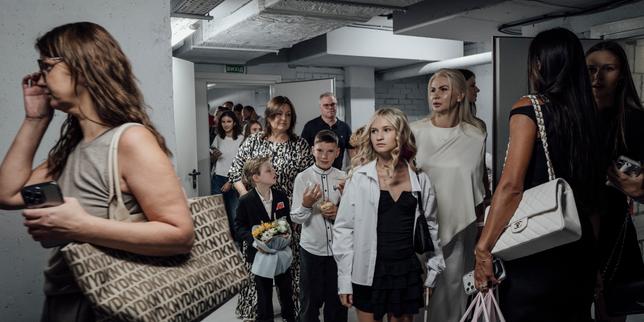
When the first howl echoes across the Dnieper, fracturing the crisp September air, the choreography of daily life shifts instantly. Teachers, many of whom spent their August weekends reinforcing basement windows with sandbags and checking ventilation shafts, do not panic. Panic is a luxury reserved for places where sirens are tests rather than warnings. Instead, they herd twenty pairs of scuff-resistant shoes down three flights of concrete stairs into windowless rooms that once stored old coal or broken furniture.
Consider what happens next. The children sit on benches improvised from wooden pallets. They do not cry. That is the most striking, devastating part of watching a generation grow up beneath interceptor trails. They have learned the syntax of danger before they have mastered fractions. They pull out their phones—not to play games, but to message their mothers: We are in the shelter. The teacher brought coloring books.
The statistics tell one story, but they are cold, bloodless things. They tell us that hundreds of thousands of children in Kyiv returned to classrooms this autumn, split between physical underground spaces and remote digital screens flickering in darkened apartments. They tell us that municipal authorities spent millions of hryvnias constructing subterranean schools capable of withstanding conventional blasts. But statistics leave out the damp smell of concrete mixed with damp wool. They omit the way a child’s fingers grip the edges of a metal desk when the muffled thud of an air defense battery shakes the earth six blocks away.
Dusk falls differently here.
There is a psychological geography to living in a city where the school day is routinely punctuated by the screech of metal overhead. Education becomes an act of defiance. Every math equation solved between blasts is a vote against the erasure of a future. Parents face impossible choices every single morning. Do you keep the child home, safe from the falling debris of intercepted drones but slowly starving of social interaction and human warmth? Or do you send them into the belly of the city, trusting the thick layers of reinforced concrete and the sleepless men and women tracking red blips on radar screens across the country?
Most choose the concrete. They choose the risk of the daylight hours over the slow rot of isolation.
I remember standing in a courtyard off Taras Shevchenko Boulevard last September, watching a grandfather walk his grandson to the school gates. The boy wore a crisp blue blazer that was slightly too large for his shoulders—bought a size up, surely, because children grow in bursts even when history stands still. The grandfather carried a bouquet of late gladioluses, their heavy pink heads nodding with every step. Halfway across the asphalt, the air raid app in the old man’s pocket began to shriek its electronic wail.
They did not run. They did not even drop their shoulders. They simply altered their trajectory, turning their backs on the ornate double doors of the school building and heading straight down the ramp into the nearest metro station, their steps clicking against the tile in a steady, unhurried rhythm that felt like a heartbeat against a stone chest.
That is the true curriculum of Kyiv today. It is not found in the textbooks approved by the ministry, nor is it written on the green chalkboards. It is an unwritten masterclass in how to hold your breath without gasping, how to find light in a room without windows, and how to keep the future alive when the present is measured in the space between explosions.
The bell rings anyway. Down in the dark, beneath the rumble of the city above, the teacher taps her chalk against a makeshift board, and forty small voices rise together in unison, reading words they hope will still matter tomorrow.