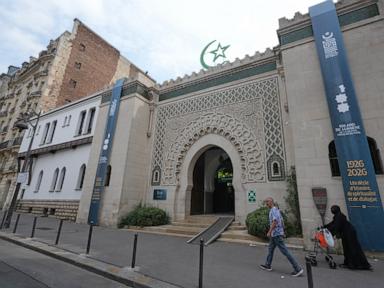
The Grand Mosque of Paris operates not merely as a site of religious devotion, but as a critical infrastructure linking European domestic policy with Mediterranean geopolitics. Commissioned by the French state following the First World War and inaugurated in July 1926, the institution completed its centennial cycle in 2026. While mainstream cultural commentary frames this milestone through the lens of interfaith harmony, a rigorous structural assessment reveals a more complex reality. The mosque functions simultaneously as a war memorial, an instrument of state integration, and a focal point of transnational diplomatic competition.
To evaluate the strategic trajectory of the Grand Mosque over its 100-year history, we must analyze the structural mechanics of its founding, its operational role within the secular framework of the French state (laïcité), and its position in the ongoing diplomatic tension over external religious governance.
The Dual-Function Origin: War Memorialization and Imperial Power Projection
The genesis of the Grand Mosque of Paris rests on a specific historical transaction between the French Republic and its colonial territories during World War I. This foundation is built upon two distinct institutional drivers:
- The Memorialization Function: During the 1914–1918 conflict, the French colonial empire deployed approximately 500,000 North and West African soldiers, the majority of whom were Muslim. An estimated 70,000 to 100,000 of these troops died in service to France, with particularly high casualty concentrations at the Battle of Verdun. The French state recognized that the existing domestic infrastructure offered no public, symbolic reciprocity for this sacrifice. The mosque was conceived as a monumental cenotaph—a physical manifestation of state gratitude designed to legitimize the concept of imperial citizenship.
- The Imperial Control Function: In the early 20th century, European empires competed directly for influence over the Islamic world. By financing a grand Islamic institution in the heart of the capital, the French government sought to project itself as a benevolent "Muslim power" to counter British and Ottoman influence. This was coupled with an internal security objective: establishing a centralized, visible institution allowed the Ministry of the Interior to monitor and regulate the growing population of North African workers migrating to metropolitan France.
The capital structure of the project reflects this state-directed motivation. In 1920, the French Parliament approved a direct subsidy of 500,000 francs, while the City of Paris provided prime real estate in the 5th Arrondissement (the Latin Quarter) valued at nearly 2 million francs. The execution was handled by the Société des Habous et des Lieux Saints de l'Islam, led by Algerian diplomat Si Kaddour Ben Ghabrit, who secured supplemental funding from the ruling elites of Morocco, Algeria, and Tunisia to complete construction.
Architectural Semiotics and the Mechanics of Spatial Assimilation
The physical design of the Grand Mosque is an exercise in cultural diplomacy, utilizing specific architectural references to anchor an external religious tradition within an established European urban landscape. Designed by Maurice Tranchant de Lunel and built by 450 North African craftsmen, the 7,500-square-meter complex relies heavily on Moorish Revival architecture, specifically mimicking the Mudéjar and Andalusian styles of the Almoravid and Almohad periods.
[Spatial Layout of the Grand Mosque Complex]
+-------------------------------------------------------------+
|                                                             |
|   +-------------------+              +------------------+   |
|   |   Minaret (33m)   |              |  Prayer Hall     |   |
|   |   (Spatial Anchor)|              |  (Capacity:15K)  |   |
|   +-------------------+              +------------------+   |
|                                                             |
|               +-------------------------------+             |
|               |   Andalusian Courtyard        |             |
|               |   (3,500 m² Public Interface) |             |
|               +-------------------------------+             |
|                                                             |
|   +-------------------+              +------------------+   |
|   |  Commercial Area  |              | Research Library |   |
|   |  (Hammam/Café)    |              | & Madrasa        |   |
|   +-------------------+              +------------------+   |
|                                                             |
+-------------------------------------------------------------+
The structural layout serves two strategic purposes:
1. The Vertical Signaling Mechanism
The 33-meter minaret was deliberately calibrated to establish visual parity within the Parisian skyline. It mirrors the proportions of the Mosque of the Kasbah in Marrakech, presenting a highly authentic, classical form of Islamic architecture rather than a modernized variant. This height ensures visibility within the Latin Quarter without structurally overwhelming adjacent civic landmarks like the Panthéon or the Jardin des Plantes, effectively normalizing the Islamic presence within the historical core of the French capital.
2. The Multi-Tiered Internal Infrastructure
The mosque avoids a monocultural design by segregating its functions into distinct zones. The sacred core (the prayer hall, expanded over the decades to accommodate up to 15,000 worshippers) operates under strict religious protocols. Conversely, the outer ring—comprising a traditional Moorish café, a Turkish bath (hammam), and a research library—acts as an accessible, desanctified commercial interface for the broader non-Muslim French public. This deliberate zoning lowers the barrier to cultural entry, converting an institutional house of worship into a highly frequented tourist and civic destination.
The Crisis of Transnational Governance: The Franco-Algerian Bottleneck
The primary structural limitation facing the Grand Mosque of Paris in its second century is the conflict between French state secularism (laïcité) and external state financing. This tension is best understood through the mechanics of transnational religious governance, which has historically relied on the "consular Islam" model.
       [Historical Funding & Leadership Pipeline]
       +-----------------------------------------+
       |           Government of Algeria         |
       +--------------------+--------------------+
                            |
                            | Direct Budgetary Subsidies
                            v
       +--------------------+--------------------+
       |       The Grand Mosque of Paris         |
       +--------------------+--------------------+
                            |
                            | Administrative & Legal Oversight
                            v
       +--------------------+--------------------+
       |  Federation of Associated Mosque Networks|
       +-----------------------------------------+
Since the mid-20th century, the operational leadership of the mosque has maintained deep ties to the Algerian state. Following Algeria's independence in 1962, the legal and financial stewardship of the mosque shifted directly into Algiers' sphere of influence. Every rector since its inception—including the current rector, Chems-Eddine Hafiz—has been of Algerian descent, and a substantial portion of the institution's operational budget is subsidized by the Algerian Ministry of Religious Affairs.
This funding mechanism creates a clear strategic bottleneck. Under modern French domestic policy, the state is actively trying to eliminate external state influences over domestic Islam. The goals are to end the system of seconded foreign imams and stop foreign capital flows into domestic religious institutions. The Grand Mosque of Paris sits directly in the crosshairs of this policy shift.
Because it is legally structured as a private association under French law but remains financially and ideologically anchored to Algiers, the mosque must constantly balance its allegiance to its foreign patrons against its need for domestic legitimacy. This dynamic is further complicated by diplomatic friction between Paris, Algiers, and Rabat. Morocco frequently challenges Algeria's administrative monopoly over the mosque, pointing to its own historical contributions to the site's Andalusian-style construction.
Human Capital and Historical Contingency: The 1940–1944 Sanctuary Model
The institutional authority of the Grand Mosque does not derive solely from state patronage; it also stems from its historical performance during moments of severe political instability. The most notable example of this occurred during the German occupation of Paris in World War II, under the leadership of its first rector, Si Kaddour Ben Ghabrit.
During this period, the mosque operated an underground rescue network that utilized its physical infrastructure to bypass occupation authorities. The strategic execution relied on two operational levers:
- Asymmetric Infrastructure Utilization: The mosque’s complex architectural layout—which features subterranean access to the Bièvre river and a network of catacomb-adjacent cellars—allowed for the concealment and transit of resistance fighters and fleeing Jews.
- Administrative Countermeasures: Ben Ghabrit and his staff exploited the occupation forces' lack of familiarity with Islamic administrative procedures. By issuing false certificates of Muslim identity to Jewish individuals, the mosque provided legal cover that prevented deportations. Historical assessments estimate that between 100 and 500 individuals were saved through this administrative subversion.
This wartime record provides the mosque with a unique form of domestic capital. When modern critics challenge the institution's compatibility with the French Republic, its leadership routinely points to this historical deployment of Islamic infrastructure to protect French citizens as proof of its foundational alignment with republican values.
The Strategic Path Forward
As the Grand Mosque of Paris enters its second century, its leadership cannot rely on historical prestige to navigate an increasingly polarized domestic environment. To maintain its position as the premier institution of Islam in France, it must execute a calculated transition away from the direct state-sponsored funding model.
The optimal strategy requires transitioning the institution into an economically self-sustaining endowment (waqf), funded primarily by domestic capital, commercial revenues from its public-facing sectors, and transparent private donations collected within the European Union.
By systematically decoupling its administrative leadership from the geopolitical interests of Algiers, the mosque can insulate itself from shifts in North African diplomacy. This independence will allow it to focus its resources on training domestic imams who are fully integrated into the legal and cultural framework of the secular republic, securing the institution's role for the next century.